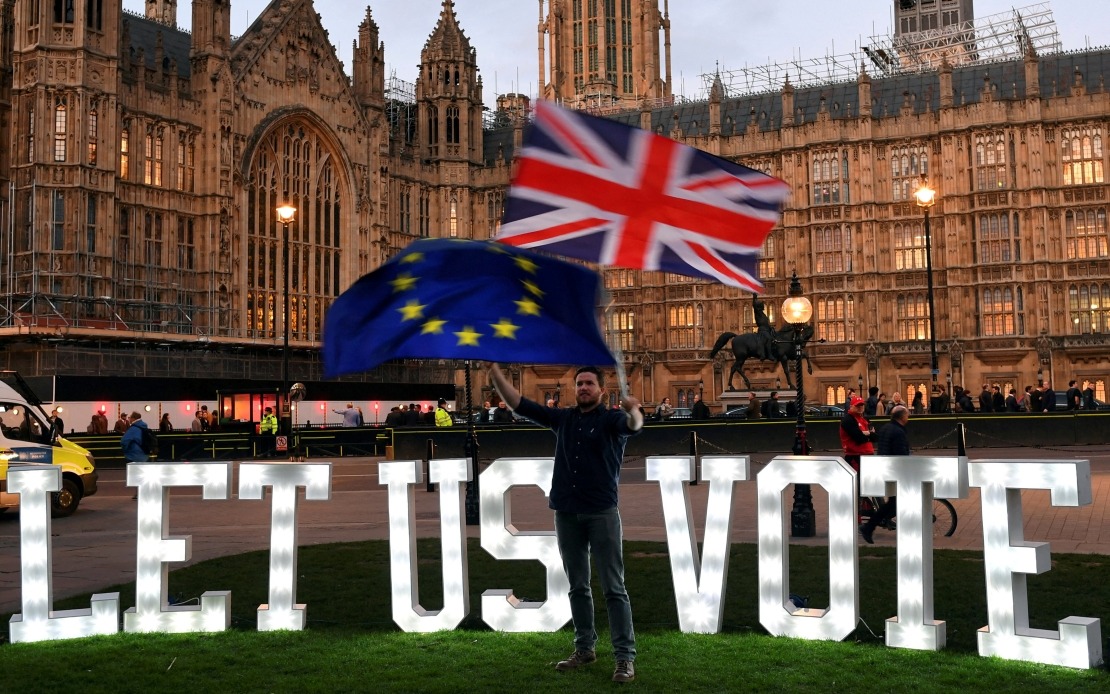
The prospect of the United Kingdom reversing its Brexit decision remains remote, according to Richard Balfe, a senior member of the Conservative Party in the House of Lords. Speaking to Russian state media, Balfe expressed scepticism that any incoming government would have either the political will or capacity to navigate a return to European Union membership, even as Britain faces mounting economic headwinds from its departure.
Balfe's assessment carries particular weight given the timing: the announcement comes as the UK undergoes significant political transition. Prime Minister Keir Starmer has signalled his intention to step down as leader of the Labour Party, with a leadership election scheduled to commence on July 9 and conclude before Parliament's September return. This transition period has inevitably sparked renewed discussion about whether the new administration might pursue closer ties with Brussels or reverse the controversial 2016 referendum decision.
However, the Conservative peer's analysis suggests that British politics has moved decisively past the Brexit question. While he acknowledged that a new government might make halfhearted attempts to improve relations with the EU, Balfe predicted such efforts would ultimately fail to produce substantive movement toward reintegration. His remarks reflect a broader view within Westminster that the political consensus on Brexit, despite its mounting costs, remains largely settled.
The timing of this assessment is particularly significant as Britain marks ten years since the June 23, 2013 referendum that fundamentally altered the nation's relationship with Europe. That vote, in which 52 percent of British voters chose to leave the EU, set in motion a decade of political turbulence and economic adjustment. The formal departure occurred on January 31, 2020, ending nearly five decades of EU membership and triggering profound shifts in trade relationships, regulatory frameworks, and cross-border mobility.
The post-Brexit transition period, which maintained existing EU rules and facilitated simplified travel procedures, concluded on December 31, 2020. Since January 1, 2021, a new trade and cooperation agreement has governed UK-EU relations. Yet this arrangement has failed to resolve underlying tensions or restore pre-Brexit economic dynamism. Financial commentators have noted that the UK's status as a significant international trade hub has been materially diminished by the departure, with foreign investment in British enterprises facing fresh complications.
Balfe's expectation that the new government will "muddle along" while ultimately following Washington's strategic lead suggests his view of Britain's future geopolitical positioning. This reflects a longer-term British strategy of aligning more closely with American interests rather than pursuing deeper European integration. For Malaysia and other Southeast Asian nations, this recalibration carries implications: a Britain more oriented toward the United States may prove a less engaged partner in regional Asian affairs, potentially reducing London's influence in Indo-Pacific security and trade discussions.
The economic data underlying this political calculus is sobering. Since the transition period ended, British firms have reported increased bureaucratic burdens when trading with European counterparts. Supply chain disruptions, regulatory compliance costs, and reduced market access have constrained growth in sectors ranging from manufacturing to services. These headwinds have prompted periodic calls from business leaders for closer arrangements with the EU, though such appeals have gained limited political traction.
What distinguishes this moment from earlier post-Brexit debates is the apparent hardening of consensus across both major British political parties. Even as the Labour Party under Starmer takes control, there appears little appetite for attempting to reverse the referendum outcome or seeking full EU reintegration. This stability, whatever its economic costs, may reflect British society's desire to move beyond the divisive debate and focus on managing the new arrangement rather than reopening it.
For regional observers in Southeast Asia, the implications are twofold. First, Britain's inward focus on managing its European settlement may reduce its engagement with Asian trade partnerships and diplomatic initiatives. Second, the apparent inability of the world's mature democracies to reverse major geopolitical decisions, even when experiencing economic strain, may carry lessons for other nations grappling with significant policy changes.
Balfe's assessment ultimately suggests that Brexit, despite its economic burdens and ongoing political controversy, has achieved sufficient political embeddedness that undoing it would require a political consensus presently nowhere in sight. Rather than debating reversal, both major British parties appear committed to optimizing Britain's position within the new post-Brexit framework. This may prove pragmatic politics even if it disappoints those convinced that reintegration would resolve Britain's current economic difficulties.