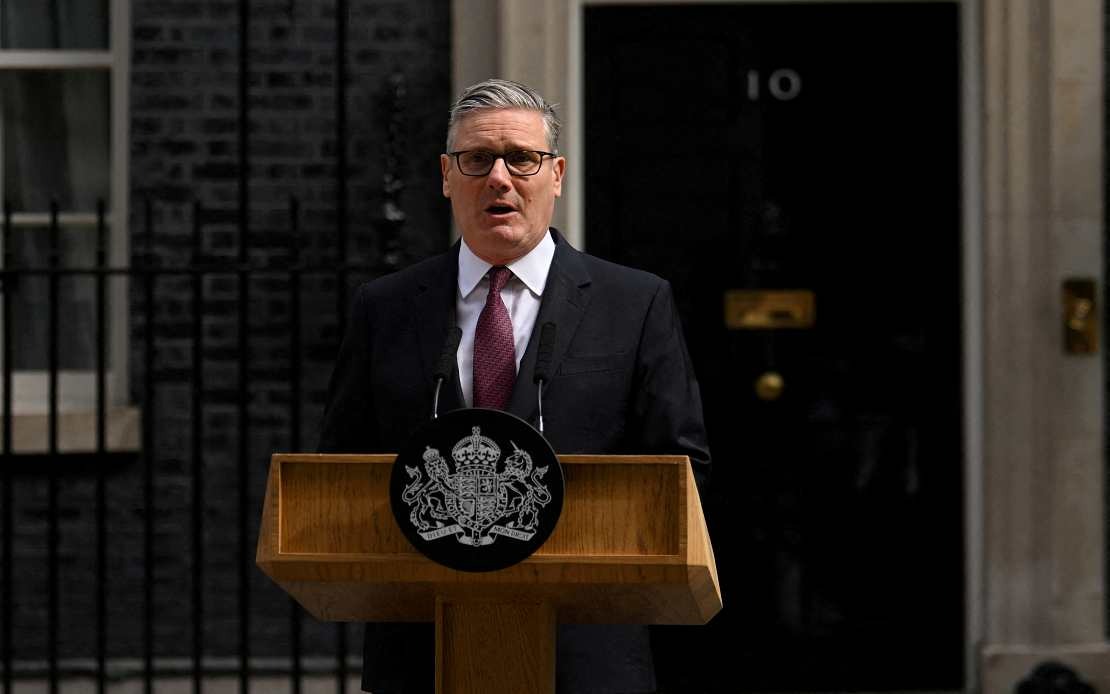
British Prime Minister Keir Starmer has added his voice to mounting international pressure on both the United States and Iran to restore diplomatic channels and cease military hostilities, warning that the escalating standoff over the Strait of Hormuz threatens regional stability and global commerce. Speaking at a joint press conference in Paris on Monday alongside leaders from France, Germany, and Ukraine, Starmer expressed grave concern over recent retaliatory strikes exchanged between Washington and Tehran over the weekend, insisting that the cycle of escalation must be broken through renewed negotiation efforts.
The British leader delivered an unequivocal condemnation of Iranian actions, stating that attacks directed at commercial shipping and regional partners cannot be tolerated and must cease immediately. This forceful language reflects growing alarm in Western capitals over the spiraling confrontation, which threatens one of the world's most critical energy transport routes. The Strait of Hormuz, through which approximately one-fifth of global petroleum passes, has become a flashpoint for broader tensions that extend far beyond bilateral US-Iranian relations.
Starmer's remarks came in the aftermath of renewed military exchanges that saw President Donald Trump announce the United States would reinstitute a comprehensive blockade targeting Iran while simultaneously imposing fees on vessels seeking safe passage through the strategic waterway. These declarations represent a significant hardening of American policy and signal the Trump administration's intention to leverage control over the strait as a pressure mechanism against Tehran. The move signals a departure from previous diplomatic overtures and suggests confidence in American military capacity to enforce such measures.
The deterioration in the security situation stems from a broader conflict that commenced in late February, centred on the ongoing war between the United States, Israel, and Iranian-backed forces in the Middle East. During the height of hostilities, Iranian actions effectively restricted passage through the Strait of Hormuz, creating severe disruptions to international shipping. A breakthrough appeared imminent when both sides agreed to a memorandum of understanding in June aimed at concluding the conflict and normalising shipping routes, yet the agreement has since unraveled amid mutual recriminations and renewed military posturing.
Britain's intervention reflects London's substantial economic interests in maintaining unobstructed maritime commerce and its historical role as a guarantor of regional stability. As a significant trading nation with major investments throughout the Gulf region, the United Kingdom faces direct consequences from any prolonged closure or destabilization of the Strait of Hormuz. The British government's willingness to mobilize diplomatic resources and offer material support demonstrates the gravity with which Western powers view the current crisis and their determination to prevent further deterioration.
Starmer signalled Britain's readiness to deploy naval and logistical assets to facilitate the resumption of normal shipping operations, positioning the Royal Navy as a stabilizing force in the region. This commitment extends beyond symbolic posturing, representing a concrete offer of resources to support international efforts to restore freedom of navigation. The proposition addresses a critical concern shared by maritime nations worldwide: the need for a secure corridor through which essential trade can flow without harassment or arbitrary restrictions.
The British Prime Minister's emphasis on the importance of both ceasefire resumption and continued negotiations on outstanding disputes reflects a sophisticated understanding of the challenges inherent in the current impasse. Rather than demanding absolute Iranian capitulation, the diplomatic formulation suggests room for continued dialogue on contentious issues while establishing a floor beneath which hostilities must not fall. This approach attempts to create space for constructive engagement even as fundamental disagreements persist between the antagonists.
The coordination evident in the Paris meeting, bringing together leaders of major European powers alongside Ukraine's government, underscores the international dimension of the crisis and the broad coalition of nations concerned about escalation. This collective posturing aims to signal to both Washington and Tehran that the international community expects restraint and a return to negotiating tables. For Southeast Asian nations including Malaysia, which depend heavily on uninterrupted Hormuz passage for energy imports and trade, the stakes in this confrontation are particularly acute.
The strategic implications extend throughout Asia-Pacific, where maritime trade routes and energy security have become paramount concerns amid regional great-power competition. Any prolonged disruption to the Strait of Hormuz would reverberate through supply chains and energy markets across the entire region, driving up costs for manufacturing and power generation. Malaysia and its ASEAN neighbours would face significant economic headwinds should the current standoff persist or intensify further, making regional interests in rapid de-escalation obvious and pressing.
The broader pattern evident in recent developments suggests that diplomatic channels, though strained, remain open for exploration. Starmer's intervention represents an attempt to leverage Western diplomatic capital and military presence to encourage both sides toward renewed engagement. However, the fundamental clash between American sanctions policies and Iranian regional ambitions means that any sustainable resolution will require addressing underlying grievances and security concerns that extend well beyond the immediate crisis surrounding shipping and the strait.
Looking forward, the success of international mediation efforts will likely depend on whether either party perceives genuine benefit in returning to negotiation rather than continued brinkmanship. The British position, emphasizing both accountability for attacks on shipping and the necessity of unrestricted navigation, attempts to establish principles acceptable to multiple stakeholders. Yet translating such diplomatic formulations into concrete outcomes remains the formidable challenge confronting regional and international powers attempting to prevent further deterioration in an already volatile situation.

