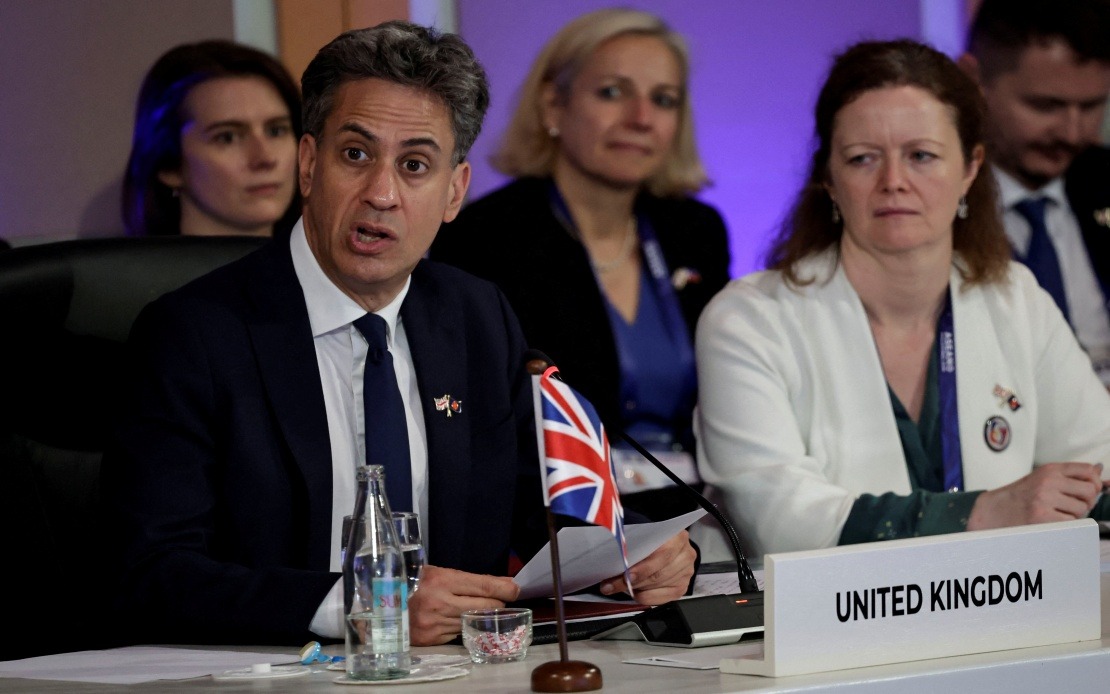
Ed Miliband's debut voyage as Britain's foreign secretary signals a deliberate pivot toward mending and deepening relationships across the European continent. The newly appointed minister's itinerary taking him through France and Spain this week underscores a strategic priority: repositioning the United Kingdom as a committed partner in European affairs following years of Brexit-induced tension. His first act on the continental stage reflects not just diplomatic protocol, but a calculated message that London intends to engage constructively with its closest neighbours.
The timing of Miliband's journey carries particular significance against the backdrop of catastrophic wildfires sweeping through southwestern Europe. Regions across France and Spain face an unprecedented natural disaster, with approximately 330,000 residents forced to evacuate their homes as flames consume vast tracts of countryside. Rather than circumvent this crisis, Miliband plans to address it head-on, framing Britain's response as an expression of European solidarity. This approach transforms what might have been routine bilateral meetings into opportunities for demonstrating shared commitment to collective resilience during emergencies.
The environmental disaster unfolding across the continent provides Miliband with a compelling platform to advance arguments about climate action at the highest diplomatic levels. By directly linking the immediate humanitarian catastrophe to the broader climate crisis, the British foreign secretary positions climate change not as an abstract policy concern but as a tangible, urgent threat demanding coordinated international response. For Malaysia and other Southeast Asian nations watching European climate diplomacy, this represents a significant moment—demonstrating how advanced economies are beginning to centre climate imperatives within their foreign policy architecture.
In Paris, Miliband will engage with French Foreign Minister Jean-Noël Barrot on matters extending well beyond bilateral pleasantries. European security architecture remains fragile, particularly given Russia's ongoing invasion of Ukraine. Britain's continued military and diplomatic support to Kyiv constitutes a defining element of contemporary European geopolitics, and Miliband's early emphasis on this issue signals that supporting Ukrainian sovereignty will remain central to British foreign policy. The discussion will also encompass Middle Eastern stability, where European and British interests often diverge but where coordination remains essential.
Migration represents another substantive agenda item during Miliband's French sojourn. Both Britain and France grapple with irregular migration across the English Channel, a politically charged issue domestically but one requiring sustained bilateral and multilateral engagement. The willingness to discuss this contentious topic early in Miliband's tenure suggests London recognises that European cooperation—rather than isolated national measures—offers the most viable pathway toward managing migration pressures. This carries relevance for Malaysia, which hosts millions of migrants and refugees and navigates similarly complex regional migration politics.
Maliband's subsequent passage through Madrid extends the diplomatic offensive toward another crucial European capital. José Manuel Albares, Spain's foreign minister, will encounter a British counterpart signalling openness to negotiating longstanding bilateral issues, particularly the contentious question of Gibraltar. The UK-EU Gibraltar treaty represents one of the more intricate legacies of Brexit negotiations, and Miliband's explicit focus on this matter indicates a determination to move beyond inherited disputes toward pragmatic agreements. For smaller nations and contested territories observing these interactions, the willingness to address difficult issues through diplomatic channels rather than confrontation offers constructive precedent.
Security cooperation between Britain and Spain extends across multiple domains—from counterterrorism to cybersecurity to naval coordination in the Mediterranean. Miliband's emphasis on this dimension reflects awareness that European stability increasingly depends upon effective coordination among NATO allies and EU members. Spain's geographical position as a gateway between Europe and North Africa makes it strategically valuable in addressing broader regional challenges, something the British foreign secretary will likely underscore during their conversations.
The climate crisis represents a unifying thread throughout Miliband's continental tour, appearing on the agenda in both Paris and Madrid. This consistency indicates a deliberate effort to establish climate action as a cornerstone of British foreign policy rather than a secondary concern. For Malaysia, observing how European powers integrate climate considerations into their diplomatic engagement holds instructive value as Southeast Asian nations navigate their own climate obligations while managing complex geopolitical relationships.
Miliband's inaugural European visit carries symbolic weight beyond its immediate bilateral outcomes. It communicates that Britain, post-Brexit, remains committed to sustained European engagement rather than strategic withdrawal. This matters not merely for European stability but for the broader international order that underpins global commerce and security arrangements. Malaysian businesses, investors, and policymakers attentive to evolving European-British dynamics will note that renewed European focus suggests continued opportunities for triangular partnerships spanning Asia, Europe, and Britain.
The substance of these conversations—Ukraine, migration, security, climate, and bilateral treaties—reveals an essentially pragmatic approach to foreign relations. Miliband appears intent on building durable partnerships grounded in shared interests rather than ideological alignment. This methodology contrasts with more confrontational diplomatic styles and suggests a Britain seeking restoration of its traditional role as a broker and stabilising force within European affairs. For regional observers, this recalibration offers valuable lessons about how major powers can reconfigure their diplomatic strategies following significant geopolitical ruptures.
Ultimately, Miliband's European tour inaugurates a new chapter in British foreign policy, one in which European partnership occupies renewed prominence. The visit demonstrates recognition that Britain's prosperity and security remain inextricably linked to European stability. As the continent grapples with climate disasters, energy transitions, and security challenges, London appears intent on positioning itself as an active, engaged participant in finding solutions. For Malaysia and Southeast Asia, Britain's recommitment to European partnerships could reshape trade relationships, security architectures, and diplomatic alignments throughout the coming years.

