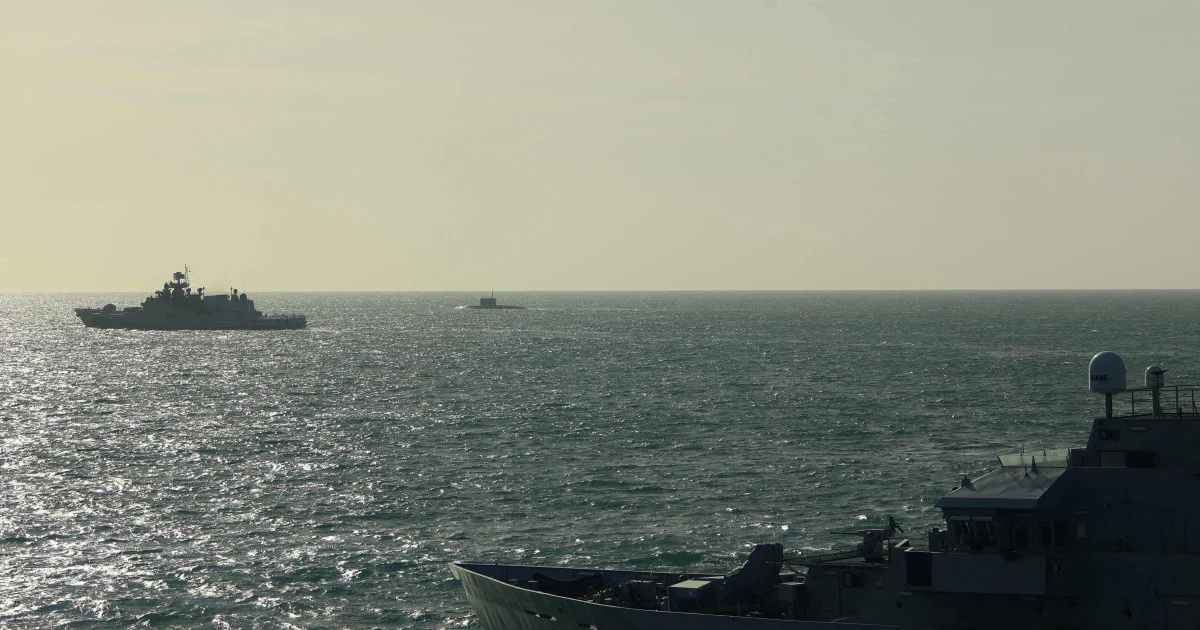
Tensions between the United Kingdom and Russia have spiked once again on the waters separating their nations, with Prime Minister Keir Starmer addressing an incident involving a Russian naval vessel firing warning shots near a private yacht in the English Channel. Speaking on Wednesday, Starmer characterised the action as reckless behaviour rather than a calculated act of intimidation, signalling Britain's effort to distinguish between dangerous maritime conduct and deliberate escalation during an already fraught period of geopolitical friction.
The incident represents another chapter in the mounting pattern of confrontations at sea that have become increasingly common since Russia's invasion of Ukraine in February 2022. These encounters between British and Russian military assets have created a challenging dynamic in one of the world's busiest shipping lanes, where commercial vessels and private craft regularly transit alongside military deployments. The English Channel, a critical artery for global maritime commerce, has become an unexpected arena for great power competition in its most direct form.
Starmer's deliberate choice of language—distinguishing between "reckless" conduct and "sinister" intent—reflects a careful diplomatic balancing act that many Western leaders have adopted when responding to Russian provocations. By framing the incident as the former rather than the latter, the British government appears to be leaving room for de-escalation while simultaneously placing responsibility for the dangerous nature of such actions squarely on Moscow. This rhetorical approach acknowledges that warning shots fired at civilian vessels create genuine hazards without suggesting that Russia intentionally seeks to provoke a major military confrontation with NATO allies.
For Malaysian observers and policymakers, such incidents carry broader significance beyond their immediate geographical context. Southeast Asia's own waters—the South China Sea and Strait of Malacca—have experienced similar patterns of tense maritime encounters involving multiple claimant states and major powers exercising freedom of navigation operations. The way Western nations respond to Russian provocations in European waters establishes precedents and frameworks that could influence how regional powers manage their own disputed maritime territories and competing interests in shared waters.
The incident underscores how 21st-century great power competition increasingly manifests itself not through conventional warfare but through a continuous series of dangerous games played in international spaces. From confrontational air intercepts to close naval encounters and now warning shots fired in crowded shipping lanes, these interactions test the limits of international law and diplomatic restraint. Each side attempts to assert its position without crossing thresholds that would trigger formal military responses, creating a grey zone of behaviour that existing international frameworks struggle to address adequately.
Britain's response to the Russian warship incident also reflects the broader NATO perspective on managing Russia while avoiding an unintended escalatory spiral. With Ukraine consuming enormous international attention and resources, Western nations are keen to contain rather than amplify peripheral confrontations that might demand military responses they are already stretched to provide. Starmer's characterisation of the event as reckless but not sinister allows Britain to formally lodge complaints through diplomatic channels without creating domestic or international pressure for a tougher military counter-response.
The Russian navy's increasing assertiveness in waters far from its traditional operational zones suggests Moscow is testing the boundaries of acceptable conduct in international waters. By firing warning shots near civilian vessels, Russian commanders may be attempting to discourage navigation patterns they find inconvenient or to probe Western responses to escalating provocations. These incidents accumulate over time, gradually normalising levels of maritime aggression that would have been considered unacceptable in previous decades of international relations.
For regional stability in Southeast Asia, understanding how global powers manage maritime friction is increasingly important. The principles being tested in the English Channel—including interpretations of international maritime law, the definition of reckless versus intentional provocation, and the appropriate responses to dangerous maritime behaviour—could eventually shape how disputes in the South China Sea or around the Strait of Malacca are resolved. Malaysia, as a maritime nation with vital interests in keeping regional waters safe and open for commerce, has a stake in how these international norms develop and become codified in state practice.
The broader pattern of Russian naval activities and Western responses also demonstrates how military rivalry can persist and even intensify in the absence of direct armed conflict. The English Channel incident joins a catalogue of similarly tense moments that collectively demonstrate the elevated risk environment in which modern maritime commerce operates. Insurance premiums, navigation protocols, and commercial decisions are increasingly shaped by assessments of geopolitical risk rather than purely economic factors, representing an unseen but significant cost of contemporary great power competition.
As these confrontations continue, the international community faces a fundamental challenge: how to establish clear rules of engagement that prevent dangerous incidents from escalating into broader conflicts while still protecting legitimate national interests and freedom of navigation. Starmer's measured response reflects the difficult position faced by Western leaders who must respond firmly enough to demonstrate resolve but carefully enough to avoid inadvertently triggering the very escalation they seek to prevent.