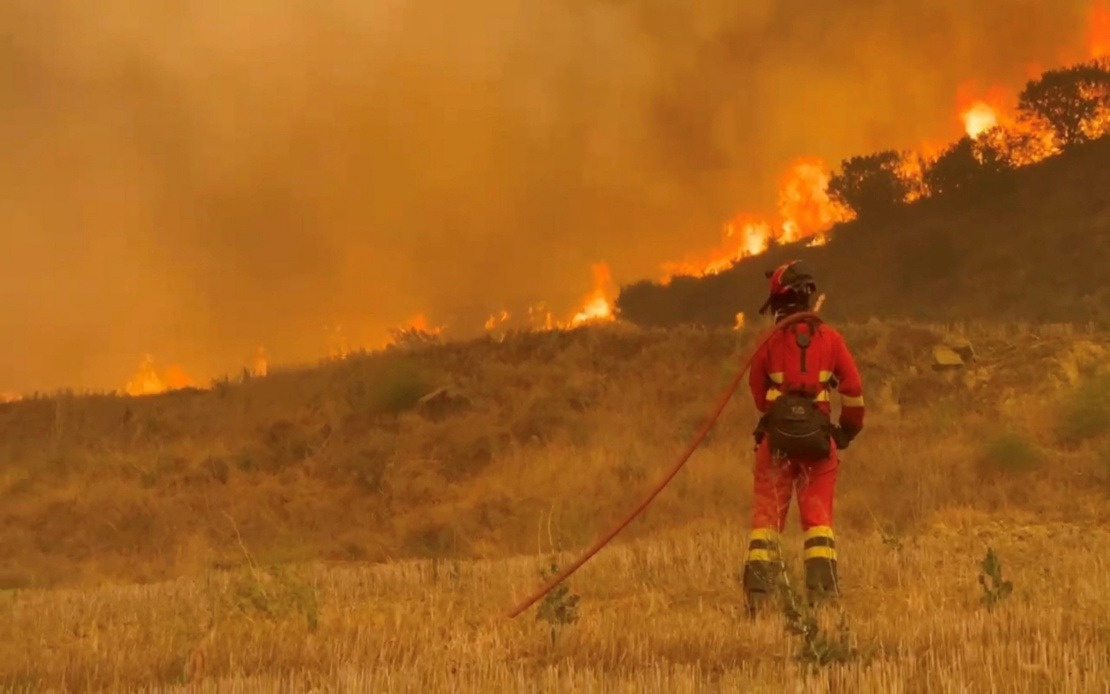
Britain is facing an unprecedented convergence of climate-driven emergencies that has forced the government to convene an urgent Cobra meeting this week. The high-level summit, chaired by Andy Burnham, represents an acknowledgment that the cumulative impact of sustained extreme temperatures, spreading wildfires and worsening water shortages has overwhelmed multiple sectors simultaneously. Firefighting crews, agricultural communities and the National Health Service are all struggling to cope with conditions that increasingly outpace conventional emergency response protocols.
The timing of the emergency gathering reflects the escalating severity of the current weather pattern. Within days, England has witnessed significant portions of the country slipping into official drought status, while firefighters have been engaged in protracted battles with major wildfires across multiple regions, most notably in the New Forest area of Hampshire. The Met Office, Britain's meteorological authority, has taken the unusual step of issuing an amber extreme heat warning for Thursday, a classification reserved for genuinely dangerous atmospheric conditions. This technical designation signals that officials expect temperatures to pose direct threats to public health across broad geographic areas.
The statistical picture emerging from recent months paints an alarming trajectory. The Met Office data indicates that 2024 is on track to become Britain's warmest summer in recorded history when measured by average temperature across the season. This prospect carries significant implications not only for immediate public safety but for long-term infrastructure resilience. The cumulative effect of sustained heat stress on the National Grid, water supply systems, and transportation networks raises fundamental questions about Britain's preparedness for climate-altered summers.
The public health dimensions have already become visible through mortality data. During the heat waves of May and June, the UK Health Security Agency recorded 2,877 excess deaths—a figure nearly double the 1,504 excess deaths observed during the summer of 2025. These numbers underscore how vulnerable populations, particularly the elderly and those with pre-existing conditions, face disproportionate risk during prolonged periods of elevated temperatures. The scale of mortality suggests that standard heat-response procedures may be inadequate for the new climate reality.
Drought declarations have been spreading across the United Kingdom with concerning speed. Wales formally declared a drought on July 30 as prolonged high temperatures and record-low rainfall combined to create critical water stress. This declaration followed similar drought declarations affecting roughly half of England earlier in the month, driven by identical factors of sustained heat and rainfall deficits. For agricultural communities dependent on water for livestock and crop irrigation, these designations translate directly into economic losses and questions about autumn harvests.
The political response to the crisis reveals significant fault lines within British discourse about climate action. Zack Polanski, leader of the Green Party, has used the emergency as a platform to advocate for transformative policy measures. His proposals include establishing a windfall tax on fossil fuel corporations to fund enhanced firefighting capability, developing accessible cooling centres throughout communities, implementing maximum workplace temperature thresholds, and ceasing new oil and gas extraction in the North Sea. These recommendations reflect a broader argument that incremental adaptation is insufficient and that structural energy system transformation is necessary.
Polanski's assertion that "we cannot negotiate with the science" encapsulates the frustration of climate advocates who contend that Britain's policy framework remains misaligned with the velocity of climate change. The framing positions this emergency not as an exceptional event requiring temporary measures but as a preview of the baseline conditions toward which the climate system is shifting. Under this interpretation, emergency meetings will become routine unless fundamental transformations in energy infrastructure and resource management are undertaken.
The cascade of emergencies unfolding simultaneously across Britain creates multiplicative stress on institutional systems. Firefighters deployed to combat wildfires cannot simultaneously assist with heat-related emergencies in urban areas. Farmers managing drought conditions require water allocation decisions that conflict with urban consumption needs. NHS facilities themselves require cooling during periods when peak heat-related patient admissions overwhelm hospital capacity. These competing demands highlight how climate impacts do not arrive in isolation but compound across interconnected systems.
For Malaysian and Southeast Asian observers, the British experience offers instructive lessons about climate vulnerability in developed economies. Despite superior wealth, technical capacity, and institutional infrastructure, Britain faces significant adaptation challenges when confronted with compound climate hazards. The region's tropical geography, existing vulnerability to monsoon variability, and dense population concentrations create conditions where similar compound emergencies could overwhelm response systems even more severely. The British case demonstrates that climate resilience requires anticipatory investment in redundant capacity rather than reactive expansion during crises.
The emergency meeting also reflects uncertainty about Britain's climate preparedness framework. If high-level government convening is necessary to coordinate response to heat, wildfires and drought, questions emerge about whether institutional structures are adequately configured for managing climate hazards that increasingly overlap and reinforce one another. The gathering suggests that current protocols treat these phenomena as distinct emergencies requiring separate responses, even though they arise from a common underlying driver: atmospheric conditions diverging from twentieth-century norms.
As Britain grapples with these immediate challenges, the broader question of whether adaptation can keep pace with climatic change remains unresolved. The accumulation of extreme events, rising excess mortality during heat periods, and increasingly severe drought conditions suggest that reactive emergency management has genuine limits. Whether this week's Cobra meeting produces structural changes in energy policy, water management, urban planning and workplace standards, or remains primarily a coordination exercise for managing symptoms, will indicate whether Britain's political system recognizes the scope of transformation required.

