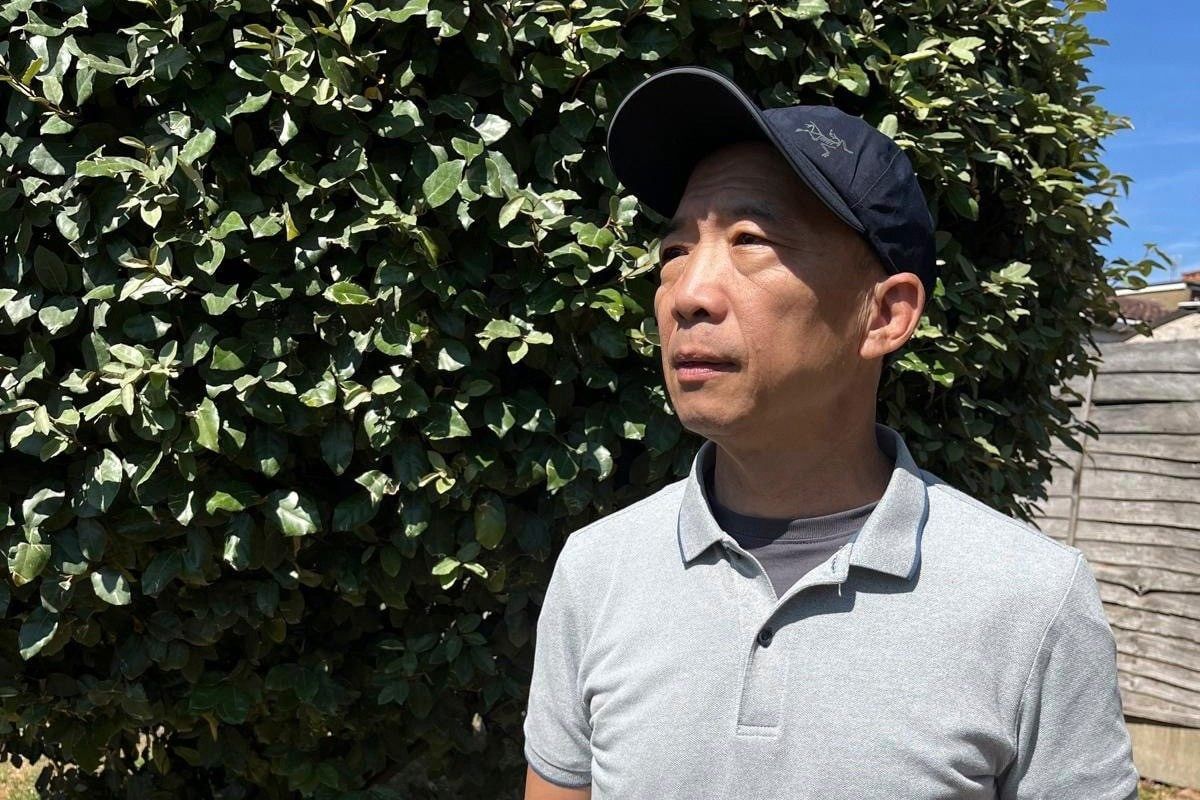
The United Kingdom will not deport Wu Chi-wai, the prominent Hong Kong opposition figure who encountered unexpected difficulties when attempting to enter Britain last month, according to a formal statement from the British immigration ministry. Migration Minister Jo White disclosed in a parliamentary response that Wu has been granted permission to enter the country and will not face removal, effectively resolving an immigration saga that sparked international concern among human rights advocates and former colonial administrators.
Wu, aged 63, was formerly the chairman of Hong Kong's now-defunct Democratic Party and served as a legislator until his arrest. He spent four years and five months in a Hong Kong detention facility after being convicted under the territory's national security law for his involvement in organising a 2020 pan-democratic unofficial primary election. His case exemplifies the broader wave of prosecutions targeting opposition figures since Beijing imposed stringent security legislation on Hong Kong in 2020, fundamentally transforming the city's political landscape.
The initial refusal of entry at London Heathrow Airport this month proved deeply controversial, as Wu's predicament highlighted potential inconsistencies in how British immigration officials were handling applications from Hong Kong dissidents fleeing political persecution. Wu was initially permitted only seven days of temporary admission before a broader coalition of human rights organisations and figures, including Chris Patten, the final British governor of Hong Kong, appealed to the Home Office to reconsider. Following this intervention, authorities extended his visitor status to six months, establishing space for him to pursue formal settlement options.
The minister's written response addressed a letter from Patten, who had pressed the government to establish clearer protocols for border officials and caseworkers evaluating applications from individuals facing what he characterised as political persecution. White's statement represents an important clarification of how Britain intends to apply its immigration rules to Hong Kong nationals seeking refuge from what they describe as unjust prosecutions rooted in political opposition rather than genuine criminal conduct.
In her formal guidance, White acknowledged that the Home Office recognises a distinction between ordinary criminal convictions and those that may reflect political motivation or be disproportionately severe by international standards. She explained that caseworkers possess discretion to consider the circumstances surrounding overseas convictions, particularly where offences are not recognised under British law or carry substantially harsher penalties abroad than equivalent crimes would warrant domestically. This flexibility suggests the immigration system will evaluate whether Wu's conviction genuinely represents a public safety risk or whether it reflects Hong Kong's implementation of contentious national security legislation.
The minister emphasised that when applicants claim their actions were politically motivated or contest the fairness of their conviction, caseworkers will examine any supporting evidence alongside independent court records and other available documentation before reaching a determination. This commitment to individualistic assessment rather than automatic exclusion could prove significant for the many Hong Kong activists and politicians facing similar circumstances. Wu's case essentially sets a precedent demonstrating that previous convictions linked to political activities need not automatically disqualify applicants from the British National (Overseas) visa scheme.
The BN(O) pathway, introduced in 2021, represents one of Britain's most significant post-handover commitments to Hong Kong residents, permitting eligible Hongkongers and their family members to reside, work, and pursue education in the United Kingdom. After five years under the scheme, residents become eligible to apply for indefinite leave to remain, eventually leading to British citizenship. This route has attracted tens of thousands of applicants since its establishment, reflecting both economic opportunities and growing concerns about political freedoms in Hong Kong following the 2019 pro-democracy protests and subsequent security law implementation.
Wu's family members were already established in Britain, making him a candidate for the scheme to facilitate reunification. His case demonstrates how the policy operates as not merely an immigration initiative but also a mechanism through which Britain has positioned itself as a refuge for those alleging political persecution under Hong Kong's security regime. The willingness to accommodate someone convicted under this controversial law signals Britain's continued framing of the security legislation as problematic and its implicit challenge to Beijing's governance of Hong Kong.
The High Court in Hong Kong had determined that the 2020 primary election in which Wu participated constituted part of a scheme to "undermine, destroy or overthrow" authorities, transforming what pro-democracy activists described as legitimate electoral organising into a conspiracy matter. Of the 45 individuals prosecuted in connection with the primary, Wu was among those who pleaded guilty, though his plea reflected his assessment of prosecutorial advantage rather than acceptance of the underlying characterisation of his political activities.
For Malaysia and Southeast Asian observers, Wu's case carries particular resonance. The region hosts numerous activists and political figures who question government policies and face legal consequences, raising questions about how democratic nations might balance immigration law with humanitarian considerations toward those alleging political persecution. Britain's decision to extend a pathway to settlement for Wu—despite initial bureaucratic resistance—demonstrates that immigration systems can incorporate discretion to distinguish between genuine security threats and political opponents.
The immigration minister's statement does not constitute a blanket exemption for all Hong Kong opposition figures but rather confirms that convictions must be individually evaluated within their full political and legal context. This nuanced approach potentially offers a model for how liberal democracies might integrate human rights considerations into security-conscious immigration frameworks. Wu's resolution also likely relieves anxiety among other Hong Kong applicants who feared that any criminal conviction would trigger automatic rejection, providing reassurance that British adjudicators will consider the circumstances surrounding these convictions.
As Hong Kong's political space continues contracting and more opposition voices seek overseas opportunities, the parameters established through Wu's case will influence how other similar applications are processed. His formal permission to enter and remain in Britain represents not merely a bureaucratic clearance but a statement about where Britain positions itself in relation to Hong Kong's contemporary governance trajectory and Beijing's security policies.

