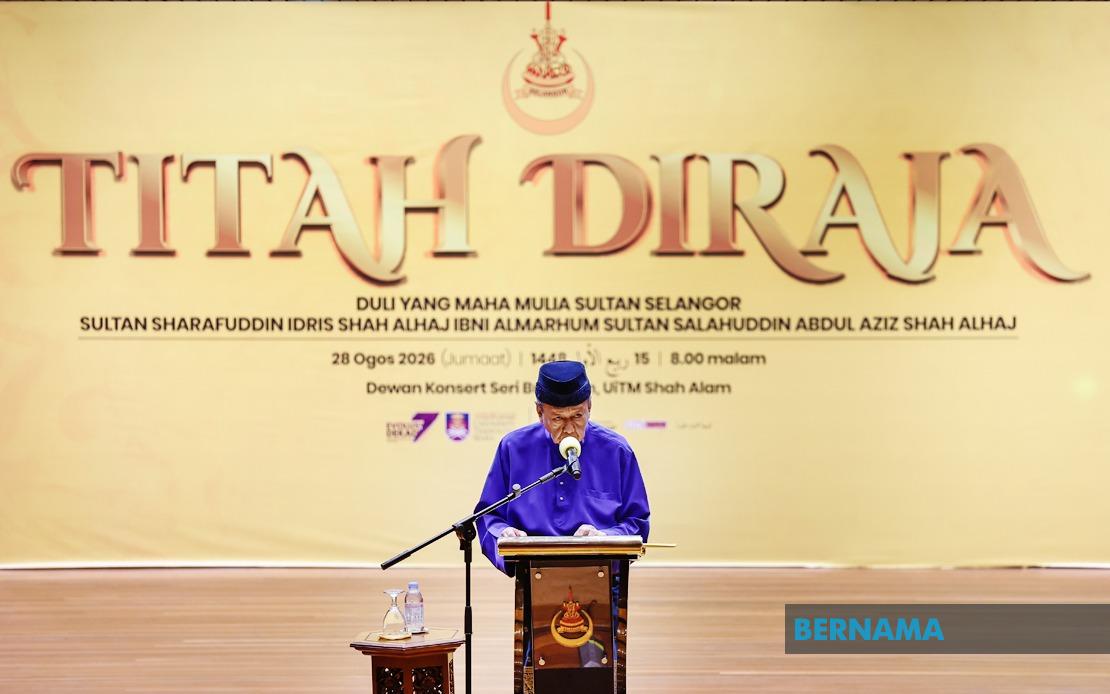
The Sultan of Selangor has issued a forceful reminder that Universiti Teknologi MARA must not abandon its founding mission to uplift underprivileged Malay and Bumiputera youth, even as the institution has evolved into one of Southeast Asia's largest tertiary educators. Speaking at the UiTM 2026 Royal Address in Shah Alam, Sultan Sharafuddin Idris Shah emphasised that as the university expands its academic offerings and infrastructure, the core commitment to students from low-income families, rural communities, and humble backgrounds cannot be diluted or left behind.
The royal intervention underscores a persistent tension in Malaysian higher education: how premier institutions serving designated communities can balance growth and prestige with equitable access. UiTM's trajectory from a modest vocational institute to a sprawling university system with over one million alumni has raised questions about whether expansion has shifted its focus away from its poorest beneficiaries. The Sultan's remarks, delivered in the presence of Tengku Permaisuri Norashikin and Higher Education Minister Datuk Seri Dr Zambry Abd Kadir, signal that the institution's leadership must actively confront this challenge rather than assume progress automatically benefits all.
To illustrate the transformative power UiTM was designed to deliver, Sultan Sharafuddin recalled the institution's humble beginnings in 1965 with merely 219 students and 11 lecturers. Within its first decade, enrolment had climbed to approximately 7,000 while faculty numbers swelled to around 1,000, with some 60 academic programmes spread across multiple campuses in different states. This rapid institutionalisation created pathways previously closed to rural and working-class Bumiputera families whose children might otherwise have had little prospect of accessing formal higher education. The Sultan's historical framing invites contemporary leaders to remember that such accessibility did not emerge by accident but through deliberate policy and resource allocation.
Today's UiTM is substantially larger. The university now graduates more than 40,000 students annually and boasts an alumni network exceeding one million individuals. These figures reflect the institution's capacity to educate at scale, yet they also mask the actual lived experiences of individual graduates whose lives have been altered by access to tertiary credentials. Sultan Sharafuddin pivoted from quantitative measures to qualitative impact, arguing that true institutional success cannot be measured simply by student numbers or graduation rates but must be evaluated against the degree to which UiTM has genuinely transformed lives and broadened opportunities for those who would otherwise have been excluded from higher education pathways.
The Sultan's specific proposal centres on leveraging this vast alumni network to create a dedicated funding mechanism. He proposed establishing a system whereby each UiTM graduate contributes RM10 monthly, or RM100 annually, as an expression of gratitude for their university experience. While framed as voluntary, the suggestion carries considerable symbolic weight when endorsed by a reigning Malay Ruler and signals that such contribution is an expectation rooted in institutional loyalty and social obligation. The Sultan argued that RM10 per month represents a modest sum, manageable for professionals who have benefited from UiTM education and now occupy positions across the economy.
If fully implemented, such a scheme could theoretically generate up to RM100 million annually. These resources would flow back into UiTM's development initiatives and, critically, into financial assistance programmes for current and prospective students grappling with economic hardship. For Malaysian readers familiar with the country's persistent wealth disparities, this proposal carries practical significance. Many capable Bumiputera youth still face genuine barriers to university attendance, with family income determining whether they can afford accommodation, textbooks, and living expenses in urban centres. An endowed fund managed transparently could meaningfully expand access without requiring additional strain on government budgets already pressed by competing priorities.
The Sultan's invocation of the "UiTM Dihatiku" motto—translating roughly as "UiTM in My Heart"—represented an attempt to infuse the contribution proposal with emotional resonance and institutional patriotism. Yet this rhetorical move also contained a subtle challenge to UiTM's leadership and broader Malaysian society. The phrase asks whether talk of deep attachment to the institution can translate into concrete financial sacrifice. For alumni who have progressed to lucrative professions—accountants, engineers, lawyers, doctors, architects—the Sultan's appeal carried an implicit moral imperative to remember their origins and to recognise that their educational opportunity depended upon institutional choices that prioritised access over selectivity.
UiTM's graduate body has indeed dispersed across Malaysia's economic landscape in remarkable ways. The Sultan's catalogue of professional fields—from corporate leadership to entrepreneurship, civil service, academia, and the creative industries—reflects how comprehensively the university has seeded the nation's talent pool. Yet this very success raises a paradox: as UiTM graduates ascend into elite positions, the institution itself may unconsciously begin mimicking the selectivity and prestige-seeking behaviours of other universities, potentially softening its commitment to nurturing talent from disadvantaged backgrounds. The Sultan's speech implicitly warned against this institutional drift.
For policymakers across Southeast Asia, Sultan Sharafuddin's intervention offers relevant lessons. Flagship institutions established with social mobility mandates face perpetual pressure to elevate their standing in international rankings, expand research output, and attract higher-achieving students. These goals are not inherently incompatible with maintaining equitable access, yet tension emerges when institutional resources are finite and choices must be made. The Sultan's proposal suggests that meeting access commitments should not depend solely on government funding or charitable largesse but on institutional stakeholders—particularly successful alumni—recognising their role in sustaining the pipeline that elevated them.
The timing of this royal address also merits attention. As Malaysian higher education undergoes structural reforms and as questions about social mobility in a middle-income economy grow more acute, the Sultan's emphasis on UiTM's foundational purpose speaks to broader national anxieties. Can Malaysia's institutions continue generating pathways for disadvantaged youth, or will education increasingly stratify along class lines? The Sultan's call for renewed commitment suggests that this outcome is not inevitable but depends upon conscious institutional choices backed by sustained resource commitment and alumni solidarity.
Ultimately, Sultan Sharafuddin's remarks function as both affirmation and admonition. He celebrated what UiTM has achieved in transforming lives and building Malaysia's professional classes, yet he also issued a warning: growth and expansion are meaningless if the institution loses sight of the underprivileged Bumiputera students for whom it was originally established. The alumni contribution scheme represents a practical mechanism through which institutional memory and social obligation could be channelled into concrete support. Whether UiTM's leadership and graduates embrace this call will signal whether the university remains true to its transformative mission or gradually becomes another elite institution serving those already advantaged.

