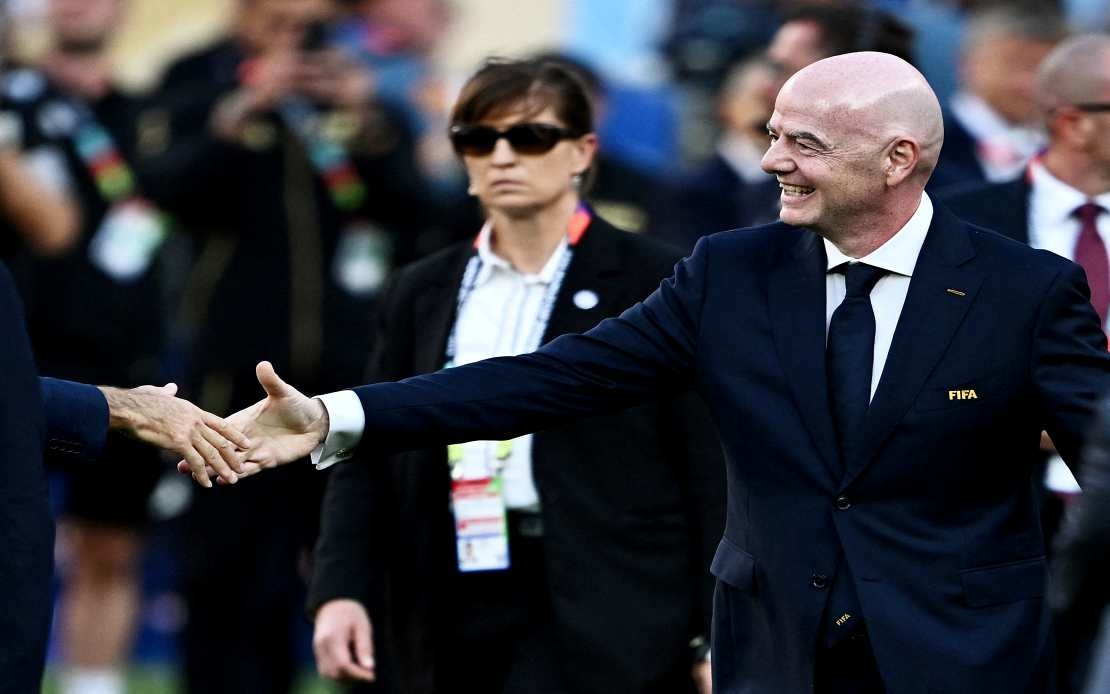
The Union of European Football Associations has escalated its confrontation with FIFA leadership by issuing a formal legal notice to President Gianni Infantino, signalling serious intent to pursue litigation over a contentious proposal to sell off significant portions of the organisation's commercial and media rights. The written notification, delivered this week, explicitly states that UEFA is actively considering judicial proceedings, arbitration, and regulatory complaints connected to FIFA's abandoned scheme.
At the heart of the dispute lies an ambitious fundraising plan announced by FIFA in early August, whereby the world football governing body sought to raise approximately US$4.2 billion through the sale of roughly 20 per cent of a newly created entity responsible for managing its media and commercial rights. This entity would have controlled highly lucrative broadcasting and sponsorship arrangements, including those associated with the FIFA World Cup tournament. According to multiple reports, potential investors included foundations connected to Joshua Kushner, whose brother Jared Kushner serves as son-in-law to former US President Donald Trump, introducing geopolitical dimensions to what ostensibly appeared as a straightforward financial transaction.
The proposal triggered immediate and forceful resistance from European football's governing body, which perceived the arrangement as fundamentally threatening to the sport's established commercial structure and governance principles. UEFA announced that all its member associations would boycott FIFA competitions if the arrangement proceeded, representing an unprecedented challenge to FIFA's authority. This unified continental response demonstrated the depth of opposition to Infantino's initiative and signalled that European football was prepared to take radical action to block implementation.
In response to mounting pressure from UEFA and other stakeholders, Infantino announced late last week that FIFA would abandon the commercial rights sale entirely. The reversal came just days after the initial proposal, representing a significant political defeat for the FIFA president. However, the abrupt withdrawal failed to mollify European football authorities, who remained adamant that accountability must follow. Financial observers noted that the scheme would have substantially enriched Infantino personally, with his annual compensation potentially escalating from three million euros to thirty million euros, raising questions about conflict of interest and governance standards.
UEFA's formal legal notice adopts the language of litigation hold, explicitly demanding that Infantino and FIFA take immediate steps to identify, preserve, and maintain all documents, emails, communications, and electronically stored information pertaining to the proposed transaction and related matters. Such preservation orders represent a critical first stage in civil litigation, as they establish a legal obligation preventing the destruction or concealment of evidence that might later be required in court proceedings. The specificity of UEFA's demands suggests that the European confederation believes it possesses grounds for substantive legal claims and is preparing its case methodically.
The controversy highlights deepening tensions within global football governance, reflecting broader disputes over how FIFA should deploy its considerable financial resources and manage its institutional structure. UEFA's position reflects concerns shared across multiple confederations that FIFA's decision-making processes lack adequate transparency and that commercial arrangements affecting the sport's fundamental character should involve consultation with all stakeholders rather than unilateral FIFA announcements. The proposed investor involvement, particularly given the American connections, also triggered concerns about foreign control over international football's commercial architecture.
For Malaysian football and Southeast Asian confederation authorities, this episode carries significant implications. As members of the Asian Football Confederation, regional football bodies have legitimate interests in FIFA's governance and commercial frameworks, given their voting rights and stake in how World Cup revenues and international tournament arrangements are structured. The conflict demonstrates that even FIFA's most senior leadership faces potential legal consequences when pursuing contentious policy initiatives, establishing that global football governance remains subject to institutional checks and contestation.
UEFA's aggressive legal posture signals that the organisation intends to hold FIFA accountable not merely through competitive boycotts but through formal legal mechanisms. This represents a threshold moment in football administration, where traditional hierarchy and deference to FIFA's authority face genuine challenge from continental confederations possessing substantial leverage. The preservation notice effectively initiates adversarial proceedings that could extend over several years, potentially involving discovery, depositions, and substantive litigation regarding FIFA's governance obligations.
The underlying governance question extends beyond this specific transaction to encompass broader issues about FIFA's accountability to its constituent members and the sport's stakeholders. UEFA's actions reflect frustration that FIFA can unilaterally propose sweeping commercial arrangements affecting all confederations without meaningful consultation, then simply withdraw them when resistance emerges without accepting systemic accountability. By pursuing legal action rather than accepting the withdrawal as closure, UEFA signals that institutional reform and governance restructuring remain essential outcomes.
Moving forward, the dispute will likely influence how FIFA approaches major commercial and governance decisions, given the demonstrated willingness of powerful continental confederations to employ legal weapons against objectionable policies. The preservation notice also suggests that internal FIFA communications, decision-making processes, and the precise reasoning behind Infantino's commercial proposal will face intensive scrutiny through litigation discovery procedures, potentially exposing governance practices to unprecedented external examination. For Southeast Asian football, observing how this conflict resolves may provide important lessons about the mechanisms available to regional confederations when seeking to influence FIFA's direction on matters affecting their interests.

