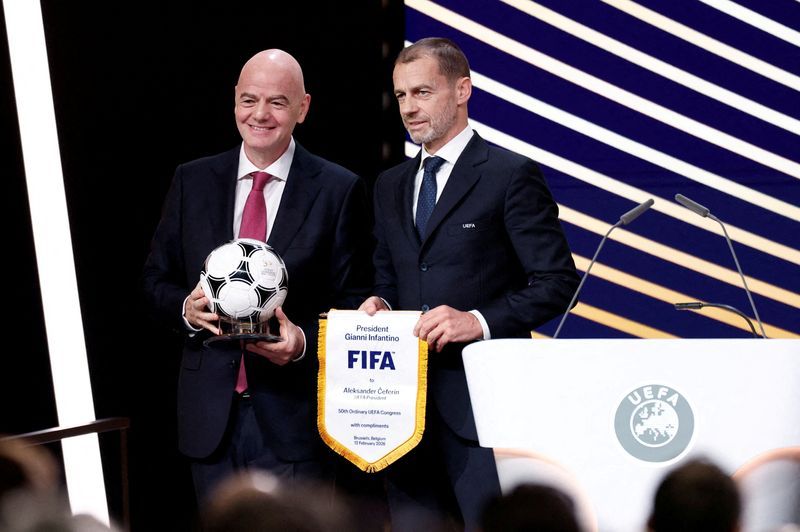
European football's governing body UEFA has launched a court action in the United States to obtain testimony and documents from FIFA entities based in Florida, strengthening its position in anticipated criminal proceedings against FIFA President Gianni Infantino in Switzerland. The move represents an escalation in what has become one of football's most significant governance conflicts, centring on a now-abandoned scheme to transfer commercial rights from multiple World Cup competitions into a newly created subsidiary called FIFA Forward Enterprise.
The proposal at the heart of the dispute would have involved investors acquiring a permanent stake in FIFA's commercial operations. According to UEFA's legal filing, the investment vehicle Thrive Eternal, controlled by Joshua Kushner and affiliated with Thrive Capital, was designated to lead an investor consortium. Under the arrangement, these outside parties would have injected $4.2 billion in exchange for equity in a business valued at approximately $20 billion—a valuation that UEFA contends significantly underpriced FIFA's commercial assets without independent assessment or open bidding processes.
What distinguishes this controversy is the secrecy surrounding the proposal's development. UEFA alleges that Infantino orchestrated the initiative over more than a year in collaboration with a restricted circle of advisers and investors, deliberately circumventing established FIFA governance structures. The confederation asserts that neither FIFA's Council—which holds exclusive statutory authority over commercial rights decisions—nor FIFA's 211 member associations, nor the continental confederations received meaningful consultation before the proposal became public on July 28. This alleged breach of institutional procedure forms the foundation of UEFA's planned criminal complaint, which will cite Article 158 of the Swiss Criminal Code regarding mismanagement.
The discovery of FIFA's Florida entities, including FIFA (AMERICAS), Inc. and FWC2026 US, Inc., is strategically significant because these organisations would hold documentation and personnel testimony regarding how the FFE transaction was conceived, structured, appraised and ultimately advanced through FIFA's decision-making apparatus. By securing US court authorisation for this discovery, UEFA aims to build a comprehensive evidentiary foundation before initiating formal proceedings in Switzerland, where FIFA is headquartered and subject to Swiss law.
Internal resistance to the proposal emerged rapidly once details surfaced. FIFA staff reportedly protested that they had been misled about the scheme's scope, and UEFA notes that FIFA Secretary General Mattias Grafstrom appeared to have been deliberately excluded from the drafting process—a striking omission given his institutional position. These allegations suggest a coordinated effort to control information and prevent institutional oversight from derailing the initiative before it could be presented as fait accompli.
European football's response proved decisive. UEFA's 55 member associations unanimously voted at an emergency meeting on July 30 to withdraw from all FIFA competitions, including the World Cup, should the proposal proceed. This unprecedented threat—targeting football's most prestigious tournament—created sufficient pressure that FIFA formally abandoned the FFE plan on July 31. Infantino subsequently attributed the withdrawal to the divisions it had created, contradicting his earlier characterisation of it as a "golden opportunity" for expanding development funding globally.
However, the scheme's abandonment has not resolved the underlying concerns about institutional accountability. UEFA has secured written FIFA assurances that the FFE project has been "irrevocably and permanently withdrawn," enabling the confederation to suspend its threat of competition boycotts on a provisional basis. This calculated decision allows European teams to participate in upcoming tournaments, including September's Under-20 Women's World Cup in Poland, while preserving UEFA's legal options. The suspension represents tactical restraint rather than full reconciliation.
UEFA's legal strategy reflects deeper anxieties about presidential power within FIFA's structure. The confederation has mandated its officials to pursue "every available institutional, political and legal avenue" to secure systemic reforms and restore meaningful constraints on presidential authority. UEFA has also demanded a genuinely independent external review of the failed proposal, explicitly rejecting FIFA's capacity to investigate itself credibly. This demand underscores scepticism that FIFA's internal processes can adequately address allegations of secretive decision-making and governance breaches.
The financial rationale remains contested. UEFA emphasises that FIFA currently maintains billions of dollars in reserves belonging collectively to member associations, questioning why the FIFA President believed external investors were necessary to expand development funding. This framing transforms the question from technical financing into one of institutional integrity and fiduciary responsibility—why would FIFA leadership pursue outside investment that would dilute member association ownership when substantial capital already existed within the organisation?
Geopolitical alignments within world football have become apparent amid the crisis. While UEFA led the resistance, Infantino retains backing from African and South American confederations. The Saudi Arabian Football Federation publicly endorsed his continued leadership on Thursday, framing support for Infantino as essential to "restore unity across the football family." This fragmentation along continental lines reflects broader tensions within FIFA's governance, with European priorities and institutional concerns colliding with other regional interests.
Infantino has announced his intention to seek a fourth term in March 2027, suggesting that this conflict will shape FIFA's presidential succession contest. UEFA has signalled that it will mobilise member associations to present alternative candidates committed to institutional reform, effectively pledging to contest any future Infantino candidacy. The legal proceedings in Switzerland will likely influence that political calculation, particularly if criminal proceedings yield findings that undermine his leadership credibility among the broader football community.
For Southeast Asian football stakeholders, this institutional conflict carries tangible consequences. FIFA's governance stability affects World Cup qualification structures, development funding mechanisms, and tournament scheduling that directly impact regional confederations and national associations. The tension between presidential authority and member association oversight—which UEFA is now fighting to redefine—will influence how FIFA allocates resources and exercises decision-making power across all continents. The outcome of both the Swiss legal proceedings and the 2027 presidential election will reshape FIFA's governance framework for years ahead.

