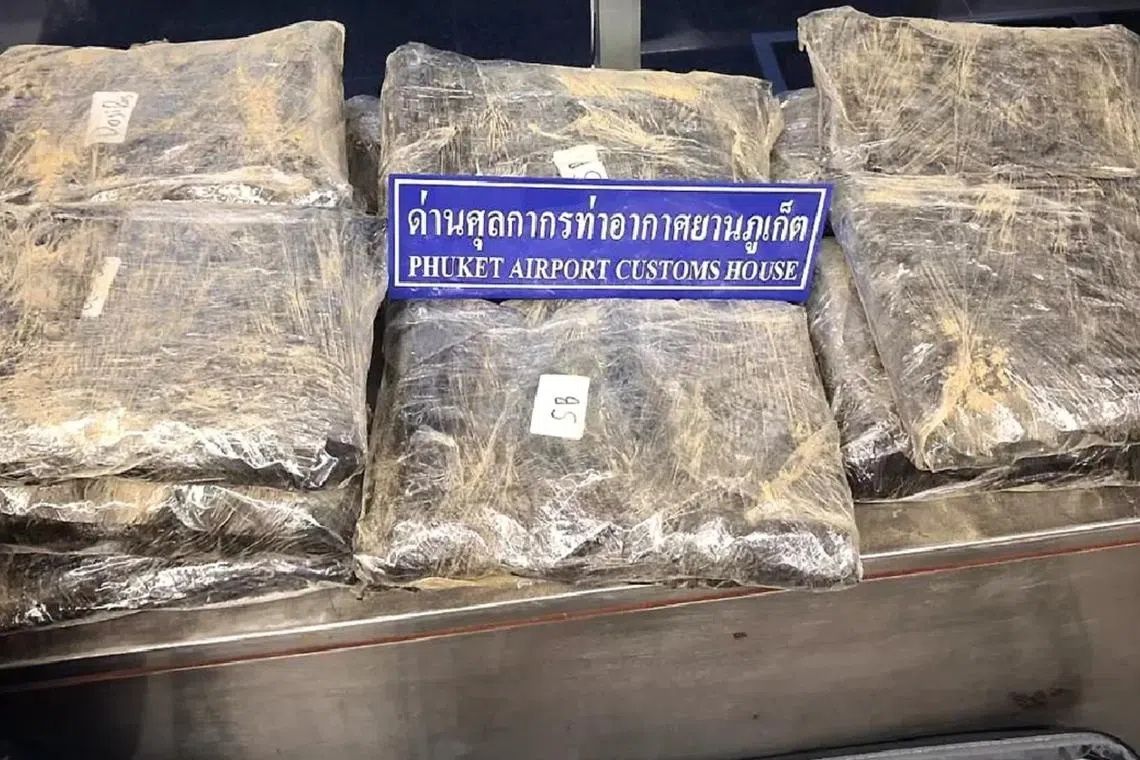
Thai customs authorities apprehended two women at Phuket International Airport after uncovering a significant quantity of cannabis flowers concealed in their checked baggage during routine inspections at the international departures terminal. The coordinated arrests by Phuket Airport Customs House officers and Sakhu Police Station on Thursday revealed separate smuggling attempts involving more than 32 kilograms of the controlled substance, marking another example of organised drug trafficking through Thailand's major transport hubs.
The first incident unfolded around mid-morning when customs inspectors examined luggage belonging to 18-year-old Filipino national Levannah Chelsea Guzman. Upon opening her black Pierre Cardin wheeled suitcase, officers discovered 14 vacuum-sealed packages containing cannabis flowers with a total weight of 14.5 kilograms, including packaging materials. The young woman subsequently confirmed ownership of both the suitcase and its contents during interrogation, providing authorities with clear evidence for prosecution.
Approximately two hours later, a second traveller drew the attention of vigilant customs officials. Penpitcha Phutsiang, a Thai national, was attempting to depart with a green Swish Navy suitcase that appeared suspicious to experienced officers. Inside the container, inspectors discovered 16 vacuum-sealed packages of cannabis flowers totalling 17.6 kilograms in weight. Like her counterpart in the earlier arrest, Phutsiang admitted responsibility for the luggage and its illicit contents.
The legal framework applied to both suspects reflects Thailand's comprehensive approach to drug control and customs enforcement. Authorities charged each woman with violations of the Customs Act BE 2560 (2017), specifically the offence of attempting to export goods without completing required customs clearance procedures. Beyond customs violations, both individuals faced charges under Thailand's Narcotics Code, which carries severe penalties for drug trafficking and smuggling operations. Additional charges were filed under the Protection and Promotion of Traditional Thai Medicine Wisdom Act BE 2542 (1999), a statute sometimes invoked in cannabis cases depending on the specifics of prosecution strategy.
The involvement of a 2025 Public Health Ministry notification concerning controlled herbs demonstrates Thailand's evolving regulatory stance on cannabis products. While Thailand decriminalised low-THC cannabis and hemp cultivation in recent years to support agricultural industries and medical research, the country maintains strict controls on exporting cannabis flowers and high-potency products. The seizures suggest that criminal networks continue to exploit airport vulnerabilities despite intensified enforcement efforts, viewing international smuggling routes through Southeast Asia as profitable ventures despite heightened detection risks.
For Malaysia and neighbouring countries, these arrests underscore the persistent challenge of cannabis trafficking through regional air corridors. The Phuket incident illustrates how Thailand's status as a major transit hub for both licit and illicit goods creates vulnerabilities that smugglers exploit. The coordinated nature of the two arrests—occurring within hours of each other at the same location—suggests either a coincidental clustering of individual smuggling attempts or potentially a more organised operation involving multiple participants and routes.
The sophistication evident in the smuggling method merits attention. Both suspects employed vacuum-sealing techniques commonly used by experienced traffickers to minimise odour detection and conceal the volume of contraband within standard luggage. This approach indicates that operators possess knowledge of inspection procedures and detection methodologies, whether acquired through previous failed attempts or criminal networks sharing operational intelligence.
Thailand's customs authorities have responded to persistent smuggling pressures by implementing stricter outbound baggage inspection protocols across major airports. The Phuket facility, serving millions of international passengers annually, represents a critical enforcement point for preventing drug trafficking that could destabilise neighbouring jurisdictions. Malaysian authorities share interest in Thailand's success at intercepting such shipments before they potentially enter regional drug distribution networks, as seizures at source airports reduce pressure on Malaysian borders and coastal interception operations.
The arrests carry broader implications for understanding cannabis trafficking patterns in Southeast Asia. The participation of both Thai and foreign nationals suggests international criminal cooperation, with the Filipino teenager's involvement indicating potential recruitment by organised syndicates capable of coordinating movements across borders. Such arrangements typically involve individuals with minimal criminal history willing to accept financial incentives or coercion to carry contraband, a model that has evolved considerably as enforcement agencies have improved conventional trafficking interception methods.
Legislative developments in Thailand continue to create tensions between medical and recreational cannabis legalisation objectives and international drug control conventions. While Thai farmers cultivate hemp legally and researchers study cannabis-derived medicines, transnational criminal organisations exploit ambiguities in enforcement and the country's evolving regulatory landscape. The substantial quantity seized—32 kilograms—far exceeds personal consumption thresholds and clearly indicates commercial intent, though the motivations driving export routes remain subjects for investigation.
Both suspects face extended legal proceedings that will establish sentencing parameters through Thailand's courts. The combined evidence and confessions provide prosecutors with substantial foundations for conviction, though appeals and negotiations may extend resolution timelines. For Malaysian observers, these developments reinforce the importance of sustained regional cooperation on drug enforcement, intelligence sharing, and border management strategies that maintain pressure on trafficking organisations operating through Southeast Asian air, maritime, and land routes.
The Phuket arrests demonstrate that despite technological advancement and criminal sophistication, conventional inspection methods remain effective when adequately resourced and consistently applied. Thai authorities' commitment to intensive luggage screening reflects lessons learned from previous years when enforcement resources proved insufficient to match trafficking volumes. As regional drug markets continue evolving and criminal networks adapt tactics, sustained vigilance and inter-agency coordination remain essential for protecting Malaysia and neighbouring nations from transnational narcotics threats.

