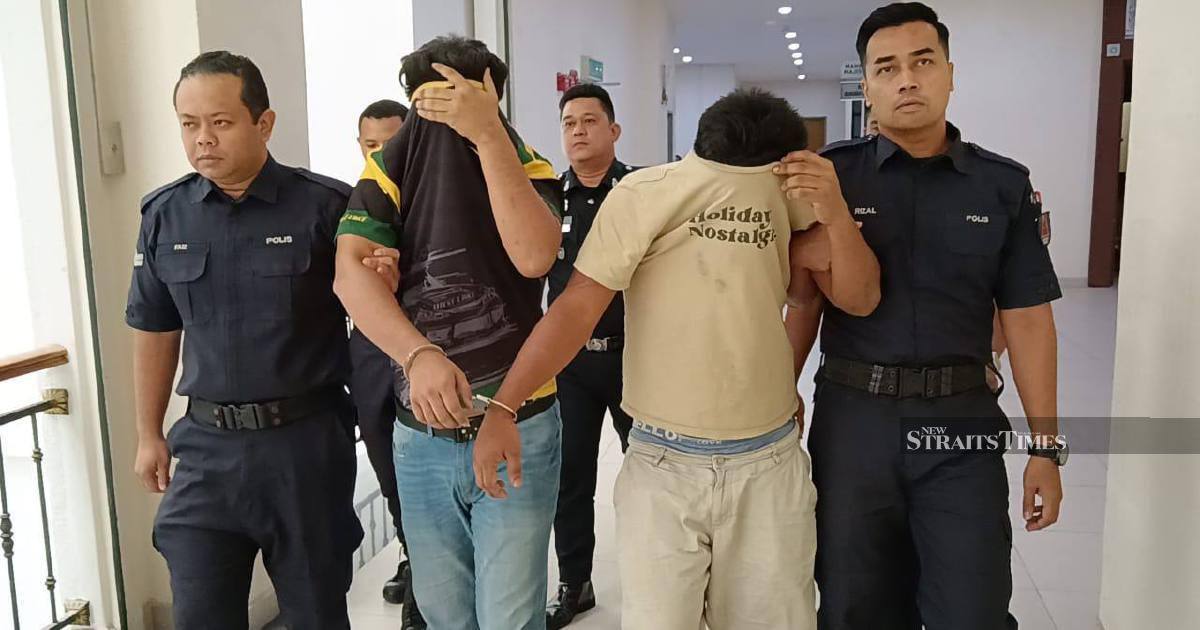
Two Rohingya men registered with the United Nations High Commissioner for Refugees faced charges in Muar Magistrate's Court on Tuesday, accused of involvement in multiple housebreaking incidents that have rattled the residential neighbourhoods across the Johor district. The case highlights growing law enforcement concerns regarding petty crime attributed to undocumented and registered refugee populations in urban centres throughout Malaysia's southern state.
Police investigations into the residential burglaries, which targeted homes across various suburbs in Muar, culminated in the formal charges being laid against both men. The allegations represent part of a broader pattern of property crimes reported to authorities over recent weeks. Residents in affected areas had grown increasingly concerned about security following successive incidents, prompting stepped-up police patrols and investigations by the district's criminal investigation department.
The timing of the charges arrives amid broader public and policy discussions in Malaysia regarding the management of refugee populations and their integration into host communities. The Rohingya, originally from Myanmar's Rakhine State, constitute one of the world's largest displaced populations. Thousands have sought refuge in Malaysia, where they typically reside in urban centres including Kuala Lumpur, Selangor, Johor and Penang, living in densely populated settlements while awaiting processed immigration status.
United Nations High Commissioner for Refugees registration cards serve as primary identity documentation for asylum seekers and refugees awaiting formal status determination. However, possession of such documentation does not confer employment rights or unrestricted freedom of movement under Malaysian immigration law. Cardholders occupy a complex legal position, acknowledged by international humanitarian organizations yet without formal citizenship protections or employment authorization that might provide legitimate income sources.
Malaysia's approach to refugee management has historically involved detention, processing, and dispersal rather than resettlement pathways. The country remains a signatory to the 1951 Refugee Convention but has not ratified the 1967 Protocol, limiting its institutional commitments and creating legal ambiguity. Consequently, many cardholders reside in a prolonged state of limbo, where international status offers minimal practical protection and economic opportunity remains severely constrained.
Socioeconomic pressures facing refugee communities in Malaysian cities have frequently intersected with petty crime patterns. Limited access to formal employment, combined with minimal government social welfare provision and dependence on community and non-governmental organization support, creates conditions where some individuals resort to illegal activities. Law enforcement agencies have reported correlations between undocumented status, poverty and opportunistic crimes including theft and burglary in several urban jurisdictions.
The specific incidents in Muar reflect a microcosm of challenges confronting district-level police forces throughout Malaysia when addressing cross-cutting issues of immigration enforcement, crime prevention and social integration. Local police must simultaneously manage public security concerns, investigate alleged criminal conduct and navigate complex questions regarding refugee rights and humanitarian obligations. These tensions often receive limited attention in national-level policy discussions dominated by border security and illegal immigration narratives.
Court proceedings in Muar will establish specific factual details regarding the allegations, evidence presented by prosecution, and circumstances surrounding each incident. The outcomes may carry implications for how Malaysian authorities and receiving communities approach refugee integration programming and crime prevention strategies. Advocacy organizations serving refugee populations have emphasized that criminal conduct by individual cardholders should not trigger collective punishment or discriminatory enforcement affecting entire communities.
Beyond the immediate legal proceedings, the case underscores ongoing tensions between humanitarian concerns and public order considerations that characterize Malaysia's approach to managing its estimated 180,000 registered refugees and far larger undocumented migrant population. Regional peers including Thailand, Indonesia and Bangladesh similarly grapple with comparable challenges, suggesting that durable solutions require international coordination and burden-sharing mechanisms rather than unilateral national responses. The Muar charges represent a singular incident within broader regional dynamics shaping displacement and protection in Southeast Asia.

