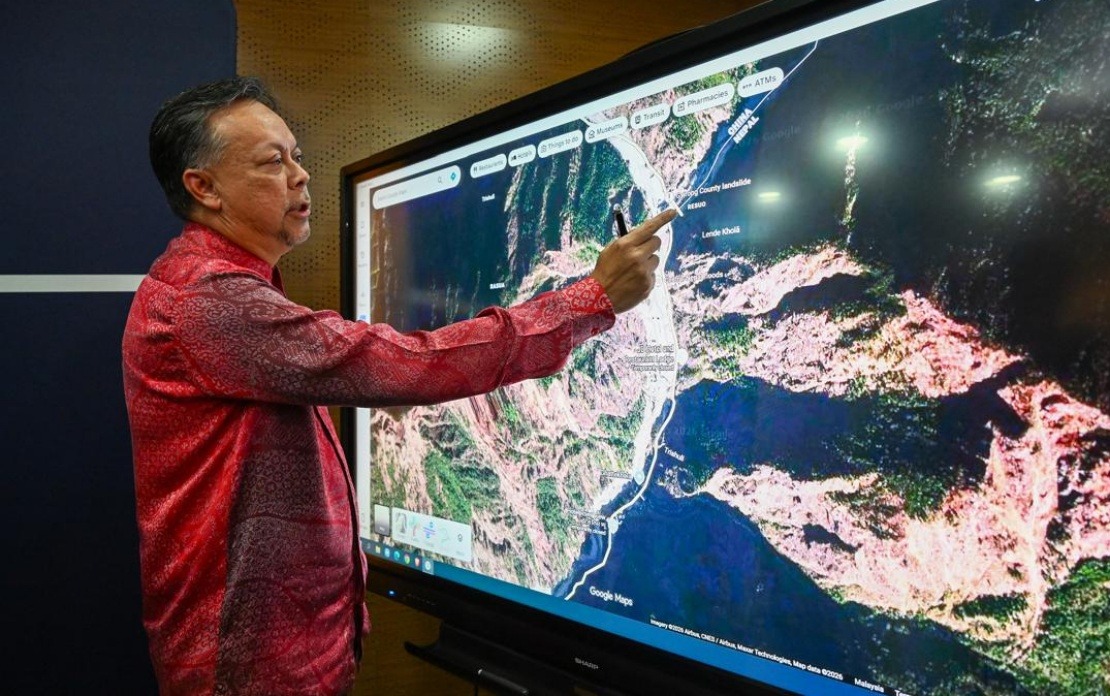
Malaysia's Foreign Ministry reported significant progress in locating missing citizens following catastrophic flooding in Nepal, confirming that two of the 57 Malaysians previously unaccounted for have been found safe, while search operations intensify for the remaining 55 individuals still beyond contact as of Wednesday afternoon. The breakthrough came as the ministry accelerated coordination efforts with Nepalese authorities and deployed additional resources to the affected region.
Datuk Syed Mohamad Hasrin Tengku Hussin, the Deputy Secretary-General for Bilateral Affairs, explained that the two individuals had been successfully identified but were undergoing verification procedures to establish their precise locations and current circumstances. This meticulous cross-checking process reflects the complexity inherent in disaster response operations, where accurate identification remains critical to preventing duplicate entries and ensuring efficient allocation of resources. Officials stressed that confirmation of identity and status must precede public announcements to maintain data integrity and avoid misleading family members with unverified information.
The figure of 55 remaining unreachable Malaysians continues to undergo refinement based on ongoing liaison with Nepalese authorities and relevant agencies. This fluid nature of casualty figures—common in international disasters—underscores the difficulty in establishing precise headcounts when communications infrastructure has been severely compromised. The ministry has been receiving information from multiple sources including tour operators, family reports, and Tourism Malaysia, which creates both comprehensiveness and potential for overlap requiring systematic verification.
Foreign Minister Datuk Seri Mohamad Hasan issued explicit instructions to intensify monitoring and location efforts, prompting the ministry to deploy a coordinator from the Malaysian High Commission in Dhaka to Kathmandu to strengthen embassy operations. This reinforcement signals the gravity with which Malaysia's diplomatic mission is treating the emergency, with the additional personnel focusing on information coordination, situation monitoring, and direct engagement with Nepalese government bodies and emergency response teams. The embassy is collaborating across multiple channels, including the Nepal Tourism Board and private tour operators who possess passenger manifests and client details invaluable for locating missing citizens.
The disaster itself stemmed from an overflow of the Bote Koshi River on August 26, which devastated the Rasua district through cascading flash floods and triggered landslides that destroyed critical infrastructure including roads and bridges. This compounded destruction has fractured communication networks and severed access routes, creating a humanitarian bottleneck that impedes both rescue operations and information gathering. The breakdown of utilities and transport links has effectively isolated affected communities, making ground-level verification of survivor status extraordinarily challenging for both Nepalese and Malaysian authorities.
Nepalese rescue operations have extracted 528 individuals to date, comprising 490 Nepalese citizens and 38 foreign nationals, though no Malaysians have yet been identified among those rescued according to the latest available reports. This statistic raises complex questions about the location patterns of Malaysian tourists and trekkers in the region during the disaster and whether groups may have been dispersed across multiple districts beyond the initial emergency zone. The relatively modest representation of foreigners among rescued persons compared to overall casualty figures suggests significant numbers may still be unreachable or displaced rather than evacuated.
The severity and rapidly evolving nature of conditions in the affected areas present persistent obstacles to systematic search and verification efforts. Nepalese authorities have issued continuing safety warnings regarding potential water overflow from border regions, requiring authorities to balance aggressive rescue efforts against the genuine risk of secondary disasters. Search and rescue operations themselves face constraints from deteriorating weather patterns and widespread infrastructure damage that restricts helicopter access and ground mobility, forcing rescuers to rely on increasingly precarious supply routes.
Malaysia's Foreign Ministry has established a round-the-clock operations centre in Putrajaya to centralize information coordination and family liaison. This facility operates on a 24-hour basis specifically to manage incoming reports, cross-reference them against official lists maintained by both the ministry and Nepalese authorities, and provide families with verified updates on their relatives' status. The operations room received between 12 and 15 inquiries during its opening hours from concerned relatives and friends, establishing a direct communication channel between Malaysian citizens abroad and their home government's emergency response apparatus.
The verification protocol employed by the ministry demonstrates the institutional complexity of international disaster response. Every received call and piece of information undergoes systematic cross-checking against Nepalese authorities' databases and the ministry's own internal records, a process essential for avoiding confusion and duplication that could misdirect rescue resources or inadvertently provide false assurance to waiting families. This methodical approach, while sometimes appearing slow, reflects best practices in disaster management where accuracy ultimately serves the affected population more effectively than rapid but unverified announcements.
Family members and concerned parties have been instructed to contact the operations room with specific details including full legal names, passport numbers, confirmed travel itineraries, last known locations, and available contact numbers. This information architecture enables cross-referencing across multiple systems and databases, transforming disparate reports into actionable intelligence for rescue coordinators. The ministry has publicized dedicated contact channels including a telephone line at +603 8887 4570 and email address [email protected], establishing multiple pathways for information submission from abroad.
The disaster highlights the vulnerability of Malaysian tourists and trekkers operating in the Himalayan region during monsoon season, when weather patterns create annual flooding risks that occasionally escalate beyond predictable bounds. Nepal's geography, combined with its infrastructure constraints and climate vulnerability, creates conditions where regional flooding can rapidly become humanitarian emergencies affecting foreign nationals dispersed across challenging terrain. For Malaysia, this incident reinforces both the importance of maintaining robust diplomatic capacity in South Asian nations and the need for pre-disaster coordination with regional tourism authorities to establish rapid communication protocols.
Coordination between Malaysia's Foreign Ministry and its High Commission in Dhaka reflects the diplomatic architecture by which Malaysia maintains presence across South Asia. The decision to draw upon the Dhaka mission's resources suggests recognition that Bangladesh's infrastructure and communication networks may offer coordinating advantages compared to the immediate disaster zone. This regional diplomatic cooperation exemplifies how ASEAN nations and their diplomatic partners collaborate during cross-border humanitarian crises, demonstrating interconnected systems of mutual assistance that extend beyond Malaysia's direct embassy presence.

