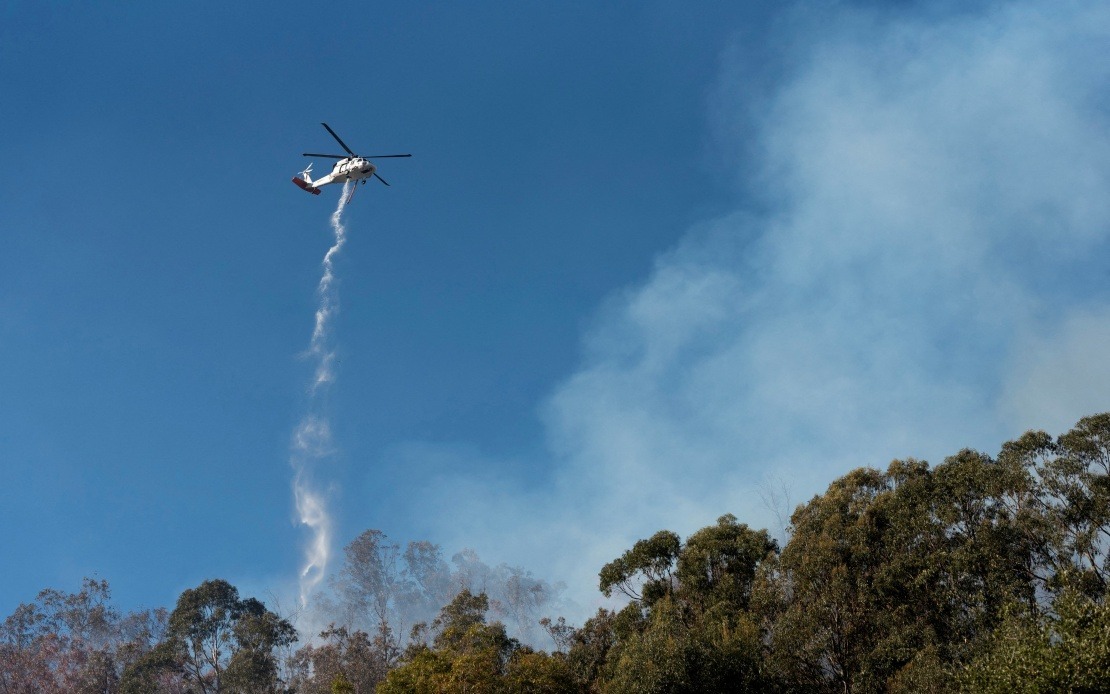
A tragic incident has highlighted the extreme risks faced by wildfire response teams in the United States, with two aviation professionals losing their lives when their helicopter went down in central Utah whilst engaged in aerial firefighting operations. The Sikorsky S-64 aircraft, operating under contract to the US Forest Service, crashed near Richfield at approximately 10 am local time on Friday whilst conducting support missions for the Widemouth 2 Fire. The National Interagency Fire Centre confirmed that the pilot and one crew member perished in the accident, though their identities were not immediately disclosed pending notification of relatives.
The Federal Aviation Administration recorded the location of the crash in remote mountainous terrain, where conditions proved exceptionally challenging for emergency responders attempting to access the wreckage. Initial circumstances surrounding the incident remain unclear, with the National Transportation Safety Board assuming investigative responsibility to determine the precise cause of the structural failure. Preliminary assessments suggest the helicopter encountered difficulties whilst engaged in active firefighting duties, though weather conditions, mechanical factors, and operational challenges all fall within the scope of the ongoing enquiry.
The crash site itself presented additional complications for rescue operations, as the accident ignited secondary fires in the surrounding vegetation, creating fresh hazards that threatened the safety of personnel attempting to reach the aircraft wreckage. The rugged landscape and ongoing fire activity forced authorities to exercise extreme caution in deploying ground crews, resulting in delays that prevented immediate investigation and recovery efforts. This compounding of emergency response challenges underscores how wildfire disasters can cascade into multiple simultaneous crises for emergency services already stretched to operational limits.
Utah Governor Spencer Cox acknowledged the tragedy through an official statement, emphasising that wildland firefighting ranks among the most dangerous occupational categories globally. His remarks reflected the sobering reality that aerial operations constitute a particularly high-risk component of modern fire suppression efforts, requiring extraordinary skill and accepting substantial hazard exposure. The Governor's call for public understanding and support for investigators and emergency responders highlighted the emotional toll such incidents inflict upon communities and government agencies alike.
The Widemouth 2 Fire itself represents a significant natural disaster for the state, originating on 27 July when lightning strikes ignited dry vegetation on the Fishlake National Forest in the Kanosh vicinity. Subsequent conditions proved catastrophically favourable for fire propagation, with sustained high temperatures, critically low humidity levels, and unpredictable wind patterns enabling rapid expansion across the landscape. The fire forced residents from their homes and resulted in substantial property damage, with official documentation confirming the destruction of at least six structures across the affected region.
As of the latest assessment, the Widemouth 2 Fire had consumed more than 114,000 acres—an expanse exceeding 461 square kilometres—whilst containment efforts achieved only approximately 24 per cent control. Utah Fire Info, the state's interagency wildfire information system, documented the ongoing battle against this major conflagration, reflecting the intensive resources devoted to suppression activities. The scale of the fire and the relatively modest containment progress indicate the substantial challenge confronting firefighting personnel and equipment.
The helicopter accident raises broader questions about aviation safety in wildfire response operations and the sustainability of current operational protocols. Aerial firefighting platforms represent critical infrastructure for large-scale fire suppression, offering capabilities that ground-based resources cannot provide, particularly for accessing remote or inaccessible terrain. However, the inherent risks of low-level flying in mountainous landscapes during conditions of active combustion present persistent operational hazards that no amount of training can entirely eliminate.
For Malaysian and Southeast Asian observers, the Utah tragedy carries particular relevance given the increasing frequency and severity of regional wildfire events. Indonesia's recurring transboundary haze episodes and similar fire management challenges across the broader region demonstrate that wildfire suppression represents a critical infrastructure sector requiring sustained investment, skilled personnel, and sophisticated equipment. The incident underscores the human cost of environmental disasters and the necessity for comprehensive regional cooperation frameworks addressing cross-border fire management.
The investigation proceeding under National Transportation Safety Board direction will eventually produce findings that may inform safety enhancements across the aviation firefighting industry. Such institutional learning processes, when effectively implemented, can gradually reduce operational risk through equipment modifications, procedural refinements, and pilot training protocols. However, the fundamental vulnerability of aircraft operating in extreme environments remains an intractable challenge that emergency services must continually manage through careful risk assessment and rigorous operational discipline.
The broader implication of this tragedy extends beyond the immediate investigation to encompass societal recognition of the extraordinary sacrifices made by emergency responders operating at the frontiers of human capability. The willingness of aviation professionals to accept substantial personal risk whilst executing critical public protection missions merits appropriate acknowledgment and support from communities whose residents and infrastructure benefit from their expertise and courage.

