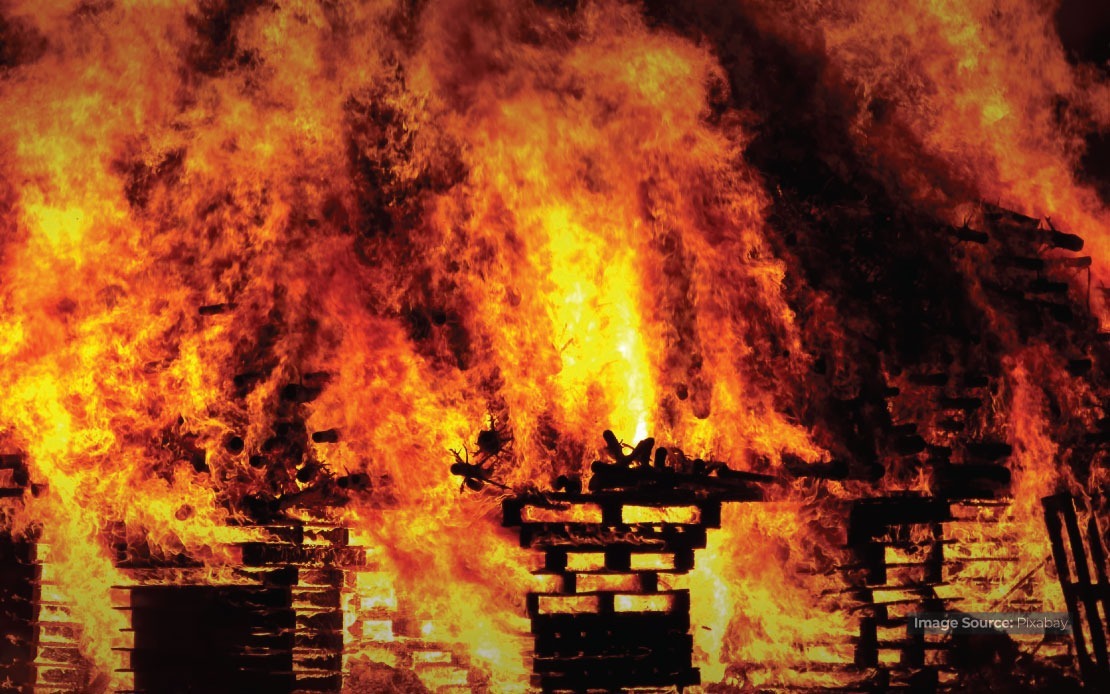
Tragedy struck southwestern France on Tuesday when two firefighters perished while responding to a major fire that broke out in the vicinity of Bordeaux Airport. French Interior Minister Laurent Nuñez confirmed the deaths in a statement to parliament, indicating that both personnel fell victim to the blaze while engaged in firefighting operations at two buildings located near the airport's long-term parking zone. The incident represents a sobering reminder of the dangers confronted by emergency service workers during extreme weather conditions and fire emergencies across Europe.
According to regional media outlet Sud Ouest, the fire initially ignited on a plot of land adjacent to the airport's long-term parking facilities. The exact cause of the fire remains under investigation, though investigators are examining whether the extreme heat and dry conditions affecting the region contributed to its rapid spread. The location near the airport presented additional challenges to firefighting personnel, as the proximity to critical aviation infrastructure required coordinated efforts to prevent the blaze from spreading to operational areas.
The Gironde region, which encompasses Bordeaux as its administrative capital, is currently operating under the most severe alert level—designated red-level wildfire warning—due to exceptionally high risks of forest fires across the territory. This classification reflects the dangerous combination of elevated temperatures, low humidity levels, and dry vegetation that has transformed much of southwestern France into a tinderbox. The timing of this incident coincides with France's broader struggle against multiple wildfires during an unusually intense summer season, placing enormous strain on emergency services.
Airport operations experienced partial disruption in the immediate aftermath of the fire. Departing flights were temporarily grounded as authorities prioritised safety protocols and ensured that emergency vehicles and personnel could access the affected areas without impediment. However, officials maintained that incoming aircraft were permitted to land, allowing the airport to continue receiving international arrivals. A scheduled evening departure bound for Munich proceeded according to plan, suggesting that airport management successfully contained the impact on overall flight operations.
The response to the emergency mobilised multiple layers of fire suppression resources. Beyond the dedicated firefighting personnel stationed directly at the airport, the Gironde regional fire service dispatched additional crews to augment on-site efforts. The airport's internal firefighting unit collaborated actively with regional authorities, pooling equipment and expertise to combat the advancing flames. This multi-agency coordination reflects established protocols designed to leverage all available resources during major incidents affecting sensitive infrastructure.
Beyond ground-based operations, authorities deployed an aerial firefighting aircraft to assist in containing the blaze and preventing its expansion. Such aircraft, equipped with water-dropping capabilities, provide critical support in combating large-scale fires that exceed the capacity of conventional ground-based suppression methods. The deployment underscores the severity of the incident and the determination of French authorities to prevent further loss of life and property damage.
The fire generated dramatic visual evidence of its intensity, with towering plumes of smoke rising visibly across the broader Bordeaux metropolitan area. Residents throughout the city witnessed these substantial columns during peak firefighting efforts, serving as a stark visual indicator of the emergency unfolding at the airport. Such visible manifestations of the blaze heightened public awareness of the acute fire risk confronting the region during this period of extreme weather conditions.
This tragedy underscores persistent vulnerabilities faced by firefighters across Europe as climate patterns shift and extreme weather events become more frequent and intense. Malaysia and other Southeast Asian nations, while geographically distant, can draw relevant lessons from European emergency management experiences, particularly regarding resource allocation, inter-agency coordination, and worker safety during crises. The incident demonstrates how rapidly dangerous situations can escalate even at developed airport facilities with sophisticated infrastructure and emergency response systems.
The deaths represent a significant loss for French emergency services and serve as a poignant reminder of the sacrifices made daily by firefighting personnel. Families and colleagues of the deceased will undoubtedly grapple with profound grief, while the broader firefighting community reflects on the hazardous nature of their profession. Such incidents typically trigger formal investigations aimed at identifying contributing factors and implementing preventative measures to mitigate future risks to emergency responders.

