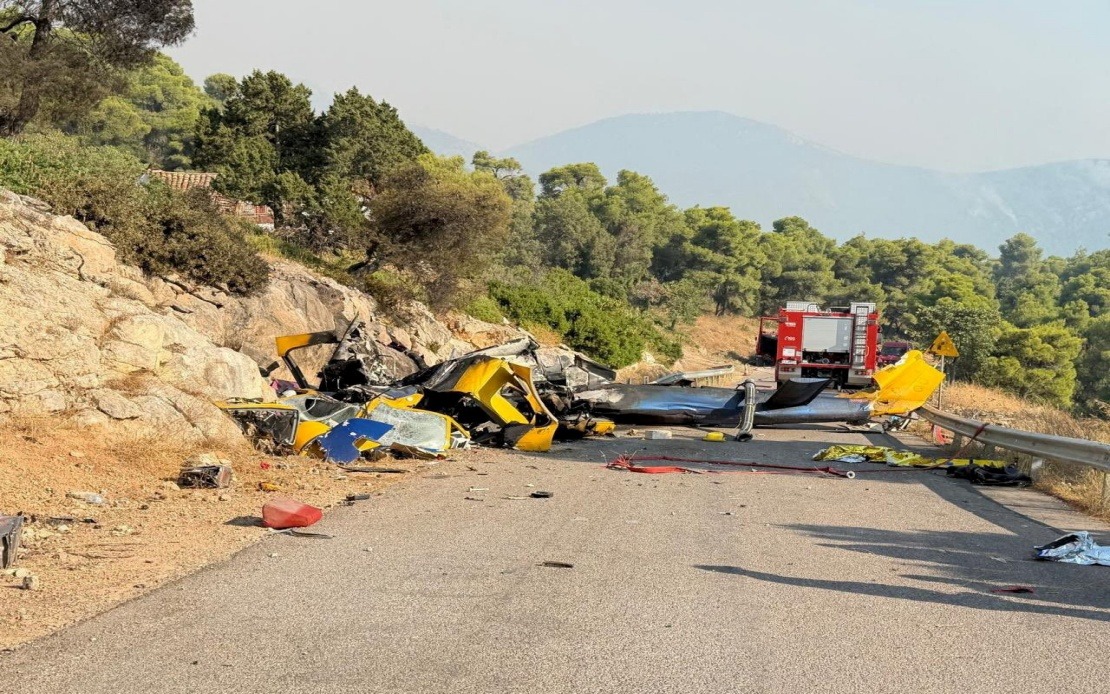
A tragic collision between two firefighting helicopters has claimed the lives of two crew members as Greece struggles to contain multiple large wildfires spreading across the country. The Bell helicopters struck each other while conducting aerial firefighting operations over western Attica on Sunday, crashing near the coastal area of Psatha and triggering an immediate search and rescue operation. The incident underscores the mounting toll of emergency operations as Mediterranean nations face intensifying wildfire seasons driven by climate change and extreme weather conditions.
Greek Fire Service spokesperson Vassilis Vathrakogiannis confirmed at a press briefing that a Danish pilot and a Greek firefighting coordinator were killed in the collision. The fatalities represent a significant loss for international firefighting efforts in Europe, where coordination between different nations and aviation operators has become increasingly critical during peak fire seasons. Authorities identified the survivors as a British pilot and another Greek firefighting coordinator, with one sustaining injuries from the crash.
Each helicopter carried a crew of two personnel, both aircraft owned by private contractors hired to augment Greece's firefighting capabilities. The use of rented helicopters reflects the strain placed on national emergency services when confronted with catastrophic wildfires of the scale currently ravaging Attica and Boeotia. These contracted aircraft represent a significant portion of Greece's aerial firefighting arsenal, yet the incident highlights the operational risks involved in deploying multiple aircraft simultaneously in challenging conditions.
The exact cause of the mid-air collision remains under investigation by Greek authorities, though preliminary assessments suggest the incident occurred during an active firefighting mission. Investigation teams will examine factors including communication protocols between aircraft, air traffic control procedures, visibility conditions at the time, and weather patterns in the vicinity of the collision. The proximity of the crash site near Psatha—a coastal settlement—raises questions about airspace coordination in densely populated regions where firefighting operations must balance rapid response with public safety.
Greece has been battling an unprecedented surge in wildfires this summer, with multiple large blazes simultaneously consuming vast tracts of forest and inhabited areas across the country. The conditions fuelling these fires—extreme heat, prolonged drought, and strong winds—create exceptionally difficult circumstances for both ground-based and aerial firefighting operations. Temperatures have repeatedly exceeded 40 degrees Celsius in affected regions, and low humidity levels have rendered vegetation highly combustible, transforming large portions of the landscape into tinderboxes.
The collision underscores broader challenges facing firefighting services across the Eastern Mediterranean and Southeast Europe, regions increasingly vulnerable to climate-induced wildfire seasons. The intensity and frequency of such fires have strained resources in ways that conventional emergency services alone cannot manage, necessitating international cooperation and private sector involvement. Malaysia and other Southeast Asian nations, which face similar fire threats during dry seasons, can observe how European nations grapple with these escalating emergencies and the coordination complexities they entail.
For Malaysia's civil aviation and emergency management sectors, the incident offers instructive lessons about airspace coordination during crisis operations. The Malaysian aviation authority and civil protection agencies engage similar protocols when deploying multiple aircraft for disaster response, whether during flood rescue operations or wildfire management. The Greek incident demonstrates that even well-coordinated international firefighting efforts remain vulnerable to catastrophic accidents when multiple aircraft operate in proximity under challenging meteorological and operational conditions.
The deployment of foreign aircraft in Greek firefighting operations reflects how European nations increasingly share resources during emergencies, a practice that extends beyond bilateral arrangements to include NATO support and European Union mutual aid mechanisms. This regional cooperation model, while effective in distributing the burden of large-scale disasters, introduces complexity in command structures and communication protocols that this incident may have exposed. Post-incident analysis will likely influence how future international firefighting missions are coordinated across Europe and potentially inform best practices adopted by other regions.
The psychological and operational impact of the collision will reverberate through firefighting communities across Europe, potentially affecting recruitment and retention in an already challenging field. Helicopter pilots and ground coordinators accept substantial risks in conducting aerial firefighting operations, particularly when visibility is compromised and thermal conditions create unpredictable air movement. The loss of experienced personnel, particularly pilots with international credentials, represents a reduction in the institutional knowledge and capability available for future operations.
As investigations proceed, the focus will shift toward identifying systemic improvements that could prevent similar incidents. Potential areas of examination include enhanced separation protocols between aircraft, improved real-time communication systems, terrain mapping technologies adapted for low-visibility conditions, and training standards for multinational crews operating in high-stress environments. Regulatory bodies across Europe may implement new requirements for helicopter operators engaged in firefighting missions, setting precedents that influence international aviation standards.
The tragedy also highlights an often-overlooked aspect of climate change impacts: the human cost of emergency response operations themselves. As climate change intensifies weather extremes and expands the geographic scope and duration of fire seasons, the demand for aerial firefighting capabilities will only increase. Yet the infrastructure, training, and personnel required to safely conduct such operations have not scaled proportionally, creating dangerous situations where the pressure to respond rapidly conflicts with the prudent management of operational risk.
In the broader context, this incident serves as a sombre reminder that environmental crises do not merely threaten ecosystems and populations directly exposed to disasters—they also claim lives within the emergency services attempting to mitigate those disasters. For regional policymakers in Southeast Asia monitoring global trends, the Greek firefighting collision exemplifies how climate-driven emergencies cascade through multiple sectors, ultimately threatening the personnel and systems upon which society depends for protection.

