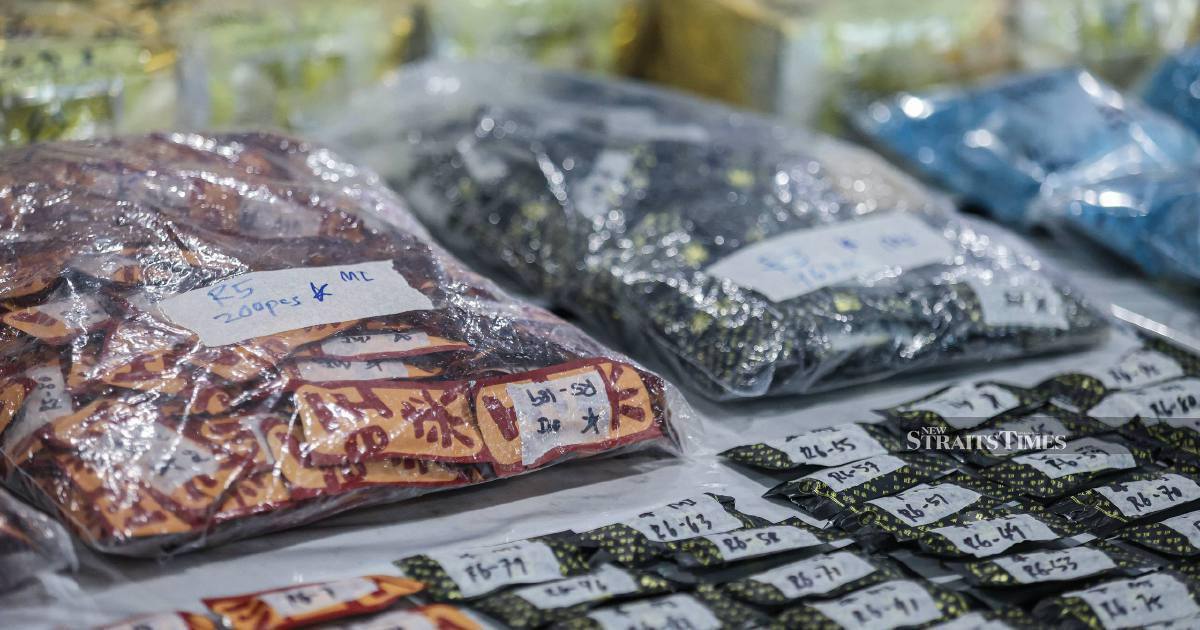
Maritime authorities in Johor Baru have made a significant drug interception, arresting two brothers who were allegedly attempting to smuggle illicit substances valued at more than RM6.85 million across sea routes to an adjacent nation. The Malaysian Maritime Enforcement Agency (MMEA) apprehended the suspects on Sunday during an operation that resulted in the seizure of a drug designated as 'Piu Piu,' marking another addition to the expanding catalogue of synthetic narcotics circulating through Southeast Asian waters.
The emergence of 'Piu Piu' represents a concerning trend in the region's drug trafficking landscape. While traditional narcotics have long dominated enforcement operations across Malaysia, law enforcement agencies have increasingly encountered novel psychoactive substances and designer drugs that often evade existing legislation or detection methods. The naming convention itself, combining two identical syllables, suggests street-level marketing tactics common among traffickers seeking to create memorable brand identities that resonate with consumers and facilitate peer-to-peer distribution networks.
The scale of the bust underscores the continued vulnerability of Malaysian maritime borders, despite substantial investments in coastal surveillance infrastructure. Johor's geographic position along major shipping lanes and proximity to Singapore and Indonesia creates an ideal environment for transnational smuggling operations. The state's extensive coastline, interspersed with remote anchorages and lesser-monitored waterways, remains an persistent challenge for border enforcement agencies attempting to maintain comprehensive maritime domain awareness.
The MMEA's Sunday operation demonstrates proactive intelligence gathering and interdiction capabilities. The agency has increasingly deployed vessel interception tactics and enhanced maritime patrols along high-risk trafficking corridors. However, the continued success of smuggling attempts suggests that criminal organisations maintain sophisticated operational planning, including timing mechanisms, route selection, and counter-surveillance methodologies that allow them to occasionally circumvent detection systems.
From a trafficking perspective, the selection of maritime routes for this operation reflects established logistical patterns. Drug trafficking organisations operating across the Strait of Johor and neighbouring waters frequently choose sea routes to avoid land-based checkpoints and vehicle inspections, particularly when transporting high-value shipments. The oceanic environment provides concealment opportunities and multiple escape routes should law enforcement presence emerge unexpectedly during transit.
The arrest of the two brothers potentially disrupts a supply chain segment, though enforcement specialists recognise that dismantling individual operations produces limited systemic impact on overall trafficking flows. These suspects likely represent mid-level operatives within broader smuggling networks, handling logistics, transport, and coordination rather than manufacturing or wholesale distribution functions. Consequently, their removal from circulation, while tactically valuable, typically triggers replacement by successor cells within the same criminal hierarchy.
The RM6.85 million valuation merits careful consideration. Street-level valuations frequently reflect significant markup premiums incorporated during successive distribution stages. The wholesale cost to trafficking organisations would typically represent a fraction of this figure, suggesting the seized quantity was destined for retail fragmentation and consumer-level sales. Understanding this economic structure proves essential for comprehending trafficking network profitability and the financial incentives motivating participation across various operational levels.
For Malaysian readers, this seizure carries implications extending beyond narcotics enforcement. The incident highlights ongoing tensions between national sovereignty and transnational criminal enterprises that exploit permeable borders and regulatory gaps. Rising drug seizure quantities and the appearance of novel substances indicate that Malaysia remains embedded within complex regional trafficking systems that funnel narcotics from source regions in Southeast Asia toward consumer markets throughout the region and beyond.
The case also illuminates coordination mechanisms within law enforcement. The MMEA's operational success depends upon intelligence sharing arrangements with other agencies, including the Royal Malaysia Police, Customs, and international counterparts. Enhanced cross-border cooperation frameworks, particularly involving Indonesian and Singaporean authorities, remain critical for monitoring trafficking corridors and preventing smugglers from exploiting jurisdictional boundaries.
Looking forward, the continued prevalence of maritime drug smuggling suggests that enforcement agencies must maintain adaptive strategies reflecting evolving trafficking methodologies. Investments in advanced surveillance technology, improved port security protocols, and enhanced intelligence analysis capabilities will determine whether law enforcement can maintain operational tempo matching the scale and sophistication of criminal activity. The arrest of these two brothers represents a tactical victory, but the broader struggle against organised narcotics trafficking requires sustained commitment and resources across maritime law enforcement agencies throughout Southeast Asia.

