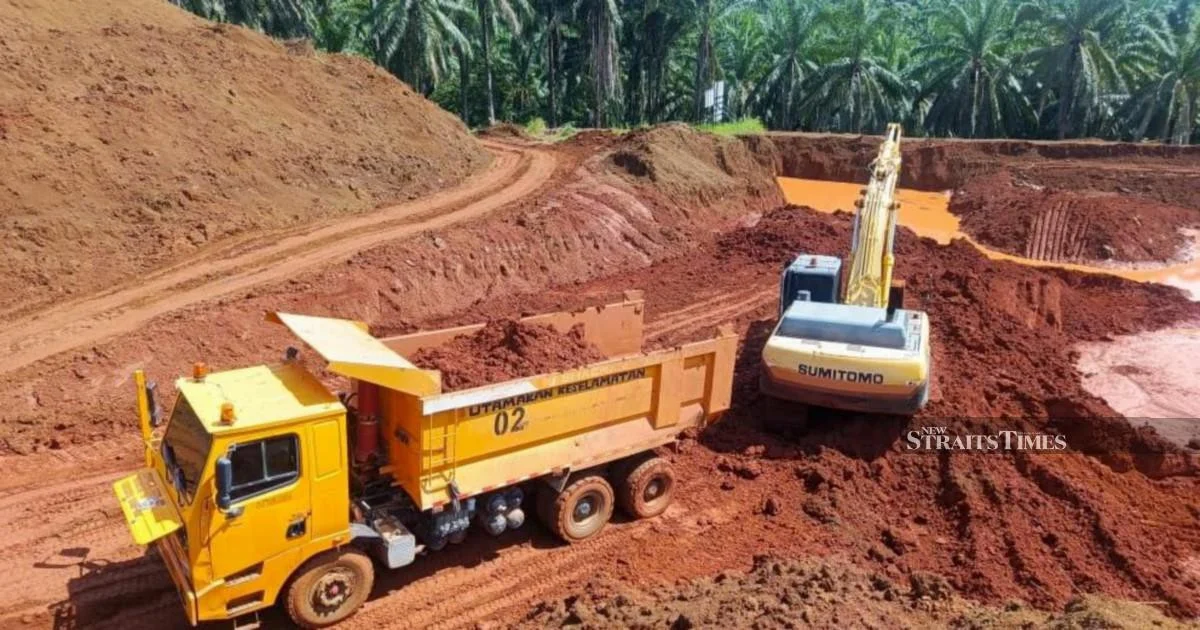
Enforcement authorities in Terengganu have made significant headway in combating illegal mining operations following the arrest of two suspects involved in the unlawful transfer of silica sand in Marang. The operation, which culminated in yesterday's arrests, represents a growing crackdown on unauthorized extraction and movement of mineral resources in the state, a problem that has plagued enforcement agencies across Malaysia's resource-rich regions.
The confiscation of machinery and equipment totalling RM1.8 million underscores the scale and sophistication of illegal mining networks operating in the area. Such operations typically involve complex supply chains, from extraction sites through to transfer points and final buyers, with multiple actors benefiting at each stage. The equipment seized suggests these suspects were not merely small-scale opportunists but rather part of a more organized structure designed to evade regulatory oversight and export restrictions.
Silica sand holds significant commercial value across multiple industries, from construction and glass manufacturing to semiconductor production and foundry work. Malaysia's silica sand deposits, particularly concentrated in states like Terengganu, Perlis, and Johor, represent valuable natural resources that attract both legitimate industrial users and illicit operators seeking to circumvent licensing requirements and royalty payments to state authorities. The economic incentive to operate outside the formal regulatory framework remains substantial, especially when international demand and prices are favourable.
The arrest highlights the persistent challenge facing authorities in monitoring and controlling mineral extraction across Malaysia. Enforcement agencies must contend with numerous unauthorized mining sites scattered across rural and forested areas where surveillance capacity is limited. Illegal operators often exploit these geographical advantages, establishing temporary facilities that can be quickly dismantled and relocated if detection becomes imminent. The sophistication of enforcement required to detect, investigate, and successfully prosecute these operations places significant demands on already stretched resources.
From a Malaysian perspective, this case illustrates the broader tension between resource extraction and environmental sustainability. Unregulated silica sand mining can cause substantial environmental degradation, including habitat destruction, soil erosion, and water table disruption. Unlike licensed operations subject to environmental impact assessments and rehabilitation requirements, illegal mining imposes uncompensated environmental costs on local communities whilst generating private profits for operators. Terengganu's experience reflects challenges facing multiple states where natural resource wealth has made illegal extraction an attractive but destructive economic activity.
The regional context amplifies these concerns. Southeast Asia has become a significant source of illegally extracted minerals and sand destined for international markets, particularly in Asia-Pacific construction and manufacturing sectors. Malaysia's position as a relatively developed economy with established port infrastructure makes it an attractive transit point for illicit mineral operations. Stemming this flow requires not only domestic enforcement but also coordination with neighbouring countries and trading partners to reduce demand for illegally sourced materials.
These enforcement actions send important signals about the government's commitment to controlling unauthorized resource extraction. However, successful long-term prevention requires complementary strategies beyond arrest and seizure. Strengthening licensing frameworks, enhancing surveillance through technology like drone monitoring, increasing penalties to genuinely deter participation, and providing economic alternatives for communities dependent on informal mining all represent components of a comprehensive approach. The authorities' success in this operation depended on intelligence gathering and coordination between enforcement bodies, suggesting operational capacity exists but may require expansion to address the scale of the problem.
The financial scale of seized equipment also indicates the profitability driving these operations. When machinery and tools worth RM1.8 million can be deployed in a single illegal operation, the returns must justify the investment and associated risks. This suggests these suspects anticipated substantial revenue that would compensate them for potential law enforcement action. Understanding the economic structure of these networks—identifying major buyers, tracking financial flows, and disrupting profitable markets—may ultimately prove more effective than case-by-case arrests.
For Terengganu's development trajectory, managing natural resource extraction responsibly remains crucial. The state has positioned itself as a key industrial hub, and the reputation for lawlessness surrounding mineral operations could undermine legitimate business confidence and investment attraction. Conversely, demonstrating effective governance over resource extraction enhances credibility with investors and the international business community seeking reliable supply chain partners.
Moving forward, this arrest should prompt consideration of whether current penalties sufficiently deter participation in illegal mining. If fines and imprisonment terms remain modest relative to potential profits, rational actors will continue calculating risk-reward calculations favourably toward illegal operation. Additionally, investigation outcomes should illuminate the broader network—identifying which operators were purchasing the illegally transferred sand and whether organized crime elements are involved, questions that will determine whether this represents significant progress or merely the removal of a few participants from a much larger system.

