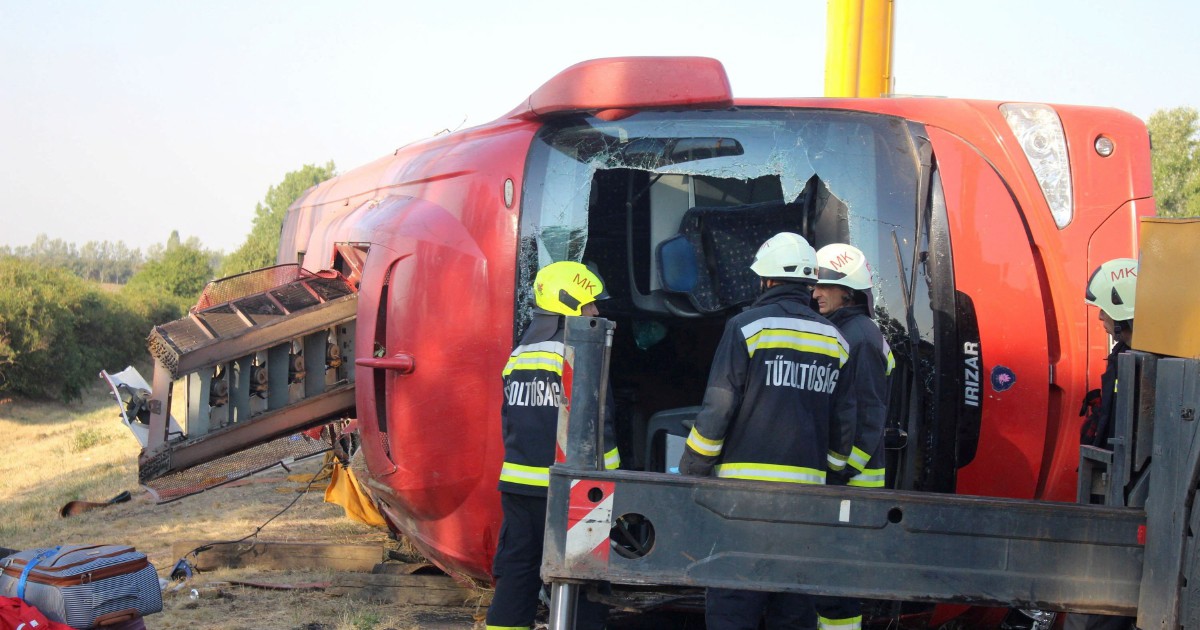
A tragic road accident in Hungary has claimed a dozen lives and left multiple passengers fighting for survival after a Polish coach veered off a motorway in the early hours of Sunday morning. The incident, which unfolded on a Hungarian highway, resulted in the overturning of the passenger vehicle and triggered an emergency response across the border region. Hungarian Prime Minister Peter Magyar confirmed the casualty figures, emphasizing the scale of what has become one of the deadliest transport accidents in the region in recent memory.
The severity of the collision, which left at least ten people sustaining serious injuries, has raised immediate questions about road safety conditions and the circumstances that preceded the rollover. Emergency services, including ambulances and rescue teams, mobilized quickly to the scene to extract survivors from the wreckage and provide medical assistance. Hospitals across the affected area prepared to handle the influx of trauma victims, with medical personnel coordinating to treat injuries ranging from critical to moderate conditions.
Polish coach travel services form a vital part of transportation networks across Central and Eastern Europe, with thousands of passengers regularly undertaking long-distance journeys between countries. The incident highlights ongoing concerns about passenger safety during extended journeys, particularly when vehicles traverse unfamiliar terrain or navigate motorways in darkness. Such accidents, while statistically uncommon, carry devastating human consequences and often prompt reviews of operational standards and driver protocols across the transport sector.
The timing of the accident early Sunday morning suggests the coach may have been operating as part of an overnight or early-morning service. Driver fatigue, which remains a persistent challenge in long-distance coach operations, frequently emerges as a contributing factor in motorway accidents. European regulations stipulate mandatory rest periods and working hour limits for professional drivers, yet enforcement varies across jurisdictions and some operators continue to push delivery schedules that strain driver wellbeing.
Hungary's position as a major transit corridor for European road transport means its motorways experience heavy traffic volumes carrying vehicles registered across multiple countries. This interconnected transport ecosystem, while economically beneficial for regional trade and tourism, also concentrates accident risk on key highway routes. Infrastructure maintenance, road markings, and safety barriers all play critical roles in preventing such tragedies, and investigations into the overturning will likely scrutinize whether the motorway met current safety standards.
For Malaysian readers and broader Southeast Asian observers, this incident offers sobering parallels to transport safety challenges that persist within the region. Long-distance coach travel remains popular throughout Southeast Asia, where similar pressures regarding schedules, driver compensation, and vehicle maintenance create comparable risk environments. The European accident underscores universal vulnerabilities in commercial passenger transport regardless of geographic location, suggesting that safety improvements require sustained attention across all markets.
The identification of victims and notification of families represents an immediate humanitarian priority following such accidents. Consular officials from Poland would be expected to coordinate with Hungarian authorities to facilitate repatriation and provide support to affected families. The broader Polish community across Europe, and particularly those with personal connections to coach travel services, faces heightened anxiety in the aftermath of such tragedy.
Investigators will likely examine vehicle maintenance records, including tire condition, brake systems, and structural integrity. Meteorological data, traffic conditions, and the coach's speed at the moment of overturning will feature prominently in reconstruction efforts. Witness statements from surviving passengers and other motorway users will provide crucial details about events immediately preceding the accident. Such comprehensive investigations typically require weeks or months to conclude, and findings often influence regulatory changes or enforcement priorities within transport authorities.
The accident occurs within a broader context of evolving European transport safety initiatives. The European Union continues implementing measures designed to enhance road safety, including advanced driver monitoring systems, vehicle stability technology, and stricter licensing requirements. Nevertheless, human factors—fatigue, distraction, and miscalculation—remain challenging to eliminate entirely despite technological improvements. This particular incident will likely feature in safety training programs and industry discussions regarding best practices for long-distance coach operations.
Polish coach operators serve extensive European networks, and the reputation of the entire sector faces scrutiny following such accidents. Insurance investigations, potential litigation, and regulatory reviews will consume considerable time and resources. For the families of victims, the loss represents an unquantifiable tragedy that extends far beyond insurance settlements or official inquiries. The broader travel community across Central Europe faces renewed attention to safety protocols that may reshape operational procedures and influence passenger decision-making regarding coach travel alternatives.

