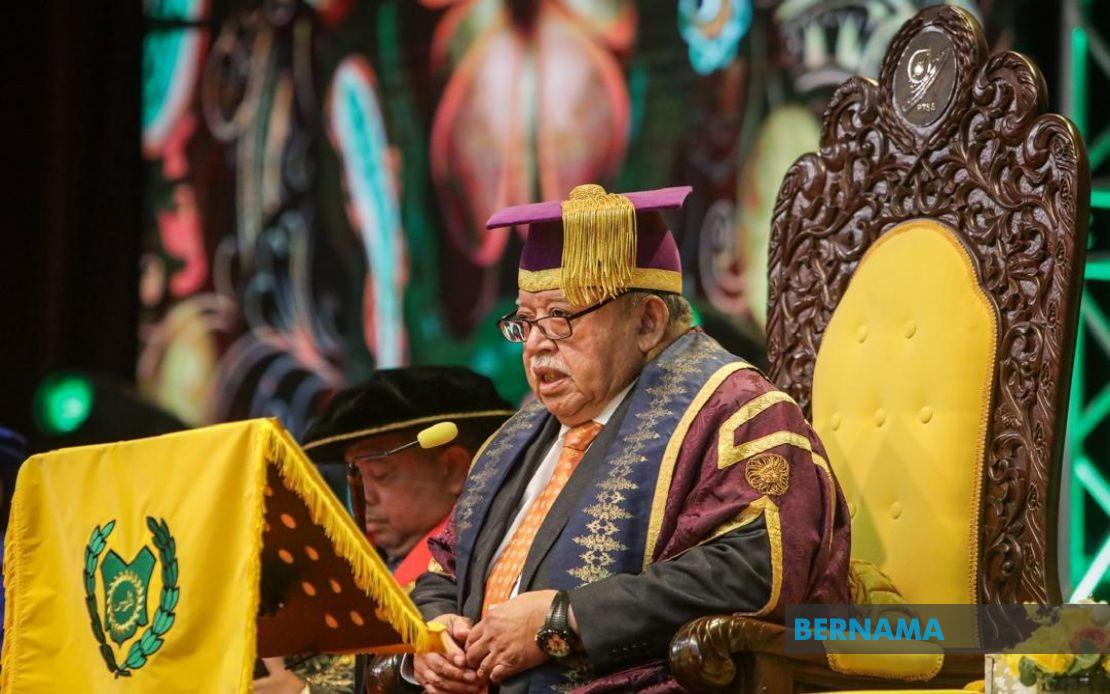
At a convocation ceremony in Perlis, the nation's technical and vocational education sector has been positioned as fundamental to developing the skilled workforce required for Malaysia's economic advancement in an increasingly complex global environment. The Raja of Perlis, Tuanku Syed Sirajuddin Jamalullail, delivered this message while presiding over the 2026 Northern Zone Polytechnic and Community College Convocation Ceremony, underscoring how TVET institutions must serve as incubators for both technical competency and creative thinking among graduates.
The Ruler's remarks come at a critical juncture when Malaysia's economy faces mounting pressure to transition toward higher-value sectors dominated by emerging technologies. He observed that innovation has ceased to be a strategic luxury and has instead become essential infrastructure for national competitiveness. His emphasis reflects broader regional concerns that Southeast Asian economies risk falling behind in the global technology race unless their education systems produce graduates capable of mastering and adapting to rapid industrial change.
Tuanku Syed Sirajuddin identified artificial intelligence, automation, robotics and digitalisation as transformative forces fundamentally reshaping employment patterns and industrial structures across sectors. These technologies are not merely incremental improvements but represent paradigm shifts that will determine which nations and enterprises thrive in coming decades. For Malaysia, the challenge is particularly acute given competition from neighbouring economies similarly racing to position themselves as technology hubs. The Ruler's focus on nurturing an innovation culture within polytechnic institutions suggests recognition that technical colleges must evolve beyond providing basic trade skills to become laboratories for problem-solving and technological adaptation.
The Ruler distinguished between superficial innovation and meaningful problem-solving, emphasizing that genuine innovation involves translating theoretical concepts into practical solutions that deliver tangible benefits to communities and contribute to national development objectives. This distinction proves crucial for Malaysia, where a substantial gap often exists between technical capability and the ability to commercialize or deploy innovations effectively. Polytechnics and community colleges must therefore embed entrepreneurial thinking and systems-level problem-solving within their curricula, preparing graduates to operate in environments where they must identify market needs and develop appropriate technological responses.
Equally significant in the Ruler's message was his insistence that technical expertise cannot exist in moral or ethical isolation. He cautioned graduates against prioritizing knowledge acquisition while neglecting character development, integrity and patriotic commitment to national welfare. This perspective challenges a common perception that technical education focuses narrowly on job readiness while leaving broader questions of professional ethics and social responsibility to humanities disciplines. The implicit suggestion is that polytechnic graduates entering technical fields—whether in engineering, information technology or industrial sectors—must understand themselves as responsible contributors to society rather than mere technical functionaries.
The convocation ceremony itself represented a significant gathering of human capital development, with 6,104 graduates from polytechnic and community college programmes across Perlis, Kedah and Penang receiving formal recognition of their qualifications. The scale indicates the substantial throughput of TVET institutions across Malaysia's northern region, suggesting that polytechnics serve as primary pathways for substantial portions of the workforce. For the three states represented, these graduates will enter labour markets facing complex demands for both traditional technical skills and emerging digital competencies.
Teerti Ganapathi Rao, a 22-year-old diploma graduate in digital technology, received the Director-General of Polytechnic and Community College Education Award during the ceremony's inaugural session. Rao's recognition in the digital technology field aligns with the Ruler's emphasis on preparing graduates for technology-driven futures. The selection of a digital technology specialist for this honour signals institutional priorities regarding which skill sets merit recognition and encouragement among the broader graduate cohort.
The venue itself, Politeknik Tuanku Syed Sirajuddin in Arau, represents one of Malaysia's key technical education infrastructure investments. Named after the reigning Perlis monarch, the institution carries symbolic weight beyond its educational mission, representing state and royal commitment to technical skills development. For Perlis, a state with significant agricultural and small-to-medium enterprise sectors, polytechnic graduates can serve as catalysts for modernization and innovation within traditional industries.
The extended convocation schedule—running through August 9—accommodates the administrative challenges of staging meaningful graduation ceremonies for thousands of students while maintaining ceremony's dignity and formality. This extended timeframe also reflects institutional recognition that convocation serves functions beyond bureaucratic qualification certification, functioning as community celebration and formal transition marker for graduates entering professional life.
For Malaysian policymakers, the Ruler's remarks provide important validation for continued investment in TVET infrastructure and curriculum development alongside more traditional higher education expansion. Regional competition for skilled talent has intensified as neighbouring nations similarly develop technical education capabilities. Malaysia's competitive advantage depends partly on whether its TVET graduates genuinely possess both technical excellence and the innovation capacity, ethical grounding and adaptability that complex modern economies demand.
The challenge moving forward involves translating the Ruler's vision into concrete curriculum innovation and workplace integration. Polytechnics must strengthen connections between classroom learning and real-world application while building assessment mechanisms that evaluate students' innovation capacity and ethical judgment alongside technical competency. Equally important is creating pathways enabling polytechnic graduates to pursue continuing professional development, ensuring their skills remain current as technologies continue their rapid evolution.
For employers across Malaysia's economy, the message suggests that polytechnic graduates should increasingly be viewed not merely as skilled technicians filling specific operational roles but as potential contributors to organizational innovation and problem-solving. This shift in perspective could enhance workplace utilization of technical talent and provide polytechnic graduates with more fulfilling and economically rewarding career trajectories. The long-term success of Malaysia's TVET strategy ultimately depends on whether the market genuinely values and rewards the innovation capacity and ethical commitment that institutions like Politeknik Tuanku Syed Sirajuddin seek to instil.

