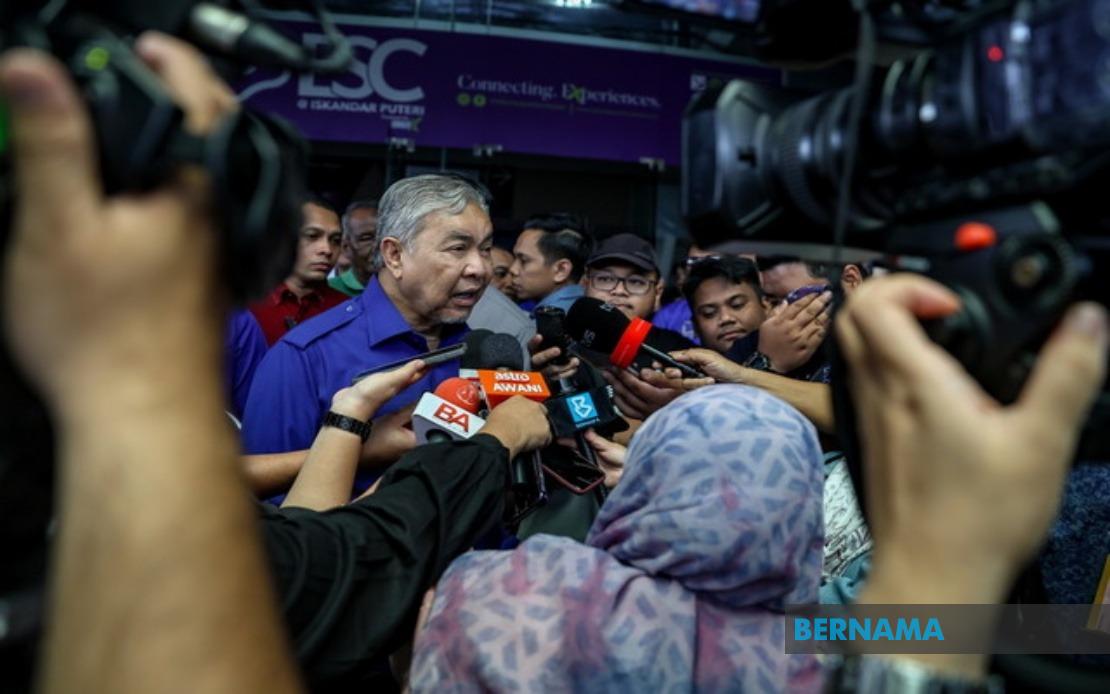
Deputy Prime Minister Datuk Seri Dr Ahmad Zahid Hamidi has confirmed that the establishment of Malaysia's Technical and Vocational Education and Training Commission will be completed by the end of this year, with the accompanying legislative framework expected to be tabled in Parliament during the same timeframe. The announcement, made at the Johor Darul Ta'zim TVET MARA Roadshow in Iskandar Puteri on July 5, signals a significant structural overhaul in how the country manages its vocational education sector.
The proposed TVET Commission will fundamentally restructure governance of technical and vocational training by replacing the current National TVET Council. According to Ahmad Zahid, who holds the dual role of Rural and Regional Development Minister as well as chairman of the existing National TVET Council, this institutional reorganisation is designed to elevate and fortify Malaysia's entire TVET ecosystem. The shift reflects a deliberate policy direction to enhance the strategic positioning and operational capacity of technical education within the broader educational framework.
The timeline to completion involves several procedural stages that remain ongoing. Ahmad Zahid detailed that comprehensive stakeholder engagement sessions are currently underway across various sectors and interest groups. These consultations form a critical foundation for the legislative drafting process, ensuring that diverse perspectives from industry, educational institutions, workers, and employers are adequately considered before formal submission to government decision-makers. The Deputy Prime Minister emphasised that these engagement activities must be thorough before progression to subsequent approval stages.
Once stakeholder consultations conclude, the government will advance a Cabinet paper for formal approval. Notably, Ahmad Zahid clarified that while the underlying policy framework has already secured Cabinet approval, separate authorisation is still being processed to table the enabling legislation in both the Dewan Rakyat and Dewan Negara. This distinction underscores the complex legal considerations involved in establishing a new statutory commission, requiring careful alignment between policy intent and legislative mechanics to ensure the commission possesses appropriate legal authority and operational capacity.
The TVET Commission model that Malaysia is adopting mirrors institutional arrangements established in developed economies with comparable technical education systems. Ahmad Zahid highlighted that the commission's mandate will transcend traditional policy-making functions. Beyond developing and recommending vocational education policies, the new body will bear direct responsibility for implementing policies and enforcing compliance with established standards. This expanded remit represents a departure from purely advisory roles, positioning the commission as an operational regulator with enforcement capabilities rather than a consultative body confined to recommendations.
The institutional transition carries particular relevance for Malaysia's workforce development strategy at a time when technical skills remain in high demand across manufacturing, construction, hospitality, and emerging technology sectors. By consolidating governance responsibilities within a dedicated commission, the government aims to create a more cohesive and responsive framework for aligning vocational training outputs with labour market requirements. The model also provides a clearer institutional hierarchy and decision-making pathway, potentially accelerating policy implementation and reducing administrative fragmentation.
During the same public engagement, Ahmad Zahid addressed the implications of Undi18 in Johor, noting that the expansion of voting eligibility to eighteen-year-olds has substantially altered the state's electoral demographics. Voters aged forty and below, incorporating the newly enfranchised eighteen-year-old cohort, now constitute approximately fifty-two percent of Johor's total electorate. This demographic shift carries significant implications for political strategy and policy prioritisation, as younger voters command an unprecedented proportion of electoral influence in the state.
Ahmad Zahid, speaking in his capacity as Barisan Nasional chairman, expressed confidence that young voters in Johor maintain strong affinity with state Menteri Besar Datuk Onn Hafiz Ghazi. The deputy premier positioned the Menteri Besar as a representative of younger leadership within the BN framework, suggesting that continuity in Onn Hafiz's tenure would benefit from sustained support among the enlarged younger electorate. This messaging strategy reflects an apparent recognition that generational preference and political appeal to younger demographics will significantly influence Johor's political trajectory in coming electoral cycles.
The TVET Commission initiative forms part of a broader governmental effort to address structural challenges within Malaysia's vocational and technical education system. Skills mismatch between vocational training outputs and employer requirements has periodically emerged as a concern, with some sectors reporting difficulty attracting qualified technical workers. A dedicated commission with enforcement authority could potentially improve coordination between training providers, industry stakeholders, and regulatory bodies, creating more responsive and demand-driven vocational curricula.
For Malaysian employers and workers, the transitional governance structure carries implications for how vocational training standards are developed, monitored, and enforced. The commission's expanded operational role suggests potential for more consistent application of technical competency standards across institutions, potentially enhancing the recognition and portability of TVET qualifications across states and industries. This standardisation capacity could strengthen Malaysia's position in regional and international labour markets where technical credentials increasingly facilitate worker mobility.
The legislative tabling process, once Cabinet approval for parliamentary submission is finalised, will initiate public scrutiny of the commission's proposed structure, funding mechanisms, and accountability frameworks. This parliamentary stage offers an opportunity for elected representatives to examine whether the institutional design adequately balances operational autonomy with government accountability, and whether the commission's authority and resourcing match its expanded mandate. Public debate during this stage will likely illuminate industry and educational sector perspectives on whether the new institutional framework addresses existing coordination challenges.
The year-end completion target places the government on a defined timeline for finalising both the legislative framework and initial commission establishment. Success in meeting this deadline will require accelerating stakeholder engagement and navigating the Cabinet and parliamentary approval processes efficiently. Any delays in stakeholder consultation or parliamentary processes could affect the implementation schedule, potentially deferring the commission's operational commencement into early 2025. Nevertheless, Ahmad Zahid's confident public announcement suggests the government views the institutional transition as a priority within its broader economic and workforce development agenda.

