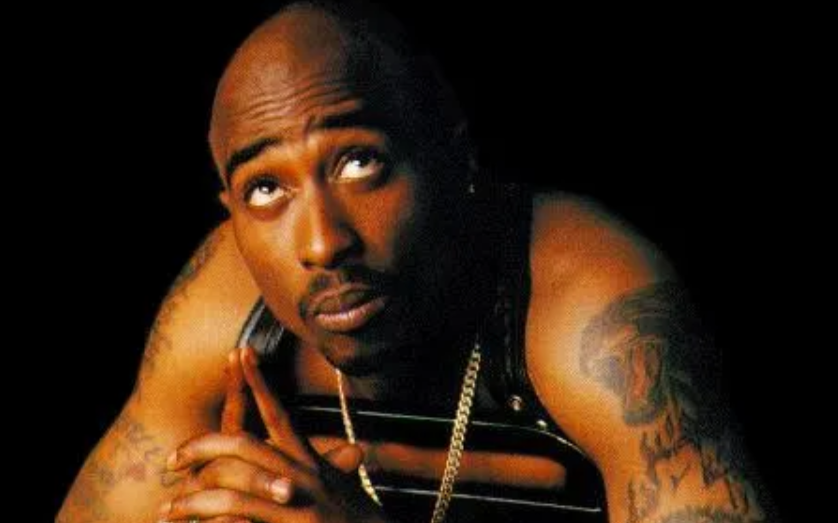
Three decades after one of America's most infamous unsolved murders, the trial of Duane "Keffe D" Davis, a former leader of the South Side Compton Crips gang, commenced on Monday with jury selection. The proceedings represent a pivotal moment in hip-hop history, offering the prospect of finally determining accountability for the September 7, 1996 killing of 25-year-old Tupac Shakur during a drive-by shooting in Las Vegas. The trial, anticipated to run for approximately a month, will determine whether Davis orchestrated the shooting and supplied the weapon used in the attack.
Davis, now 63 years old, appeared in court dressed formally in a light-blue shirt and blue tie as proceedings began. He stands to face a life sentence without the possibility of parole should he be convicted of murder charges. The case has long captivated the imagination of music enthusiasts and criminal investigators, who have debated its circumstances for generations. Tupac Shakur, performing under the name 2Pac, was an influential figure in the East Coast-West Coast hip-hop rivalry that dominated the industry during the mid-1990s, making his death a watershed moment in popular culture and criminal history.
The backdrop to the alleged murder involves a complex web of record label rivalries and gang affiliations that shaped the hip-hop industry throughout the decade. Death Row Records, established by Marion "Suge" Knight, faced competition from Bad Boy Records, an East Coast operation founded by Sean "Diddy" Combs that featured the late Christopher "The Notorious B.I.G." Wallace, who himself was murdered in March 1997. The investigation has revealed that Death Row Records enjoyed protection from Mob Piru, a Los Angeles gang connected to the Bloods alliance, while Bad Boy Records employed rival gang members from South Side Compton Crips as security personnel—a detail that created the underlying tensions prosecutors argue led to Shakur's death.
According to prosecution allegations, the catalyst for violence emerged on the evening of the Mike Tyson boxing match at the MGM Grand casino. Prosecutors contend that after the fight concluded, Knight and Shakur attacked Davis's nephew, Orlando "Baby Lane" Anderson, a Crips member, in retaliation for an alleged assault on a Death Row employee. This incident set the stage for what investigators characterize as a revenge killing orchestrated by Davis, who allegedly sought retribution for the assault on his family member. The attack on Anderson represented a significant breach of protocol between the two competing gang factions and escalated tensions considerably.
Later that evening, a white Cadillac carrying Davis, Anderson, and others positioned itself alongside Shakur's vehicle on a Las Vegas street. Gunfire erupted from the Cadillac, fatally wounding Shakur and leaving the case shrouded in mystery. The investigation stalled for decades due to insufficient evidence and the reluctance of potential witnesses to cooperate with authorities. This standstill persisted until 2019, when Davis's published memoir unexpectedly breathed new life into the dormant investigation by providing previously undisclosed details about his involvement that night.
Davis's own autobiographical account presented troubling admissions that would ultimately lead to his arrest in September 2023. In the memoir, Davis acknowledged being present in the front seat of the white Cadillac and claimed to have handed a firearm to occupants in the rear of the vehicle. However, he conspicuously avoided identifying who actually discharged the weapon at Shakur. The critical limitation of his account stems from the fact that every other person present in that vehicle on the night of the shooting has since passed away, eliminating alternative sources of corroboration or contradiction. These memoir revelations aligned with statements Davis had previously made to reporters, yet their publication in book form created documentary evidence that authorities could employ in prosecution.
The author's sudden decision to cooperate with law enforcement proved decisive in securing Davis's arrest. Yet his legal strategy shifted dramatically following his detention, as he entered a plea of not guilty and began systematically denying previous statements. In a March 2025 interview conducted from prison with ABC News, Davis vehemently asserted his innocence, claiming authorities possessed no credible evidence placing him in Las Vegas during the time of Shakur's death. Davis now insists he remained in Los Angeles that evening and further contends that he never actually read the memoir attributed to him, suggesting instead that his co-author fabricated or exaggerated details to enhance commercial appeal and boost sales figures.
Davis's defense lawyers mounted unsuccessful pre-trial efforts to exclude both his memoir and a 2008 witness statement he provided to police from being admitted as evidence. These exclusions would have significantly weakened the prosecution's documentary foundation, as both materials represent Davis's own words recorded in different contexts and periods. The failure to suppress this evidence means the prosecution can now present a timeline of Davis's shifting narratives—from his detailed 2008 witness account, to the memoir revelations a decade later, to his current categorical denials. This progression may prove instrumental in demonstrating consciousness of guilt to the jury.
The trial's conclusion may ultimately disappoint those seeking comprehensive answers about the circumstances surrounding Shakur's death. While prosecutors aim to establish Davis's role in orchestrating the shooting, they openly acknowledge the proceedings will likely not definitively identify the individual who fired the fatal shots. This limitation reflects the evidentiary challenges inherent in prosecuting a three-decade-old crime where direct witnesses have perished and forensic evidence has degraded. Nevertheless, the trial represents significant progress in a case that long seemed destined to remain perpetually unresolved, offering some measure of accountability for a tragedy that profoundly impacted hip-hop and American popular culture.
Shakur's family has indicated that the criminal proceedings alone may prove insufficient to address their grievances. In May 2025, Maurice Shakur, the rapper's stepbrother, initiated a separate wrongful death civil lawsuit seeking damages and justice. The complaint emphasizes that certain individuals involved in orchestrating Shakur's murder have evaded accountability for three decades, suggesting that additional parties beyond Davis may bear responsibility. This parallel litigation signals the family's determination to pursue justice through multiple legal channels, reflecting the enduring trauma and unanswered questions that have plagued them since 1996. For Malaysia and Southeast Asian observers, the trial underscores how criminal investigations across international boundaries and decades can eventually yield results, though often with incomplete resolution and lasting controversy.

