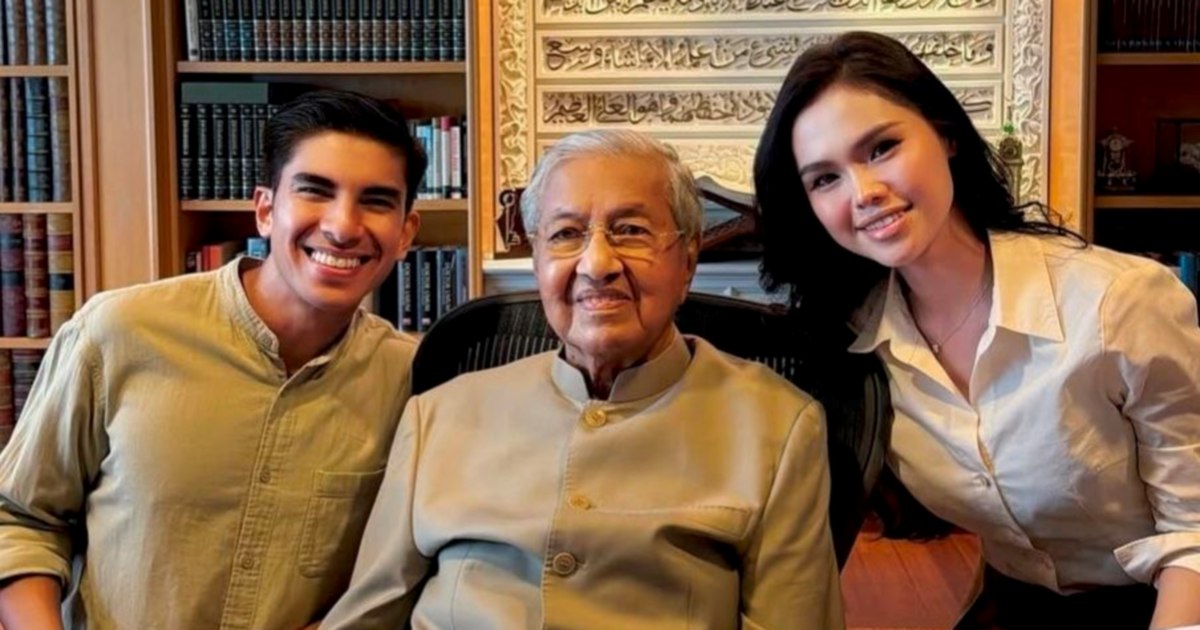
Actress and singer Bella Astillah has divulged that she and her fiancé, Muar MP Syed Saddiq Syed Abdul Rahman, consulted with former prime minister Tun Dr Mahathir Mohamad regarding marriage matters during a recent encounter. The unexpected confluence of the entertainment world and political establishment has drawn attention as the couple approaches their wedding date, with the elder statesman reportedly offering his observations on matrimonial life to the younger pair.
The meeting between the three parties underscores the enduring reverence that former premier Tun Mahathir commands across Malaysia's diverse social strata. His willingness to engage with figures from the entertainment and political sectors simultaneously reflects his continued visibility in public discourse, even after stepping down from the highest office. For a prominent actress and recording artist, seeking counsel from a figure of his stature signals the weight placed on his accumulated wisdom spanning decades of public service.
Syed Saddiq, who represents the Muar constituency in Johor, represents a newer generation of political leadership within the country's complex parliamentary landscape. His parliamentary duties and profile as a younger MP provide a contemporary counterpoint to Tun Mahathir's era of governance. The fact that both the entertainment figure and the politician deemed it worthwhile to approach the former premier demonstrates how elder statesmen continue serving advisory roles beyond formal positions of power.
Bella Astillah's career trajectory has positioned her as a recognisable face in Malaysian popular culture, maintaining visibility through both television and music endeavours. Her decision to publicise the consultation with Tun Mahathir indicates a comfort with intertwining personal milestones with public narratives, a characteristic common among personalities whose livelihoods depend on maintaining audience engagement and public interest in their activities.
The nature of marriage counsel from someone of Tun Mahathir's generation carries particular significance given Malaysia's cultural context, where family structures and matrimonial commitments remain central to social cohesion. The former premier's perspective, shaped by decades of navigating both personal relationships and the demands of governance, offers a distinctive vantage point on balancing competing responsibilities and expectations. Such intergenerational exchange of perspectives has historically played a meaningful role in Malaysian society, where respect for elder figures traditionally influences major life decisions.
The public revelation of such private consultations also illuminates how Malaysia's celebrity sphere frequently intersects with its political establishment. Unlike many democratic societies where clear social boundaries separate entertainment from governance, the Malaysian context permits and often encourages such crossovers. This reflects the country's relatively compact elite circles and the communal nature of major celebrations and milestones, where high-profile figures spanning multiple domains frequently converge.
For individuals contemplating marriage in contemporary Malaysia, the symbolic weight of blessing or counsel from respected public figures carries psychological and social resonance. While modern couples navigate matrimonial decisions through diverse means, including professional counselling and personal reflection, the cultural value of wisdom from esteemed elders remains significant. Tun Mahathir's engagement with the couple suggests a recognition that major life transitions deserve thoughtful consideration and benefit from accumulated experience.
The timing of such consultations, particularly as the couple prepares for their wedding, reflects practical considerations about marital success and longevity. Malaysian society maintains relatively formal attitudes toward marriage as an institution, with societal expectations regarding spousal roles, family obligations, and public conduct remaining more structured than in some other developed democracies. Guidance from figures who have successfully navigated these complexities for extended periods therefore carries tangible utility beyond mere ceremonial significance.
The incident also illustrates how Malaysian media frequently reports on the personal lives of public figures, treating major milestones and their surrounding activities as legitimate news subjects. This reflects both societal interest in celebrities' journeys and the normalised interweaving of public and private spheres within the country's information ecosystem. For Bella Astillah and Syed Saddiq, the disclosure serves multiple purposes: humanising their public personas, demonstrating respect for institutional wisdom, and maintaining engagement with their respective audiences.
Moving forward, the couple's willingness to publicly acknowledge consultation with Tun Mahathir may influence broader perceptions of their union and individual characters. In Malaysian social contexts, such associations frequently carry cultural and political implications, signalling alignment with particular values or acknowledging debts to influential figures. The disclosure thus functions not merely as personal anecdote but as a strategic element within their public narratives.

