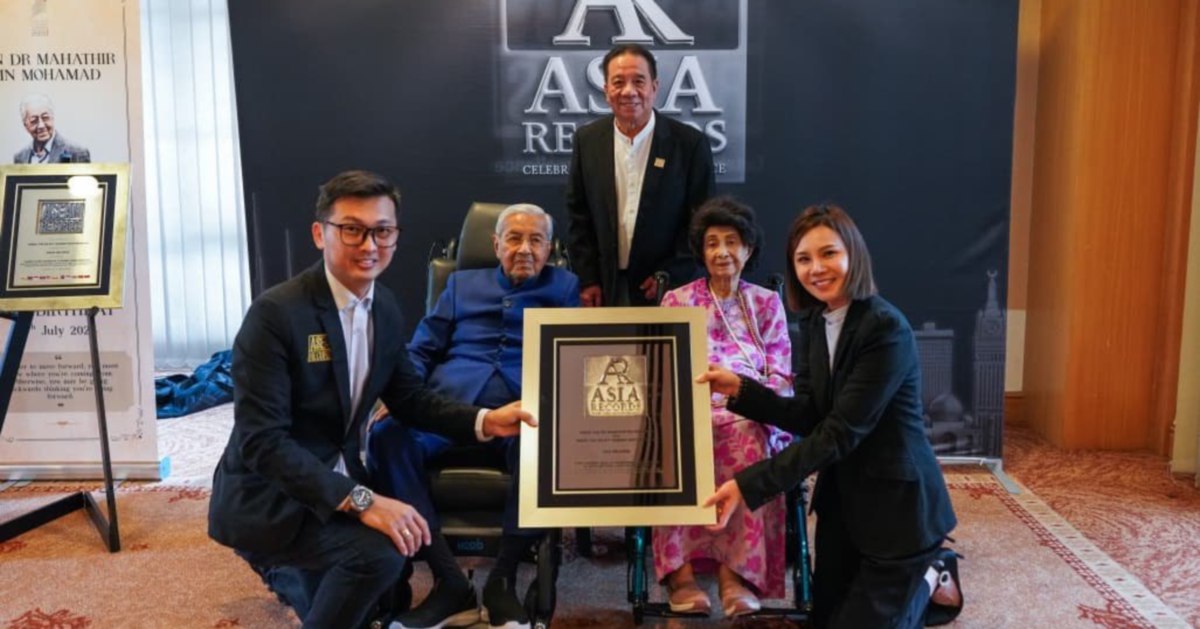
Former Prime Minister Tun Dr Mahathir Mohamad and his wife, Tun Dr Siti Hasmah Mohd Ali, have entered the history books following official recognition of three world records that underscore their remarkable longevity and unprecedented status as a married couple. The recognition, which celebrates their combined age and enduring partnership, represents a significant milestone not only for Malaysia but within the global context of centenarian achievements.
The couple's milestone carries particular resonance in Malaysia, where the couple remains iconic figures in the nation's modern history. Tun Dr Mahathir served as Prime Minister across two separate tenures, fundamentally shaping the country's trajectory from independence onwards, while Tun Dr Siti Hasmah has been equally recognised for her role as a pioneering figure in Malaysian public life and for her humanitarian work. Their longevity together underscores not merely individual health and wellness, but the strength of a partnership that has endured through Malaysia's most transformative decades.
The official records certifying their status arrive at a moment when global awareness of ageing populations is intensifying. Nations across the world, particularly in Asia where life expectancy has risen dramatically, are observing how demographic shifts reshape societies. Malaysia is no exception, with increased numbers of Malaysians now crossing into their eighties and nineties, placing the couple's achievements within a broader context of improved healthcare, living standards, and lifestyle factors that have extended human lifespans across the region.
Tun Dr Mahathir's continued public engagement into his ninth and tenth decades has made him an unusual figure in contemporary politics. Most retired leaders step away from public view; his persistent involvement in political commentary and occasional interventions in Malaysian affairs demonstrates the kind of active ageing that health experts increasingly advocate. Similarly, Tun Dr Siti Hasmah has maintained visibility through her work and public appearances, presenting a model of purposeful ageing rather than withdrawal.
The recognition framework underlying these records reflects international bodies' efforts to document and celebrate human longevity achievements. Such certifications serve purposes beyond mere commemoration. They establish benchmarks, encourage research into factors contributing to extended healthspans, and provide data that demographers and healthcare planners use when projecting future needs for elderly care services, pension systems, and social infrastructure across Southeast Asia.
Malaysia's healthcare system, which has evolved considerably since independence, clearly has played a role in enabling this couple's longevity. The availability of modern medical facilities, pharmaceutical access, and ongoing health management have contributed to their endurance. Yet beyond medical infrastructure, broader social factors—family stability, purposeful living, intellectual engagement, and psychological wellbeing—likely intersect with physiological advantages to extend lifespan and maintain quality of life into advanced age.
The couple's achievement raises important questions about ageing in Malaysia's modernising society. As the country continues developing economically and socially, the population ages alongside economic growth. Understanding factors that enable some individuals to thrive into their centenary years while maintaining cognitive sharpness and social contribution offers valuable insights for policy makers designing eldercare frameworks and retirement systems.
Cultural significance attaches to this recognition within Malaysian society. Respect for elders remains deeply embedded in Malaysian and Southeast Asian values, and the couple's longevity combined with continuing public esteem reflects traditional values intersecting with contemporary achievement. Their status as centenarians who have lived through Malaysia's entire modern history—witnessing and shaping transformation from colonial territory to independent nation to developed economy—invests them with particular historical weight.
The three official records acknowledge different dimensions of their achievement. Such multiple recognitions underscore that the couple's significance extends beyond mere chronological age to encompass the length, quality, and impact of their partnership. In an era when marriage stability faces pressures and long-term relationships are increasingly scrutinised, a centenarian couple's enduring bond carries symbolic weight beyond their individual circumstances.
Looking forward, the couple's milestone has implications for how Malaysia positions itself within regional and global conversations about healthy ageing. The nation increasingly markets itself as a healthcare and wellness destination; examples of domestic success stories like Tun Dr Mahathir and Tun Dr Siti Hasmah provide authentic narratives that complement medical tourism messaging. Their achievement becomes part of Malaysia's broader health and lifestyle narrative.
The records also prompt reflection on generational legacies. Both individuals have children and grandchildren who inherit not merely genetic material but also examples of purposeful, engaged living extended well into advanced age. Such family narratives influence attitudes toward ageing within extended networks and contribute to cultural shifts in how societies perceive and value their oldest members.
Beyond the ceremonial aspects of record recognition lies a deeper significance. In a region where rapid modernisation sometimes threatens traditional structures and where young people increasingly migrate for opportunity, a couple who have remained central to Malaysian public consciousness for decades represents continuity and institutional memory. Their achievement celebrates not only longevity but the capacity to remain relevant and valued across generational change, a particularly resonant message in rapidly evolving Southeast Asia.

