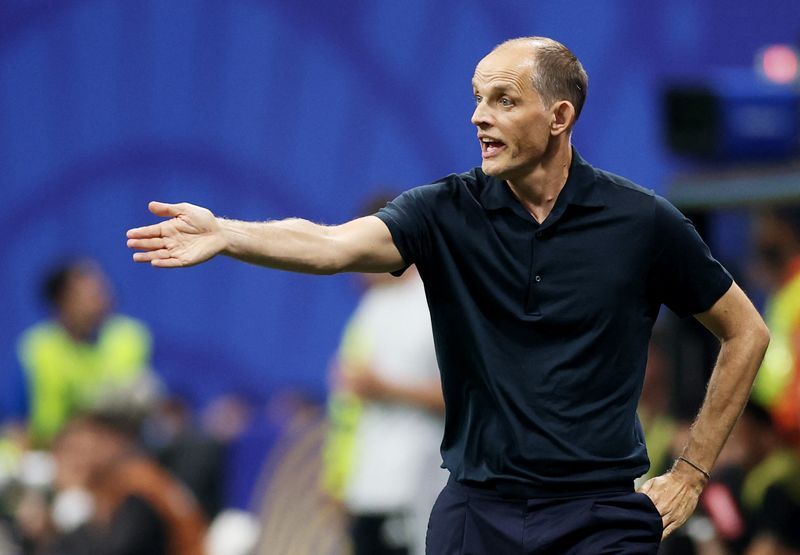
Thomas Tuchel stepped into the England manager's role with considerable fanfare and a clear mandate: deliver the nation's second World Cup title since 1966. When the German tactician was unveiled in October 2024 as Gareth Southgate's successor, Football Association Chief Executive Mark Bullingham declared that Tuchel represented "the best possible chance" to finally end England's 58-year wait for another global trophy. Yet in the dying moments of a semi-final clash against Argentina, that promise crumbled, leaving Tuchel to absorb an avalanche of criticism despite a squad that had navigated a path to the final four.
The post-match analysis has centred heavily on Tuchel's in-game management, particularly his defensive repositioning after Anthony Gordon's opener created space for Argentina to strike back decisively. Former West Ham and Crystal Palace manager Alan Pardew characterised the outcome as a collapse in organisational structure, suggesting the boss had inadvertently fostered "a negative mindset" that undermined England's cohesion. Such verdicts, while partly rooted in observable events, overlook a more complex reality: England were not simply undone by one manager's tactical miscalculation but by the sheer calibre of opposition and the fundamental disparities in how the two teams approached the game.
Tuchel himself identified a critical asymmetry when reflecting on the defeat. He highlighted a cultural and strategic gap in ball possession—an area where Spain, Argentina, and Brazil operate with seemingly innate mastery that England has struggled to replicate at the highest level. The German coach's candid assessment that "no structure in the world could have helped us" in those final moments points to a structural vulnerability within English football that transcends any single manager's tenure. This acknowledgment, however unpalatable to sections of the English media, deserves serious consideration when evaluating the loss.
Arguably, critics underestimate the magnitude of the challenge Tuchel faced. He was managing his first major international tournament after a decorated club career that included the UEFA Champions League title with Chelsea. While his pedigree and track record suggested readiness for the role, tournament football operates according to different rhythms and pressures than club competition. Didier Deschamps, the French manager who has presided over a golden period spanning more than a decade, required six years before winning the 2018 World Cup; his predecessor Aimé Jacquet needed five years to construct the 1998 championship-winning team. By this measure, Tuchel's run to the semi-finals—matching Southgate's 2018 achievement—constitutes a respectable debut, one from which valuable lessons will inevitably emerge.
Yet the narrative cannot rest solely on managerial inexperience or tactical philosophy. Argentina's path through the tournament revealed a side of extraordinary resilience and resourcefulness. Lionel Scaloni's squad demonstrated their capacity to overcome adversity repeatedly: Cape Verde pushed them to the brink, three late goals were required to subdue Egypt in the last sixteen, and extra time proved necessary to overcome a ten-man Swiss side in the quarter-finals. These were not performances suggesting a dominant force coasting to a second consecutive title. Rather, they reflected a team with a seemingly bottomless well of determination and the individual quality to conjure solutions when conventional methods faltered.
At the heart of Argentina's ability to respond lay Lionel Messi, a 39-year-old whose influence transcended conventional positional metrics. The world's preeminent player responded to adversity not with retreat but with heightened intensity, shifting positioning to exploit England's defensive concentration and orchestrating the crucial late strikes from Enzo Fernández and Lautaro Martínez. Thierry Henry, who spent three seasons observing Messi's artistry from close quarters at Barcelona, articulated the phenomenon with characteristic insight: when Messi "switches," he becomes something approaching unstoppable, capable of single-handedly altering match outcomes through sheer force of will and technical mastery.
England's attempts to neutralise this threat proved ineffectual, a reality underscored by possession statistics that starkly illustrate the game's decisive passage. From the 72nd to the 92nd minute, England attempted merely two passes in Argentina's half while their opponents completed 111. This dramatic disparity reflects not merely tactical conservatism but a fundamental loss of initiative against a team that never stopped probing, never ceased applying pressure, and never allowed their opponent to dictate terms. The numerical asymmetry reveals that Tuchel's side had essentially surrendered the match's final phase, a recognition of Argentina's superiority that no tactical adjustment could have reversed.
Messi's individual performances throughout Argentina's knockout campaign underscored the tournament's ultimate truth: elite-level international football remains fundamentally shaped by individual brilliance operating within a coherent tactical framework. Messi played 120 minutes in a previous encounter before delivering a near-perfect performance against England, his movement and decision-making creating openings that his teammates capitalised upon with clinical precision. When examining why England failed, one must account not only for what Tuchel's team did wrong but for what Argentina's greatest player did spectacularly right.
The criticism directed at Tuchel, while understandable given English football's appetite for scapegoating, obscures more uncomfortable truths about the wider environment within which international managers operate. England's historical difficulties in translating club success into tournament achievements reflect deeper issues around tactical philosophy, player development, and the psychological architecture required to sustain pressure at the sport's highest level. Tuchel signed a two-year contract extension in February, signalling the Football Association's continued confidence in his long-term project. That patience may prove vindicated, particularly if the squad can develop the ball-retention capabilities and composure under pressure that separate perennial contenders from occasional participants in major finals.
Argentina's journey to the final, by contrast, illuminates a different pathway: one constructed around a talisman capable of manufacturing moments of genius when conventional tactics falter, a manager confident enough to remain committed to structural principles even when those principles are tested repeatedly, and a collective mentality that refuses to accept defeat as inevitable. Scaloni's team represents the defending champions not through overwhelming dominance but through unrelenting determination and the presence of a player whose singular talent permits margin for tactical error. England, facing that combination, discovered that superior preparation and recent tournament experience, while valuable, cannot fully compensate for the presence of arguably football's greatest ever player operating at peak motivation.
For Malaysian and Southeast Asian observers, the semi-final result carries implications beyond England's domestic discourse. It reinforces that tournament success at football's highest level demands not merely organisational excellence from coaching staff but access to world-class individual talent capable of determining contests through moments of transcendent skill. It also demonstrates that persistence through adversity, as Argentina repeatedly showcased, frequently yields results where caution and defensive approaches falter. As regional football continues developing infrastructure and player pathways, these lessons—that technical mastery and psychological resilience matter as much as tactical sophistication—offer valuable perspective on what separates sustained achievement from isolated successes.

