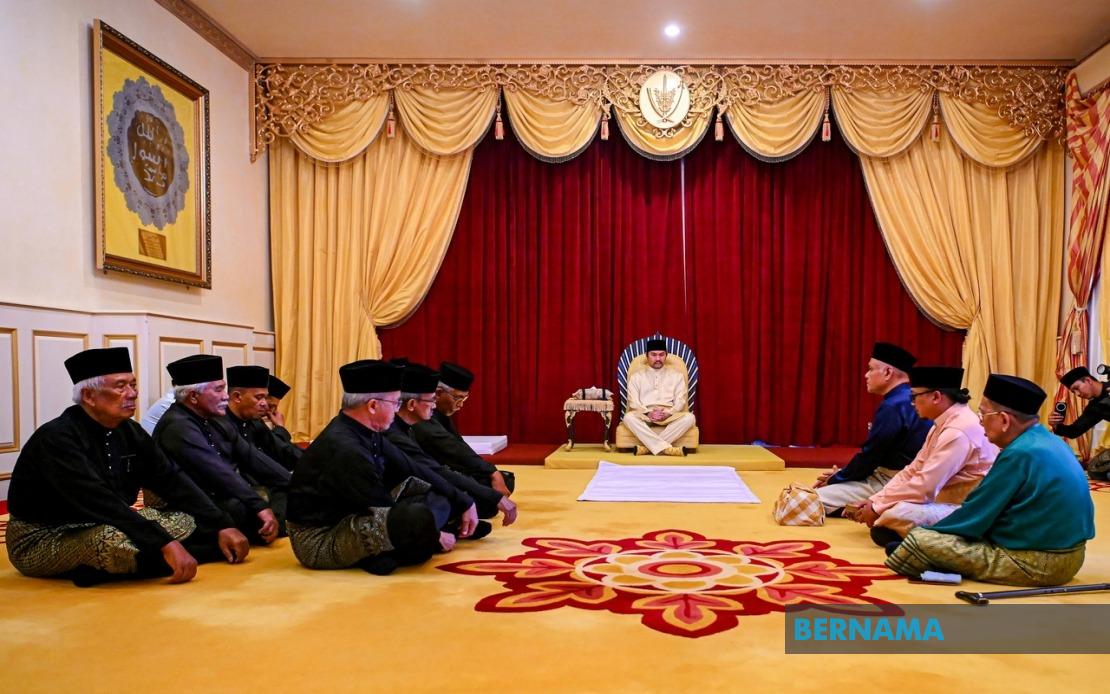
The Yang Dipertuan Besar of Negeri Sembilan, Tuanku Muhriz Tuanku Munawir, has given his royal blessing for a formal audience ceremony to be held at Istana Besar Seri Menanti in Kuala Pilah this coming Saturday morning. The occasion will mark the official installation of Muhammad Faris Johari, 29, as the 11th Undang of Luak Sungei Ujong, representing an important constitutional moment for one of the state's traditional administrative divisions.
The announcement was conveyed through Tunku Besar Seri Menanti Tunku Ali Redhauddin Tuanku Muhriz during a formal audience with the Datuk-Datuk Adat of Luak Sungei Ujong and their representatives at the palace today. This approach reflects the careful protocol observed in Negeri Sembilan's distinctive system of governance, where the Yang Dipertuan Besar maintains ceremonial oversight of the installation of traditional leaders within the lauan divisions that make up the state.
According to Waris Negeri Sungei Ujong Datuk Sinda Maharaja Razlan Hamid, who represented the luak during today's audience, the selection process for Johari followed the customary practices and traditions historically observed in Luak Sungei Ujong. The Buapak customary council assembly, which functions as the traditional decision-making body for the luak, conducted a formal selection in accordance with established adat before presenting their recommendation to the royal household.
The installation ceremony comes following the formal dismissal of the previous Undang, Datuk Klana Petra Datuk Mubarak Dohak, who had served as the 10th Undang of Luak Sungei Ujong. The Dewan Keadilan dan Undang, the judicial body responsible for matters concerning the undang system, accepted the dismissal after a special sitting was held at Istana Besar Seri Menanti. This sitting, chaired by Tuanku Muhriz himself, underscores the gravity with which such changes are treated within Negeri Sembilan's constitutional framework.
Menteri Besar Datuk Seri Aminuddin Harun confirmed that the decision regarding the previous undang's dismissal was made during that special sitting, indicating coordination between the traditional leadership structure and the state government's administrative apparatus. This intersection between customary adat and modern governance remains a defining characteristic of Negeri Sembilan's political system, which operates uniquely among Malaysian states.
The ceremony this Saturday will represent the formal constitutional recognition of Johari's appointment, transforming what was essentially a traditional council decision into an officially sanctioned installation backed by royal authority. In Negeri Sembilan's system, the undang serves as the chief custodian of adat within their respective luak divisions and represents their constituents in various state governance structures. The position carries significant cultural and administrative weight, making the formal ceremony more than mere ceremonial formality.
The timing is particularly notable as Saturday's schedule will also include the installation ceremony for the 22nd Undang of Luak Rembau, following similar royal consent granted by Tuanku Muhriz the previous day. This concentration of two undang installations in a single day demonstrates the regular functioning of Negeri Sembilan's unique constitutional machinery, where vacancies or transitions in these positions are managed through established protocols that have evolved over generations.
For Malaysian constitutional observers, Negeri Sembilan's system represents an instructive example of how traditional governance structures have been integrated into modern state administration. The undang system predates the formation of the Malaysian federation and has been carefully preserved through the state's constitutional arrangements. The involvement of both traditional councils like the Buapak assembly and the Dewan Keadilan dan Undang, alongside the Yang Dipertuan Besar's formal role, demonstrates a sophisticated layering of decision-making authority.
The installation of Johari also marks a generational transition, as the 29-year-old represents a younger generation of traditional leaders stepping into these historically significant roles. This succession pattern will be relevant for Malaysian observers considering how traditional institutions are adapting to contemporary circumstances while maintaining their foundational principles and protocols.
Tunku Ali Redhauddin's statement conveying his father's consent specifically noted that detailed arrangements for the ceremony should be coordinated between the adat leaders and the Orang Empat Istana, the palace administrative body responsible for coordinating state ceremonial functions. This practical devolution of organizational responsibility to specialized palace officials reflects how Negeri Sembilan manages to maintain elaborate ceremonial traditions while ensuring contemporary administrative efficiency.
The consent granted by Tuanku Muhriz carries constitutional significance beyond the ceremonial aspects. In Negeri Sembilan's system, the Yang Dipertuan Besar's formal recognition of an undang's appointment provides the ultimate constitutional validation necessary for the individual to fully discharge the duties and privileges associated with the position. Without this royal blessing, despite the adat selection process, the installation would remain incomplete from a constitutional standpoint.
For the broader Malaysian context, the proceedings in Kuala Pilah this week provide insight into how states beyond the peninsular monarchies manage succession and leadership transitions within traditional institutional frameworks. Negeri Sembilan's approach demonstrates that effective constitutional governance can accommodate both modern administrative requirements and deep respect for customary traditions, offering lessons relevant to discussions about federalism and state autonomy across the nation.

