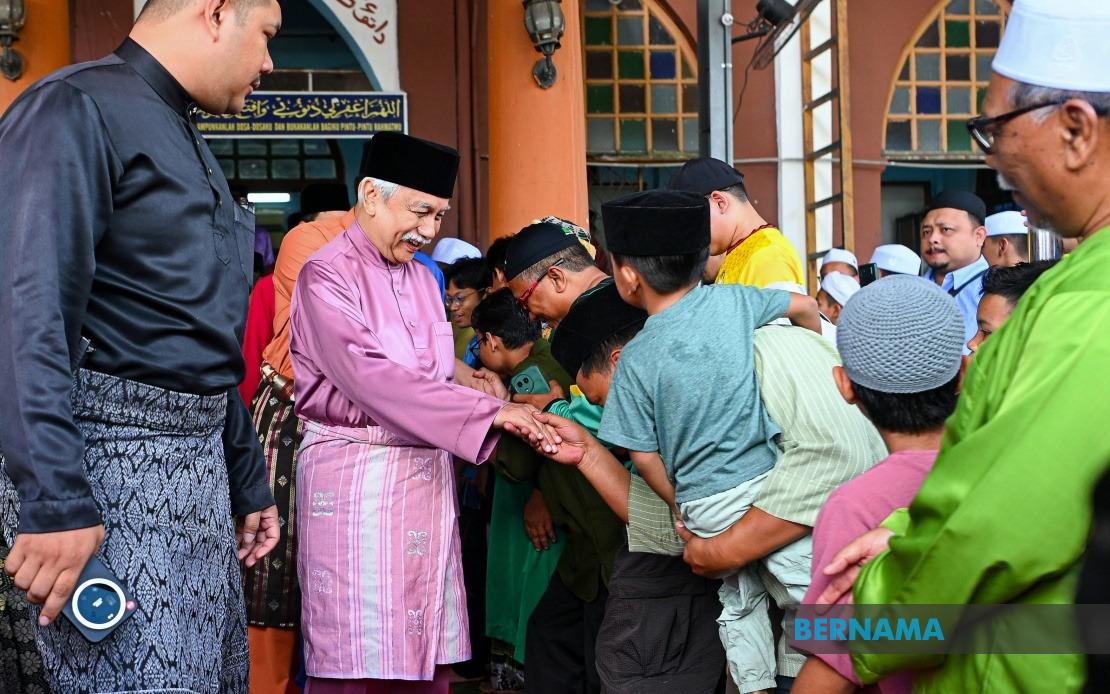
Yang Dipertuan Besar Negeri Sembilan Tuanku Muhriz Tuanku Munawir participated in Friday prayers at Masjid Kariah Pantai in Seremban on July 17, leading a congregation that exceeded 500 Muslim worshippers in the mosque's main hall and prayer areas.
The royal presence underscored the significance of the weekly congregational prayers within Negeri Sembilan's Islamic community. Accompanying Tuanku Muhriz were his two sons, Tunku Besar Seri Menanti Tunku Ali Redhauddin and Tunku Zain Al-'Abidin, reflecting the royal family's continued commitment to observing religious obligations alongside their administrative responsibilities in the state.
The gathering also attracted senior government dignitaries, including the Undang of Luak Sungei Ujong Datuk Klana Petra Muhammad Faris Johari and Menteri Besar Datuk Seri Aminuddin Harun. Their presence highlighted how state leadership frequently participates in communal religious observances, blending formal governance with grassroots spiritual engagement—a pattern common across Malaysia's constitutional monarchies and state administrations.
Prior to the prayer service, Imam Amru Zubair Abu Hanifah delivered the Friday sermon, addressing congregants on contemporary challenges to religious faith and practice. The khutbah, or sermon, is a key component of Friday prayers in Islam, offering spiritual guidance and addressing matters relevant to the community's welfare and moral development. The imam's focus on current threats to faith suggested engagement with contemporary concerns facing Malaysian Muslims, whether related to misinformation, secularisation pressures, or other societal challenges.
Following the conclusion of prayers, Tuanku Muhriz and his sons engaged directly with worshippers, mingling with congregants in a gesture of accessibility and communal solidarity. This practice of post-prayer interaction between royal and state leadership and ordinary Muslims reinforces social bonds and demonstrates the ruler's investment in the spiritual life of the populace beyond ceremonial duty.
A notable aspect of the visit involved the distribution of contributions to children who had attended the prayers, supporting young Muslims' religious participation and education. Such gestures encourage youth engagement with mosque communities and underscore the monarchy's role as a patron of Islamic practice and development.
For Malaysian and Southeast Asian readers, this event reflects the integral role that constitutional monarchs and state administrators play in preserving Islamic institutions and practices within the federation's plural democracy. In Negeri Sembilan specifically, the Yang Dipertuan Besar holds significant religious authority, serving as the chief patron of Islam in the state—a position inherited from the Minangkabau sultanate traditions that influenced the state's founding.
The gathering at Masjid Kariah Pantai exemplifies how Malaysia's federal structure accommodates state-level Islamic governance, with each ruler playing an active role in supporting religious infrastructure and community life. Such participation also demonstrates the monarchy's efforts to remain visible and relevant to the common citizen, particularly within faith-based contexts where spiritual leadership carries particular weight.
The scale of the congregation—exceeding 500 attendees—indicates the mosque's importance as a community anchor in Seremban. Friday prayers typically draw the largest congregations in the Islamic calendar, and mosques such as Kariah Pantai serve multiple functions: spiritual centres, community gathering spaces, educational facilities, and symbols of Islamic identity within urban and semi-urban Malaysian settings.
Regionally, the prominence of the monarchy in Islamic practice distinguishes Malaysia from secular governance models, embedding religious observance within the state apparatus and the ruler's constitutional responsibilities. This integration reflects Malaysia's foundational documents, which establish Islam as the federation's religion whilst guaranteeing freedom of worship for other communities.

