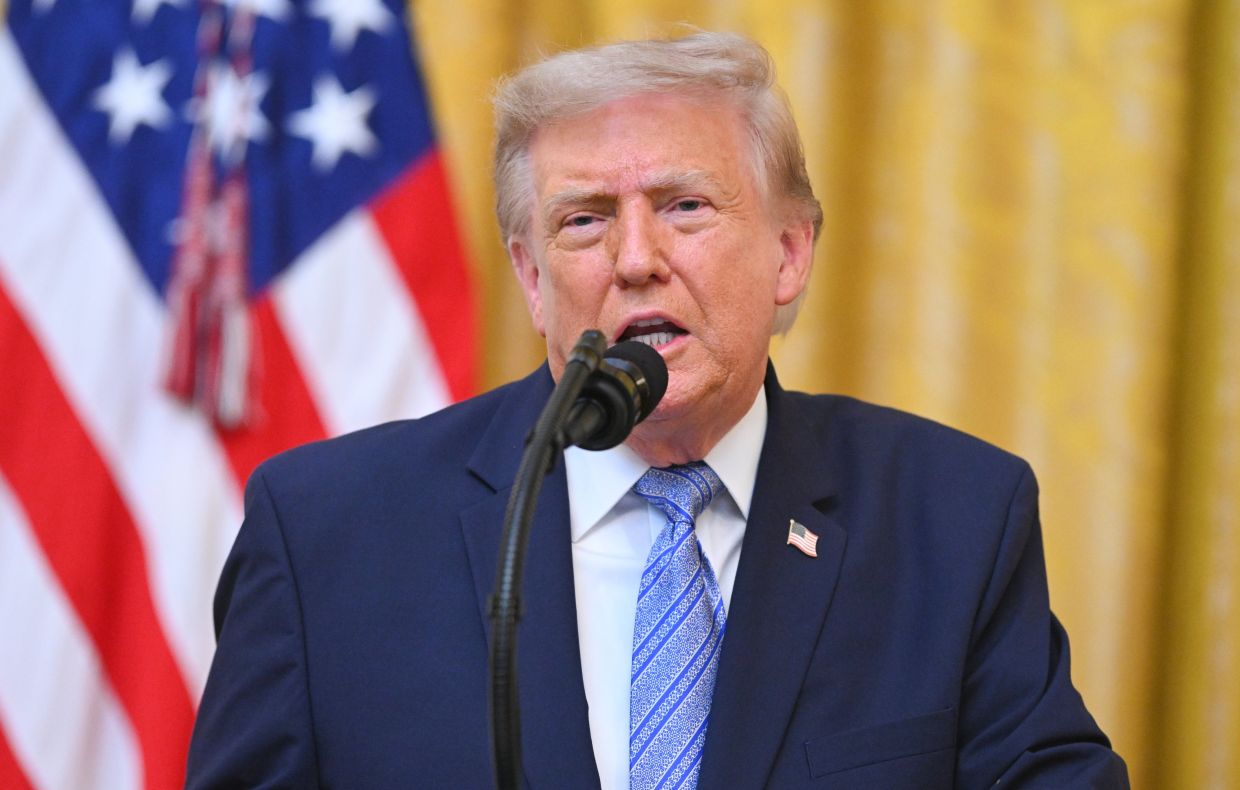
President Donald Trump used a major White House address to escalate accusations against China over election interference whilst simultaneously pushing for domestic voting reforms ahead of this year's midterm elections. The speech represented one of the most confrontational addresses of his second term, weaving together national security concerns about Beijing with domestic political messaging on election integrity—a combination that underscores how Trump's administration is framing both external threats and internal governance priorities for American voters heading into the electoral cycle.
At the centre of Trump's rhetoric was an unprecedented claim that China orchestrated what he described as the "largest compromise of election data in history." By framing this alleged breach in such absolute terms, the President sought to elevate the severity of Chinese actions from mere meddling to a strategic assault on American democratic infrastructure. This characterisation serves a dual purpose: it justifies a harder line on Beijing whilst simultaneously reinforcing his administration's argument that election security deserves urgent legislative attention. The framing also reflects broader geopolitical anxieties about US-China competition that extend far beyond electoral politics into economic, technological, and military domains.
Beyond the specific charge of data theft, Trump alleged that China's interference operated on multiple levels. He accused Beijing of systematically influencing American business leaders and journalists to adopt anti-Trump positions, painting a picture of coordinated influence operations designed to undermine his presidency. This accusation—that Chinese state actors were actively shaping American media narratives and corporate behaviour—represents a significant escalation in how the administration characterises Chinese interference. If substantiated, such claims would suggest interference efforts that transcend traditional election meddling to encompass broader information warfare and economic coercion strategies.
Trump also contended that China's electoral interference was not merely opportunistic or random but specifically targeted at his political survival during his first term. This personalisation of the threat—framing Chinese actions as directly aimed at removing him from office—transforms the issue from abstract national security into a question of presidential legitimacy. By connecting Chinese actions to his own political fortunes, Trump effectively merged security concerns with his political narrative, a rhetorical move that demands scrutiny regarding the distinction between genuine security threats and partisan political claims.
The domestic policy component of Trump's address centred on election integrity reforms that his administration has championed throughout his tenure. Central to these proposals are requirements for voter identification and proof of citizenship, measures that have remained contentious in American politics. Trump linked these reforms to the SAVE America Act, positioning them as necessary safeguards against electoral fraud. For Malaysian observers following American politics, these proposals reflect a broader conservative emphasis on tightening election administration that contrasts sharply with progressive arguments for expanded voting access—a fundamental debate about who should be able to vote and under what circumstances.
The emphasis on "free and fair elections" in Trump's rhetoric signals that election integrity—whether addressing alleged Chinese interference or domestic voting procedures—will be a central theme of Republican messaging through the midterms. This focus allows the administration to simultaneously warn against foreign threats whilst justifying domestic voting restrictions. The dual strategy creates a coherent narrative in which election security demands both protection against external adversaries and implementation of stricter voting rules domestically.
Beyond the elections focus, Trump used the address to signal a fundamental shift in US strategy toward China. He explicitly warned against what he characterised as American "complacency" in dealing with Beijing, positioning his administration's approach as a necessary wake-up call to the nation. This rhetorical positioning casts previous administrations as having been insufficiently vigilant, whilst framing Trump's confrontational stance as the only realistic response to Chinese ambitions. The speech thus functions as both a policy announcement and a justification for escalating tensions that could reshape US-China relations significantly.
The global ramifications of Trump's harder line on China warrant careful attention, particularly for Southeast Asian nations navigating their own complex relationships with Beijing. A more confrontational American approach to China could pressure regional countries to choose sides more explicitly, disrupting the careful balancing acts that many Southeast Asian governments have maintained. For Malaysia specifically, which has substantial economic ties to China whilst maintaining security partnerships with the United States, such escalation could create difficult diplomatic choices in coming months.
Trump's closing attack on American media outlets deserves particular scrutiny as it revealed the broader combative tone of his address. His warning that he was considering revoking broadcast licences for television networks ABC and NBC—ostensibly for their coverage of his policies—demonstrated how the speech blended security arguments with attacks on domestic institutions. This threat against media organisations echoes authoritarian governance patterns and raises questions about press freedom in American democracy, a concern that extends beyond the United States to how global democracies conceptualise the relationship between executive power and independent journalism.
The integration of election interference claims with voting restriction proposals and media criticism creates a comprehensive political agenda that Trump presented as unified by national security and electoral integrity concerns. Yet the speech also reveals how easily security narratives can become intertwined with partisan political interests, making it difficult for observers to distinguish between genuine threats requiring urgent action and political positioning designed to mobilise supporters. As American politics becomes increasingly polarised, such distinctions grow more important whilst simultaneously becoming harder to maintain.
For regional analysts and policymakers in Southeast Asia, Trump's address signals that US-China competition will intensify further, with election interference narratives likely featuring prominently in American political discourse. The combination of heightened rhetoric about Chinese threats with domestic voting reforms suggests that the 2024 election cycle will be fought partly on the terrain of election security—both as a substantive policy matter and as a political weapon. Understanding how these American domestic debates intersect with China policy remains essential for regional countries seeking to maintain stability and protect their own interests amidst superpower competition.

