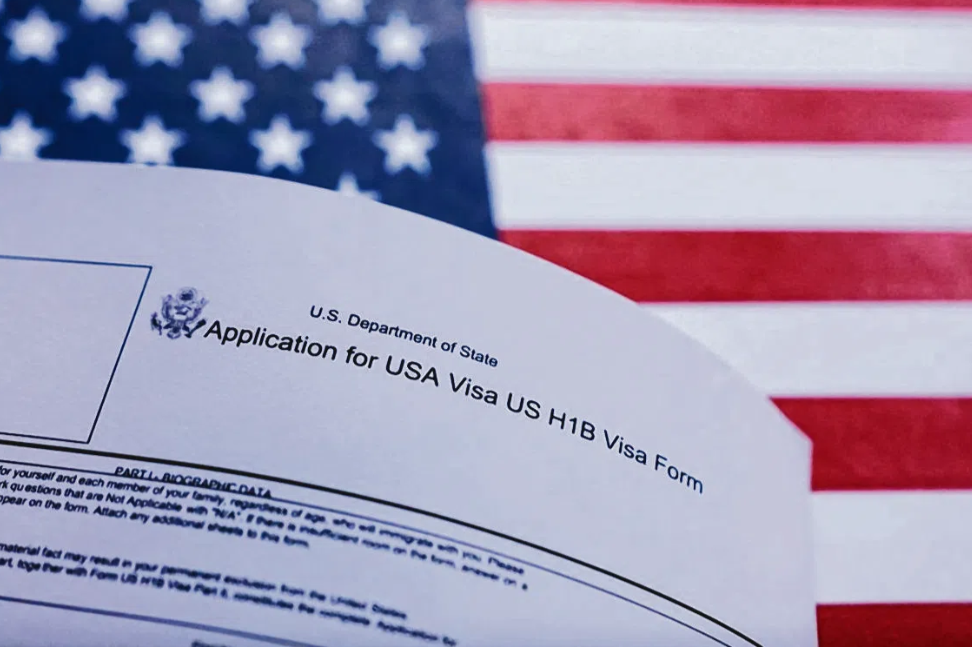
The departure of Deepak from the United States in May marked the end of a 15-year chapter built painstakingly across decades of professional advancement. His decision to relocate his wife and two children back to India, dismantling a carefully constructed life in the process, reflects a broader reversal in global talent migration that is now reshaping technology industries worldwide. Although he had secured fresh employment shortly after being laid off in October, Deepak ultimately calculated that the precarious legal status attached to temporary visa sponsorship posed greater long-term risk than the prospect of rebuilding his career in his native country.
The psychological toll of the H-1B visa system under the Trump administration has become unbearable for many foreign professionals. The constant anxiety about maintaining employment status—facing potential deportation if jobless for more than 60 days—has made workers increasingly willing to abandon previously unthinkable options like returning to their home countries. What was once viewed as a temporary stepping stone in an international career has transformed into a precarious limbo, with each new policy announcement generating fresh waves of uncertainty that ripple through the global tech workforce.
The administration's approach to immigration has introduced significant financial barriers alongside regulatory uncertainty. When Trump announced a proposed US$100,000 application fee for new H-1B visas—a staggering 25 times the prevailing rate—the tech industry descended into confusion, with companies unable to determine whether this punitive levy would apply to renewals, transfers, and existing applications. Although a federal judge struck down this particular policy as unlawful in June, the Trump administration persisted in making H-1B recruitment more expensive and administratively burdensome, proposing an additional US$4,000 surcharge on visa extensions and renewals beginning in September.
The statistics on return migration paint a picture of accelerating exodus. Indian talent consulting firm Xpheno reports that approximately 15,100 Indian professionals returned to India during 2025 compared with 9,800 in 2024, representing a significant year-on-year surge. The trend continued into early 2026 with 7,300 professionals having already returned within the first months of the year. While comparable data for Chinese nationals remains less readily available, China's Ministry of Education documented that 536,000 students returned to China in 2025 following graduation—an 8.3 percent increase from the previous year—suggesting that the traditional allure of the American Dream has fundamentally eroded for technical professionals across Asia.
These personal stories and aggregate statistics correlate directly with measurable declines in H-1B petition approvals at the nation's largest technology employers. Data analysed from the US Citizenship and Immigration Services reveals that approvals for leading companies including Amazon, TCS, Infosys, Apple, and Microsoft are tracking toward a decline exceeding 10 percent in fiscal year 2026 compared with 2025. This deterioration reflects both the hostile regulatory environment and the broader contraction in the American technology labour market, where mass layoffs at Meta, Visa, Amazon, and other industry giants have eliminated thousands of positions and simultaneously tightened visa sponsorship availability.
The concurrent crises of mass layoffs and hiring freezes have created a perfect storm for H-1B visa holders. Even skilled professionals find themselves competing in a severely contracted labour market while facing employer reluctance to navigate the expensive and burdensome visa sponsorship process. Carrie, a Chinese data analyst who received termination notice from her Midwestern employer in June, exemplifies the desperation now prevalent among visa-dependent workers. At the height of her job search, she submitted 30 applications daily; by the time her visa status deadline approached in August, that number had withered to just five per day. Despite applying to virtually every remaining company willing to sponsor H-1B visas, she faced rejection after rejection, ultimately forcing her departure from the country she had inhabited for three years.
Indian and Chinese nationals comprise the overwhelming majority of H-1B visa recipients—approximately 70 and 12 percent respectively—with the vast majority employed in technology-related fields. Paradoxically, these highly educated and economically successful immigrant groups have become targets of increased social hostility and online racist attacks, according to documentation from the AAPI Equity Alliance. The combination of visa precarity, employment uncertainty, and intensifying xenophobia has created an environment sufficiently inhospitable that even workers determined to persist through previous cycles of uncertainty are now reconsidering their commitment to remaining in the United States.
The return migration wave has created unexpected opportunities in India's rapidly expanding ecosystem of Global Capability Centres. These 2,000-plus facilities, established by multinational corporations to tap into India's technical talent and cost advantages, have collectively hired approximately 100,000 employees annually since 2023. The top 125 such centres absorbed around 7,000 mid and senior-level tech professionals with more than a decade of experience over the past 12 months alone, including 2,800 individuals returning directly from the United States. Nevertheless, returnees confront a challenging reality: unless they possess specialized data science or artificial intelligence expertise, they rarely command the premium salaries and professional recognition they enjoyed in America, instead accepting substantially reduced compensation packages.
Consultants specializing in facilitating American-to-India transitions report unprecedented demand for their services. Nupur Dave, a Bengaluru-based professional who has assisted thousands of overseas Indian tech workers plan repatriation, describes witnessing a dramatic surge in return migration exceeding any previous period in her career. While some individuals initially weathered stricter visa regimes, the cumulative impact of layoffs spanning recent years has finally compelled even previously resilient professionals to accept the inevitable and relocate permanently to their home countries.
The phenomenon extends beyond mere economic calculation into deeper questions about life priorities and personal agency. Ram, a 38-year-old product manager who spent nine years in Connecticut before returning to Bengaluru in early 2025 with his wife and toddler, now finds himself contemplating fundamental life choices previously impossible under the perpetual time constraints of H-1B employment. Having liquidated all possessions—including his daughter's baby clothes—Ram now has the luxury of time to explore alternative career paths, entrepreneurship, or even agricultural pursuits. This reflective space, unavailable during years of visa-dependent professional anxieties, represents an unexpected psychological dividend of repatriation that suggests returnees are not uniformly motivated by career desperation but also by the prospect of reclaiming agency over their lives.
For Southeast Asia, particularly Malaysia, these migration patterns carry important implications. As the traditional pipeline of international tech talent to the United States contracts sharply, regional technology sectors could benefit from increased availability of experienced professionals previously committed to American employment. Malaysia's technology industry, already attracting multinational investment, could potentially recruit returning professionals or capture workers reconsidering American relocation. Simultaneously, the demonstrated willingness of experienced technologists to abandon previously unshakeable commitments to US-based careers suggests that Asia's domestic technology ecosystems are finally achieving sufficient maturity and opportunity to compete directly with American employers on quality-of-life and professional development grounds.
The Trump administration's immigration policies have inadvertently catalysed a rebalancing of global talent distribution that may prove far more consequential than policymakers anticipated. Rather than reducing immigration through deterrence, the combination of financial barriers, regulatory uncertainty, and employment market contraction has instead accelerated the departure of precisely the highly skilled, educated professionals that American technology companies claim to need. In their place, India and China are rebuilding technological capacity with experienced professionals carrying decade-long exposure to American innovation practices, potentially establishing these nations as more formidable technological competitors than they would have become if the traditional brain drain to America had continued unabated.

