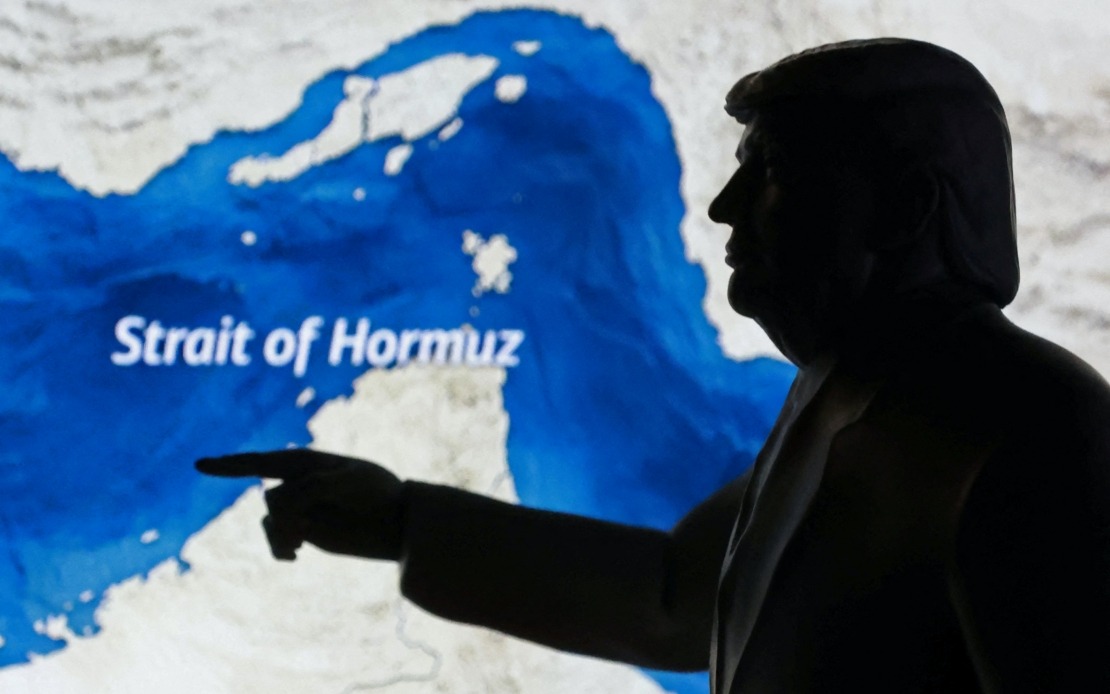
Tensions in the Middle East have reached a dangerous inflection point as United States President Donald Trump issued an explicit threat to strike Iranian civilian infrastructure in response to maritime attacks. Speaking via his Truth Social platform on Wednesday, Trump declared that for every assault on a commercial vessel transiting the Strait of Hormuz, Washington would target Iranian bridges or power plants, with particular emphasis on facilities near Tehran itself. The statement represents an unusually direct escalation of rhetoric, moving beyond typical diplomatic warnings to specify precise retaliatory measures with potential catastrophic humanitarian implications.
The Strait of Hormuz represents one of the world's most strategically vital chokepoints for global energy security. Through this narrow waterway between Iran and Oman, approximately one-third of all seaborne traded oil passes daily, making it essential to economies far beyond the immediate region. Southeast Asian nations, particularly those dependent on Middle Eastern petroleum supplies, face direct economic vulnerability should regional instability disrupt shipping lanes or prompt insurance companies to dramatically increase premiums on vessels traversing these waters. Malaysia's energy security, like that of Singapore and other regional trading hubs, hinges on the unimpeded flow of commerce through this corridor.
The current cycle of military exchanges has escalated significantly in recent weeks, with the United States conducting air strikes across Iranian territory since the previous week. Tehran responded with its own strikes targeting military installations and bases that Iranian officials claim represent American military infrastructure distributed across multiple regional countries. The tit-for-tat nature of these exchanges suggests a troubling pattern where each side's response triggers further escalation, creating momentum toward a larger confrontation despite diplomatic efforts aimed at preventing precisely such an outcome.
Particularly significant is the apparent collapse of negotiated stability achieved just the previous month. In June, the United States and Iran, with Pakistan playing a crucial mediating role, had reached a framework agreement specifically designed to terminate the conflict that erupted in February and establish conditions for a durable peace settlement. The mere existence of this agreement, however fragile, represented an attempt to prevent exactly the scenario now unfolding. That Washington and Tehran have resumed military operations whilst a ceasefire framework theoretically remains in effect suggests deep structural problems in the agreement's implementation or fundamental disagreement about its provisions.
Trump's threat language carries particular weight due to its specificity and inclusivity of civilian targets. By explicitly naming power plants and bridges, the statement moves beyond targeting military installations toward infrastructure that directly supports civilian populations. International humanitarian law carefully distinguishes between legitimate military targets and civilian infrastructure, with attacks on the latter potentially constituting war crimes if conducted without overwhelming military necessity. The casual assertion that power plants supplying electricity to Tehran's millions of residents would become legitimate targets marks a significant rhetorical shift toward expanded targeting principles.
The maritime dimension adds another layer of complexity to regional calculations. Commercial shipping companies increasingly face dilemmas about routing through the Strait of Hormuz versus taking far longer, more expensive alternative routes around Africa or through the Suez Canal. Each attack on vessels, whether actual or threatened, pushes insurance costs upward and encourages rerouting that benefits competitors whilst increasing global energy prices. This economic pressure creates incentives for all parties to demonstrate resolve through military means, potentially trapping rational actors in escalatory cycles despite mutual preference for stability.
For Malaysia and other Southeast Asian nations, the implications extend beyond energy security to broader maritime safety and regional order. The Strait of Hormuz sits at the convergence of multiple shipping lanes connecting Asian producers and consumers to Middle Eastern suppliers and African markets. Malaysian vessels operating in the region face heightened risk, and Malaysian trading relationships with both Iran and the United States create complex diplomatic positioning. Should the conflict genuinely escalate into the scenario Trump threatens, economic disruption would ripple across Southeast Asian supply chains dependent on uninterrupted petrochemical flows and manufactured goods transported through Middle Eastern waters.
The Pakistani-brokered framework deserves scrutiny as context for understanding current developments. Pakistan's willingness to mediate between Washington and Tehran reflects Islamabad's own interests in regional stability, yet the framework's apparent fragility raises questions about the adequacy of confidence-building measures contained within it. Neither side appears to have developed sufficient trust mechanisms to de-escalate when incidents occur, leaving political space for military responses even under nominal ceasefire conditions. This suggests that any durable settlement requires far deeper structural agreements addressing verification, communication protocols, and graduated response procedures rather than simply stating intentions to cease hostilities.
The broader geopolitical context matters considerably. The exchange between Washington and Tehran unfolds against a backdrop of shifting global alignments, with China and Russia observing how the United States handles Middle Eastern regional powers. Any perception that American military threats lack follow-through undermines deterrence credibility, whilst excessive escalation validates narratives about American aggression that complicate future diplomatic efforts. For Southeast Asia, these calculations affect broader questions about great power balancing and the sustainability of a rules-based international system that, however imperfectly, has underwritten regional prosperity for decades.
Looking forward, the trajectory established by Trump's explicit threat suggests further deterioration in US-Iran relations unless deliberate de-escalatory measures gain traction. Malaysian policymakers and business leaders should prepare contingency planning for potential supply chain disruptions, energy price volatility, and possible maritime incidents affecting regional commerce. The immediate diplomatic challenge involves reinvigorating confidence in the June framework through enhanced transparency, communication channels operating at multiple levels, and creative mechanisms for addressing incidents without automatic military responses. Without such measures, the Strait of Hormuz faces genuine risk of becoming the focal point for a much larger regional conflict with consequences extending far beyond the Middle East.

