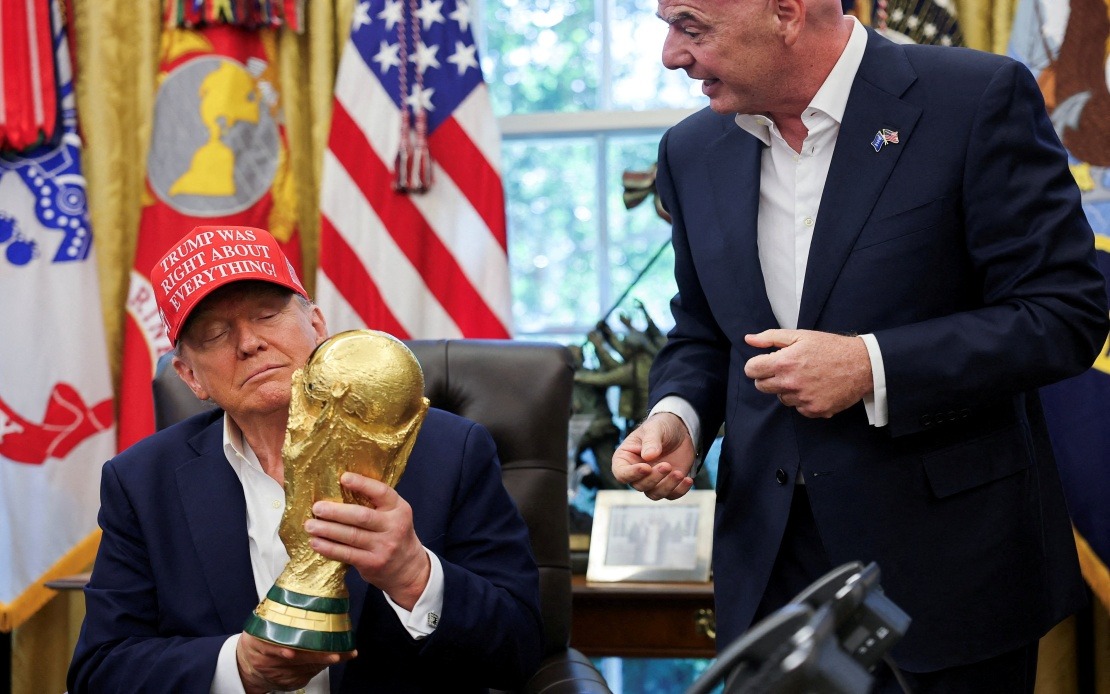
At a press gathering in Istanbul on July 20, US President Donald Trump struck a notably conciliatory tone regarding Spain, insisting that diplomatic tensions with Madrid do not exist. His comments came in the immediate aftermath of Spain's 1-0 triumph over Argentina in the FIFA World Cup final, marking a striking reversal from inflammatory language he had deployed just weeks earlier against the Spanish government and its leadership.
The American president extended warm congratulations to Spanish officials, commending their national team's performance and characterising the championship match as an exciting spectacle worthy of international attention. When questioned about whether he felt disappointed by Argentina's defeat, Trump deflected the question by acknowledging Spain's superior play throughout the contest, though he qualified this assessment by noting the match had remained competitive and closely contested until its conclusion.
This diplomatic pivot stands in sharp contrast to Trump's rhetoric at a NATO summit held in Ankara, Türkiye, earlier in the month. At that gathering, he had launched a scathing attack on Spain's government, labelling the nation a "wasted cause" and describing it as a "terrible partner in NATO." His criticism extended beyond rhetorical flourish; Trump explicitly instructed his administration to cease all commercial relations with Spain and directed officials to suspend engagement with Spanish representatives entirely. The severity of these directives underscored the depth of his frustration with Madrid's policies.
The central grievances driving Trump's earlier condemnation centred on two distinct policy disputes. First, Spain had declined to grant American military forces expanded access to military installations on Spanish territory during the escalating tensions with Iran. Such base access remains strategically crucial for US regional operations and power projection across the Mediterranean and Middle East. Second, and perhaps equally significant from Trump's perspective, the Spanish government had resisted committing to the NATO target of allocating five percent of gross domestic product to defence spending—a benchmark that Trump had repeatedly championed as essential for burden-sharing among alliance members.
These underlying disagreements reflect broader tensions within the transatlantic alliance during this period. Trump's demands for increased European defence expenditure had become a recurring theme in his approach to NATO, with the American president frequently citing what he characterised as an unfair distribution of security responsibilities and costs. Spain's reluctance to meet these expectations apparently triggered a particularly strong reaction, prompting the unusually forceful language about cutting off all diplomatic and commercial contact.
For Malaysian observers and Southeast Asian policymakers, this episode illustrates the unpredictable nature of Trump's approach to international relations and the degree to which diplomatic positioning can shift rapidly based on symbolic events and public gestures. The World Cup victory provided Spain with what amounts to a soft diplomatic opening—an occasion where congratulations and praise could be extended without directly addressing the underlying policy disputes. Trump's willingness to exploit this moment for image rehabilitation suggests that his threats, while serious in intent, remain subject to tactical recalibration when circumstances permit a face-saving resolution.
The incident also underscores how traditional alliances within NATO and the broader Western framework face periodic strain under pressure to meet specific defence spending benchmarks and military cooperation requirements. Spain's position—caught between American demands for increased military expenditure and expanded base access on one hand, and domestic political constraints and budget priorities on the other—represents a challenge faced by numerous mid-sized European nations seeking to balance alliance obligations with national interests.
From a broader geopolitical perspective, the Spain episode reveals how economic leverage and threats of trade restrictions have become normalised diplomatic tools in recent American statecraft. The explicit instruction to cease all commercial relations represented a weaponisation of trade relationships that departed from conventional diplomatic practice, suggesting that Trump viewed economic sanctions as an appropriate instrument for enforcing NATO compliance and military cooperation standards.
The relatively rapid shift from harsh condemnation to public praise also raises questions about the durability of Trump's stated positions on international partnerships. While the underlying disputes regarding defence spending and military base access remained unresolved, the president's demonstrated willingness to set aside inflammatory language in exchange for a congratulatory moment implied that these conflicts, while genuine, might ultimately yield to pragmatic compromise or symbolic gestures of goodwill.
For Spain itself, the episode presented both challenges and opportunities. The trade cessation threat represented a significant economic risk for a nation deeply integrated into transatlantic commerce and investment networks. However, the rapid de-escalation following the World Cup victory provided relief and suggested that the government's resistance to American demands, while costly in diplomatic terms, had not produced irreversible damage to bilateral relations. The episode demonstrated that Madrid's leverage, however limited, remained sufficient to secure some restoration of normal diplomatic engagement.
Looking forward, the Spain-Trump dynamic illustrates how major power relationships increasingly incorporate elements of unpredictability and rapid tactical adjustment. For Southeast Asian nations monitoring superpower behaviour and attempting to craft their own strategic positioning, the episode offers a cautionary lesson about the importance of maintaining flexibility in international relationships while avoiding the kind of direct confrontation that might trigger sustained economic or diplomatic consequences.

