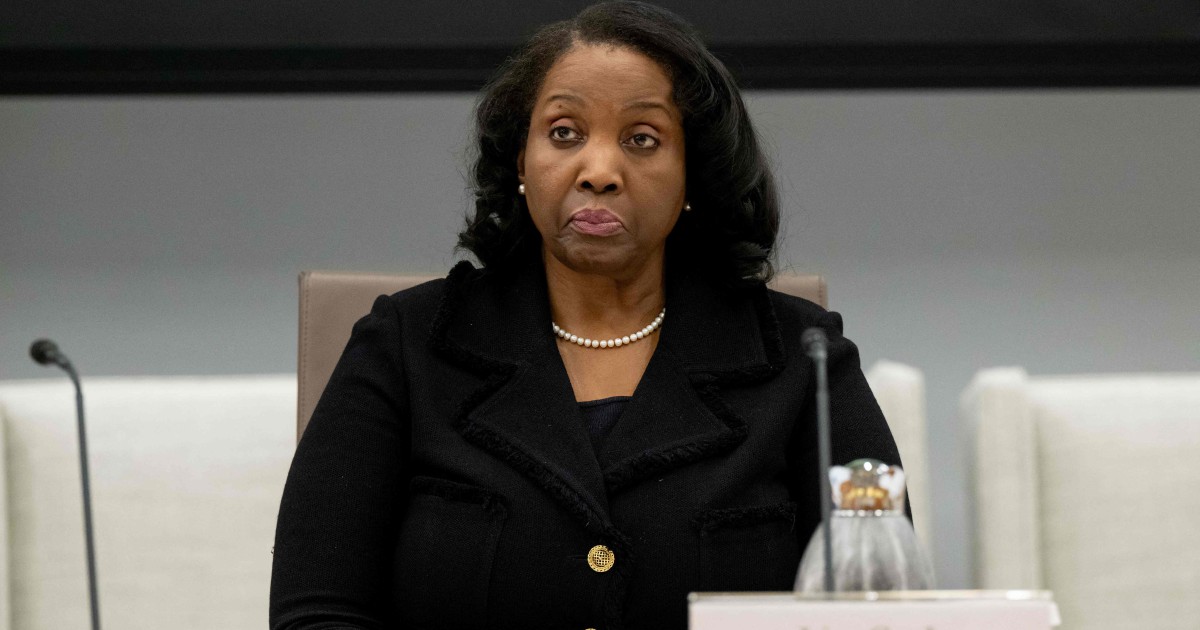
The Trump administration has launched a fresh campaign to remove Lisa Cook from her position as a Federal Reserve governor, according to correspondence made public on Friday. The effort represents a determined second attempt by the president to dislodge the senior central bank official, whose removal the administration believes is justified by unresolved questions surrounding mortgage fraud allegations.
Cook's tenure at the Federal Reserve has become unexpectedly contentious despite her appointment during the Biden administration and confirmation by the Senate. Her presence on the seven-member board has drawn criticism from the incoming Trump team, which views her as ideologically misaligned with the administration's economic policy direction and skeptical of her qualifications for the role.
The previous attempt to remove Cook encountered a significant legal obstacle when the Supreme Court rejected Trump's initial strategy in June. That ruling fundamentally constrained the president's authority to unilaterally dismiss officials from the Federal Reserve, an institution designed with structural independence to shield monetary policy decisions from direct political interference. The justices affirmed long-standing principles that protect the Fed's operational autonomy from executive overreach.
Rather than accepting that judicial determination, the Trump administration appears to have identified an alternative legal pathway. The new approach, detailed in correspondence reviewed by news agencies, suggests the White House believes it has discovered grounds for removal that may withstand constitutional scrutiny. Advisors have apparently studied the Supreme Court's reasoning carefully to craft a strategy that works within the established legal framework.
The mortgage fraud allegations represent the substantive justification for Cook's removal in the revised approach. While the precise nature and scope of these allegations remain unclear from public disclosures, they form the foundation of the administration's case that Cook is unfit for her Federal Reserve position. The strategy pivots away from broad executive authority arguments toward specific misconduct claims.
For Malaysian and regional observers, this institutional clash illuminates the ongoing tensions in American governance between executive authority and independent regulatory institutions. The Federal Reserve's independence is foundational to US economic stability, yet the Trump administration's determination to reshape its leadership reflects broader skepticism toward bureaucratic autonomy. This dynamic echoes global debates about central bank independence, particularly relevant as Southeast Asian economies navigate their own relationships with independent monetary authorities.
Cook's background as an economist specializing in monetary policy and racial wealth gaps had positioned her as a reform-oriented appointment during the Biden years. Her presence on the Fed's board symbolized a shift toward greater attention to equity concerns within monetary policy discussions. The Trump administration's push to remove her thus signals a competing vision of the Fed's proper role and priorities.
The legal and political dimensions of this confrontation carry implications beyond the immediate question of one official's employment. Successful removal under these new grounds could establish precedent for future presidents seeking to reshape the Federal Reserve's composition more aggressively. Conversely, another judicial rebuff could further entrench the institution's independence and demonstrate the judiciary's commitment to preserving regulatory autonomy.
The timing of this renewed effort matters considerably. As the Trump administration settles into office and begins nominating Federal Reserve officials to upcoming vacancies, the Cook question operates symbolically as a statement about the direction the administration intends to take monetary policy. Her removal would signal the Fed's future direction distinctly different from recent practices.
Southeast Asian policymakers and economists observe these developments closely because the Federal Reserve's decisions reverberate throughout global financial markets and currency systems. A Federal Reserve that shifts significantly under Trump administration pressure toward priorities different from recent years could alter the external monetary environment in which regional economies operate. Interest rates, dollar strength, and capital flows all respond to Fed policy shifts.
The unresolved question of what exactly constitutes the mortgage fraud allegations underlying this removal effort creates ambiguity about the administration's true intentions. If the allegations are substantial and well-documented, they provide genuine grounds for concern about an official's fitness. If they represent a pretext for removing someone the administration dislikes for policy reasons, the case becomes more troubling for institutional independence and the rule of law.
As this situation develops, the broader principle at stake transcends the individual circumstances of Lisa Cook's Federal Reserve governorship. The Trump administration's persistent effort to overcome judicial constraints and reshape an independent agency tests foundational American constitutional principles about separation of powers and bureaucratic independence. The outcome will meaningfully affect how much discretionary power presidents can exercise over ostensibly independent institutions that manage critical functions.

