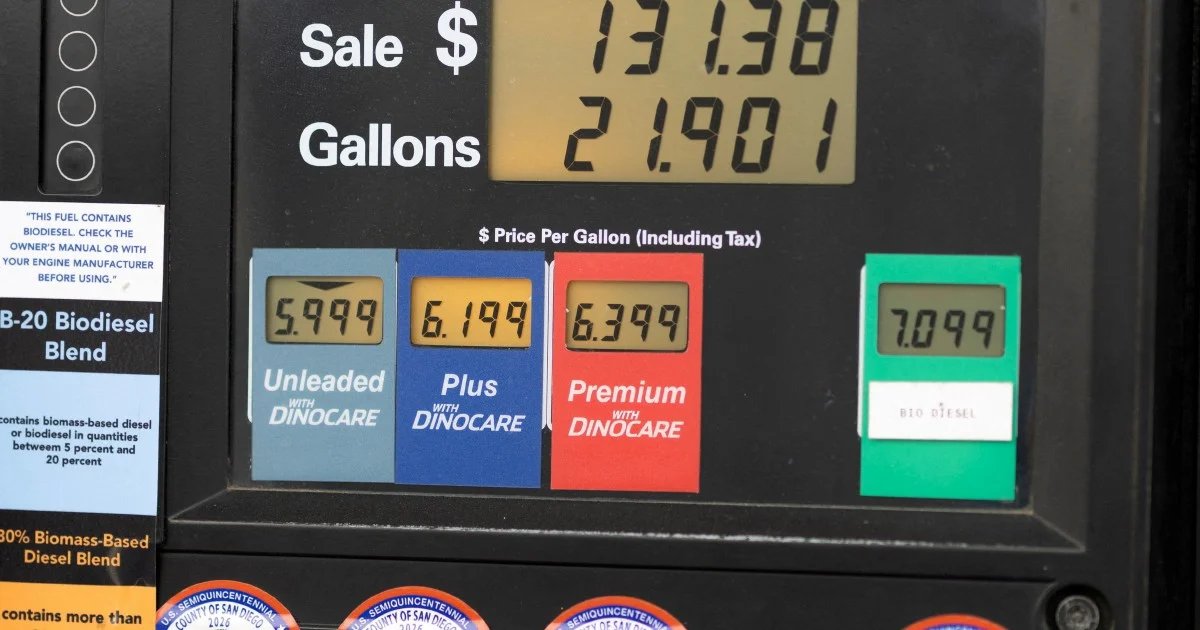
Donald Trump has directed authorities to examine the practices of major oil corporations regarding sustained fuel prices, an action signalling the US administration's frustration with the pace of relief at the pumps despite global market shifts. The move represents a significant policy response to mounting political pressure, as the US leader seeks to demonstrate active engagement with an issue that directly affects household budgets and public sentiment heading into pivotal months.
The inquiry addresses a longstanding tension between market forces and political expectations. While crude oil prices have experienced considerable fluctuation in response to geopolitical events and supply dynamics, the translation of wholesale cost reductions into tangible savings at forecourt pumps has lagged significantly. This gap between theoretical price adjustments and real-world consumer experience has created substantial political vulnerability, with critics pointing to the oil sector's reluctance to pass savings downstream as evidence of insufficient competition or potential market manipulation.
The timing of this investigation reflects broader concerns about energy security and market stability in an unstable global environment. The Middle East remains a critical hub for petroleum production, and recent military tensions in the region have created persistent uncertainty about supply continuity. This geopolitical backdrop compounds the challenge of bringing fuel prices down, as traders incorporate risk premiums into their calculations, even when direct supply disruptions remain limited.
For Malaysian readers, the implications extend beyond American borders. Southeast Asia's energy sector remains deeply interconnected with international crude markets, and any shift in US energy policy could reverberate through regional fuel pricing structures. Malaysia's own refineries and downstream operations remain sensitive to global petroleum valuations, and the competitive dynamics American regulators examine could shape investment patterns and pricing strategies across the region.
The investigation also illuminates the structural complexities of modern energy markets. Oil companies operate across multiple jurisdictions with varying regulatory environments, and distinguishing between legitimate pricing adjustments and anti-competitive behaviour requires sophisticated economic analysis. Refinery margins, logistics costs, tax differentials, and regional supply bottlenecks all influence final pump prices in ways that transcend simple crude cost calculations. Any regulatory action must untangle these layers to establish whether companies are exercising genuine market power or responding rationally to underlying cost structures.
Historically, such inquiries into petroleum sector pricing have produced mixed results. Previous administrations have launched similar investigations during periods of elevated fuel costs, sometimes identifying transparency issues or communication gaps rather than overt collusion. The political utility of such probes often exceeds their enforcement outcomes, as they demonstrate governmental attentiveness to consumer concerns while creating space for market adjustments that may eventually provide political credit regardless of regulatory findings.
The petrol price environment also intersects with broader inflation management concerns. As central banks navigate the challenge of controlling price growth without triggering economic contraction, energy costs remain a particularly sensitive variable due to their pervasive impact on transportation, manufacturing, and consumer spending. Political pressure on oil companies represents an alternative approach to monetary policy tightening, attempting to reduce inflationary pressure through sectoral scrutiny rather than economy-wide demand destruction.
Global energy companies operating in the United States face heightened scrutiny across multiple fronts, from environmental regulations to antitrust concerns to tax policy debates. An investigation into pricing practices adds another layer of regulatory complexity that corporations must navigate, potentially influencing capital allocation decisions and investment horizons. The expectation of heightened governmental attention may itself influence market behaviour, as companies become more conscious of potential political consequences for pricing decisions.
Regional implications for Southeast Asia warrant careful attention. Countries like Malaysia and Indonesia with petroleum export interests face different dynamics from net importers like Thailand or Singapore. Export-oriented producers benefit from higher crude prices but face domestic political pressure when fuel pricing formulas translate global costs into elevated local prices. The US investigation could influence how international oil majors manage price transmission across different markets, potentially affecting regional fuel cost structures.
The investigation's scope and methodology remain important variables. Broader examinations that encompass the full supply chain from extraction through retail distribution might identify genuine bottlenecks or inefficiencies, whereas narrower inquiries focused primarily on major companies could yield less actionable insights. The effectiveness of any regulatory action depends partly on whether investigators can distinguish between market dynamics beyond corporate control and discretionary pricing decisions that warrant intervention.
Longer-term, this episode underscores the enduring tension between energy market realities and political expectations. Crude oil trades in globally integrated markets influenced by supply disruptions, currency fluctuations, inventory levels, and geopolitical risk assessments. Individual companies, even those of substantial scale, operate within these broader constraints. Yet democratic governments cannot easily explain to citizens that fuel prices reflect global forces beyond direct control, creating persistent incentives for regulatory intervention even when effectiveness remains uncertain.
The investigation ultimately reflects deeper questions about energy market structure and regulatory philosophy. Whether through enhanced competition, improved transparency, or targeted enforcement, policymakers grapple with ensuring that consumers benefit appropriately from wholesale price reductions. For Malaysia and neighbouring economies monitoring global energy policy developments, the American approach to petroleum market regulation offers insights into how developed economies manage this politically fraught intersection of market dynamics and public expectation.