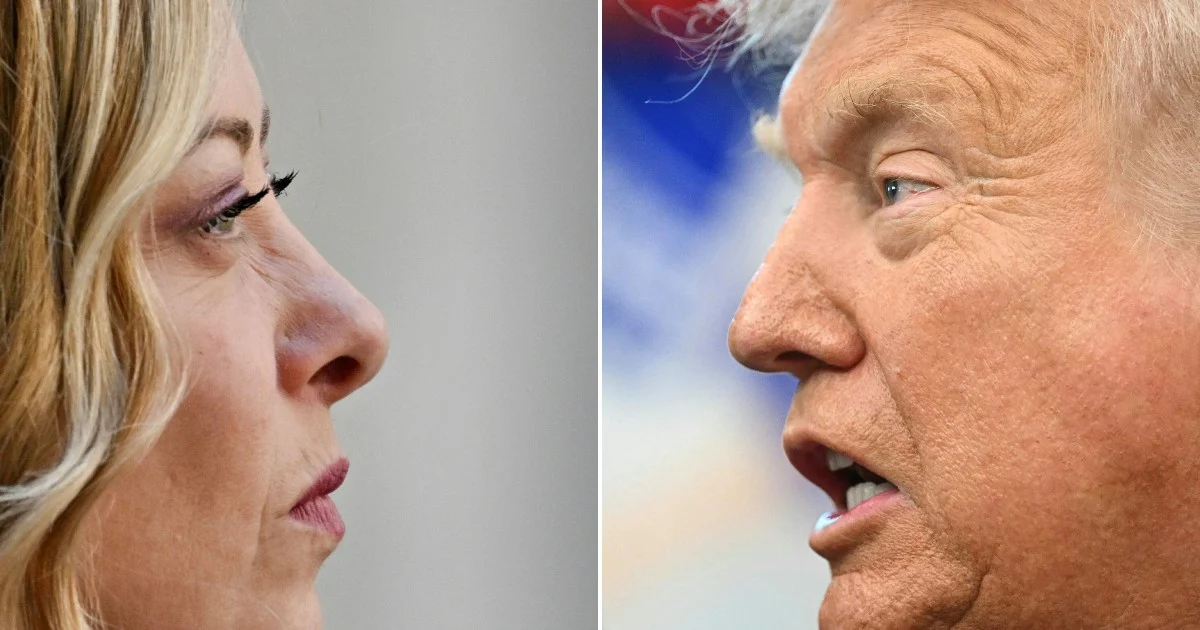
United States President Donald Trump has intensified a public disagreement with Italian Prime Minister Giorgia Meloni, levelling accusations that she has sought multiple photographs with him during international gatherings. The dispute, aired publicly on Saturday, represents a widening rift within the Group of Seven industrial democracies at a moment when transatlantic unity would typically be considered crucial for addressing shared geopolitical challenges.
The photograph controversy, seemingly minor on its surface, masks deeper tensions simmering beneath the relationship between Washington and Rome. Trump has connected the personal friction to substantive policy disagreements, specifically citing disputes over Iran sanctions and European NATO contributions. This linkage suggests the American leader views the interpersonal tension as symptomatic of broader Italian positions that diverge from his administration's strategic objectives.
For Malaysian observers, this G7 discord carries significant implications. The alliance's internal cohesion directly affects global economic policy, trade frameworks, and responses to regional crises that impact Southeast Asia. When the world's leading industrialised nations experience fractious leadership relations, the downstream effects ripple through international institutions, investment patterns, and diplomatic coordination that shape the regional environment in which Malaysia operates.
Meloni, whose government has pursued a more independent European foreign policy while maintaining traditional Atlantic ties, appears to have become a focal point for Trump's frustration with what he perceives as insufficient European commitment to shared defence burdens. The Iran policy dimension is particularly significant; the Trump administration's approach toward Tehran has consistently differed from European positions, and Italy's stance has reflected European consensus rather than American preferences in several instances.
The NATO spending argument represents a recurring American grievance that transcends Trump's current tenure. For years, successive US administrations have pressured European allies to increase defence expenditure, with Italy frequently cited as underperforming relative to GDP. Trump's injection of this issue into the photograph dispute suggests he views Meloni's leadership as emblematic of European nations that benefit from American security guarantees without proportionately shouldering costs.
The public nature of this escalation signals a departure from traditional diplomatic protocol, where leaders typically resolve such disagreements through private channels before any public acknowledgment. Trump's willingness to air the conflict openly reflects his distinctive approach to international relations, where perceived slights frequently become matters of public dispute. This approach complicates Italy's position within both the G7 and European Union structures, potentially damaging Meloni's credibility as a bridge-builder between European and American interests.
From a Southeast Asian perspective, this transatlantic turbulence raises questions about the reliability of Western-led multilateral frameworks. If the world's largest industrial democracies cannot maintain unified positions on routine diplomatic matters and policy priorities, the implications for regional institutions and agreements become concerning. Investment flows, trade negotiations, and security arrangements that depend on Western bloc coherence may face uncertainty when internal Western cohesion fracturs.
The Iran dimension deserves particular attention for Malaysian readers. European business interests in Iran, which Meloni's government represents to some extent, have clashed repeatedly with American maximum pressure sanctions policies. Italy's position reflects broader European commercial and strategic interests in maintaining some economic engagement with Tehran, a stance fundamentally at odds with American objectives. When the Trump administration links this policy disagreement to personal friction with Meloni, it signals that commercial and diplomatic leverage may increasingly be deployed through personalistic channels rather than institutional frameworks.
Meloni's government has endeavoured to position Italy as a responsible European power that maintains constructive relationships across the Atlantic. The public escalation from Trump undermines this delicate balancing act, potentially pushing Italian policy closer to European consensus positions simply to demonstrate distance from American criticism. Such dynamics can inadvertently drive allies further apart when intended to pressure closer alignment.
The photograph dispute, while seemingly trivial, illuminates how personal relationships between leaders increasingly influence diplomatic outcomes in the contemporary international system. Unlike previous eras when institutional frameworks and career diplomats mediated disagreements, the current environment places enormous weight on personal chemistry and perceived respect between heads of government. Meloni's apparent misstep in seeking photos, if accurately characterised, may reflect her attempt to build personal rapport with a leader whose decision-making patterns she recognised as personality-driven.
For Malaysia and other nations outside the Western core, these G7 tensions reinforce the importance of cultivating diverse international relationships and not relying excessively on any single bloc's coherence. The disputes within the alliance system underscore why countries throughout Southeast Asia increasingly pursue pragmatic, flexible foreign policies that avoid excessive dependence on any particular great power or multilateral structure that may prove unstable.
Moving forward, the trajectory of this Trump-Meloni dispute will reveal whether the disagreement remains a temporary diplomatic irritant or signals a more fundamental realignment within transatlantic relationships. Should Trump continue pursuing grievances through public escalation rather than diplomatic resolution, the implications for G7 effectiveness could prove significant. For Malaysian policymakers monitoring Western bloc dynamics, the episode demonstrates that Western unity cannot be assumed and that planning must account for potential fractures within traditionally allied groupings.
%22%2F%3E%3C%2Fpattern%3E%3C%2Fdefs%3E%3Crect%20width%3D%22100%25%22%20height%3D%22100%25%22%20fill%3D%22url(%23ph4zavbg)%22%2F%3E%3Crect%20width%3D%22100%25%22%20height%3D%22100%25%22%20fill%3D%22url(%23ph4zavbp)%22%2F%3E%3Ctext%20x%3D%2250%25%22%20y%3D%2250%25%22%20text-anchor%3D%22middle%22%20dominant-baseline%3D%22central%22%20fill%3D%22rgba(255%2C255%2C255%2C0.95)%22%20font-family%3D%22Georgia%2C%20'Times%20New%20Roman'%2C%20serif%22%20font-weight%3D%22700%22%20font-size%3D%22272%22%20letter-spacing%3D%22-0.02em%22%3EASEAN%3C%2Ftext%3E%3C%2Fsvg%3E)
%22%2F%3E%3C%2Fpattern%3E%3C%2Fdefs%3E%3Crect%20width%3D%22100%25%22%20height%3D%22100%25%22%20fill%3D%22url(%23ph359w1g)%22%2F%3E%3Crect%20width%3D%22100%25%22%20height%3D%22100%25%22%20fill%3D%22url(%23ph359w1p)%22%2F%3E%3Ctext%20x%3D%2250%25%22%20y%3D%2250%25%22%20text-anchor%3D%22middle%22%20dominant-baseline%3D%22central%22%20fill%3D%22rgba(255%2C255%2C255%2C0.95)%22%20font-family%3D%22Georgia%2C%20'Times%20New%20Roman'%2C%20serif%22%20font-weight%3D%22700%22%20font-size%3D%22226%22%20letter-spacing%3D%22-0.02em%22%3EPenang%3C%2Ftext%3E%3C%2Fsvg%3E)