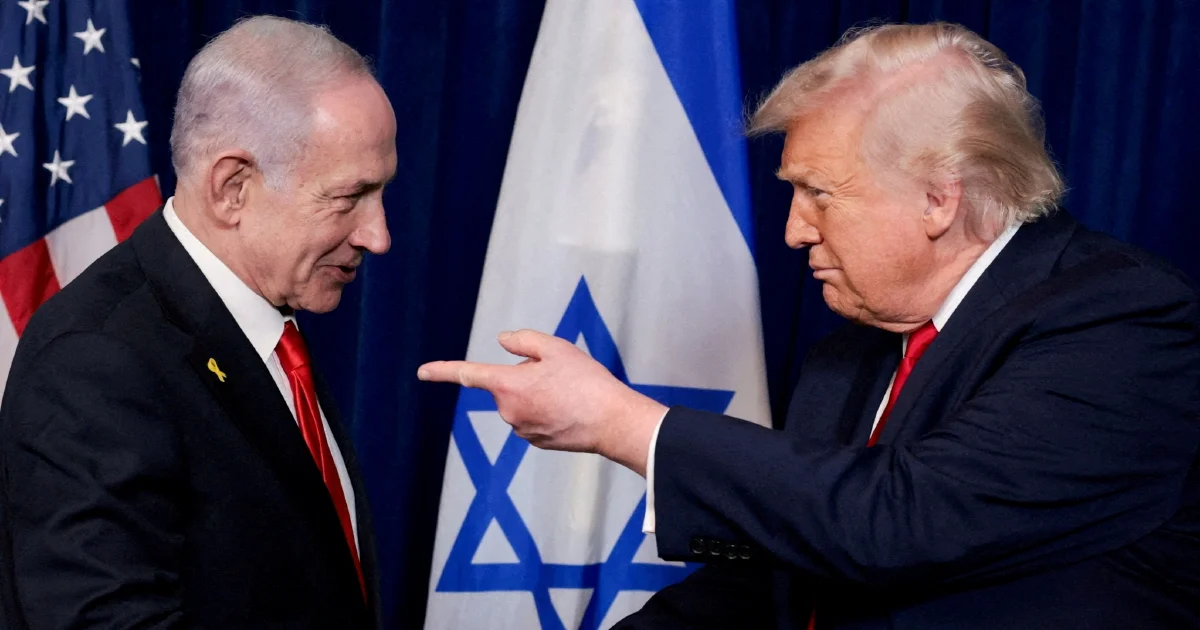
US President Donald Trump broke publicly with Israel on Tuesday over its military campaign in Lebanon, departing from the typically unified American support for Israeli operations in the region. The criticism centred on what Trump characterised as disproportionate tactics employed against Hizbollah, with the President arguing that flattening residential buildings to reach combatants goes beyond what operational necessity demands.
Trump's intervention into the fraught Lebanese conflict marks a notable shift in American diplomatic posture. Throughout his first term and into his second presidency, Trump has largely maintained unwavering support for Israeli military actions across the Middle East. This public divergence suggests either mounting concern about the humanitarian cost of the campaign or a strategic recalibration of how the United States wishes to be perceived in ongoing regional conflicts.
The President's specific concern about the destruction of apartment buildings reflects a broader international humanitarian debate surrounding the Lebanon operation. Residential structures in Beirut and southern Lebanon have been extensively damaged in recent weeks, raising questions among Western allies about whether Israel's targeting criteria adequately distinguish between military and civilian objectives as required under international law.
For Malaysia and other Southeast Asian nations, Trump's comments carry significance beyond their immediate Lebanese context. They demonstrate that even Washington's closest allies in security matters may face public scrutiny over military conduct, suggesting that no power enjoys complete immunity from diplomatic pressure regarding civilian protection. This principle resonates particularly in a region where Malaysia has historically advocated for international humanitarian standards and civilian welfare in conflict zones.
The timing of Trump's critique coincides with intensifying international concern about the humanitarian dimension of Middle Eastern conflicts. The United Nations and various human rights organisations have documented extensive civilian displacement and infrastructure damage across Lebanon, with medical facilities and residential areas coming under bombardment. Trump's willingness to articulate concerns about civilian casualties, even when directed at a close ally, signals that domestic and international scrutiny of military conduct carries political weight even for the world's leading superpower.
Israeli military operations in Lebanon targeting Hizbollah have escalated dramatically in recent months, representing a significant expansion of the long-running conflict between the Israeli state and the Iranian-backed militant organisation. The campaign has involved extensive air strikes aimed at eliminating Hizbollah's leadership and infrastructure, leading to significant loss of life among both combatants and civilians caught in populated areas.
Trump's intervention also reflects broader American strategic calculations regarding regional stability and the long-term consequences of extensive civilian harm. Military campaigns that generate large civilian casualties risk creating grievances that fuel extremism and destabilise regions for years or decades. The United States, despite its military dominance, remains dependent on regional allies and stability for its strategic interests, suggesting that restraint in civilian harm serves American long-term objectives.
The President's critique does not indicate any fundamental shift in American support for Israel's security concerns or its right to defend itself against Hizbollah attacks. Rather, it reflects disagreement over methodology and proportionality in how that defence is conducted. This nuanced position—supporting Israel's security while questioning specific operational choices—mirrors the approach adopted by some other Western allies who have expressed similar concerns about civilian protection.
For observers across Southeast Asia, Trump's public rebuke demonstrates that military alliances do not require unconditional acceptance of all operational decisions. Malaysia, Vietnam, and other regional states navigating complex relationships with major powers can note that principled disagreement on specific policies need not destabilise broader strategic partnerships. This precedent may encourage more honest diplomatic engagement between aligned nations.
The Lebanese situation has become increasingly destabilising not only for that country but for the broader Middle Eastern region and international security. The extensive civilian displacement and humanitarian crisis unfolding demands international attention, and Trump's willingness to voice concerns about civilian costs represents one avenue through which pressure for restraint can be applied even to close military allies.
Going forward, Trump's position may influence how other Western governments approach similar conversations with Israel about military operations. Public criticism from the American president, even if limited in scope, carries substantial weight internationally and may reshape the calculus surrounding which military tactics receive international acquiescence versus which face diplomatic resistance.
Ultimately, Trump's critique suggests that even in an era of shifting geopolitical alignments and great power competition, international humanitarian standards and civilian protection retain sufficient political salience to merit public presidential attention. For a region like Southeast Asia, where nations increasingly balance relationships with multiple powers, this principle offers a framework for advocating that all military operations—regardless of which power conducts them—meet consistent standards of civilian protection and proportionality.