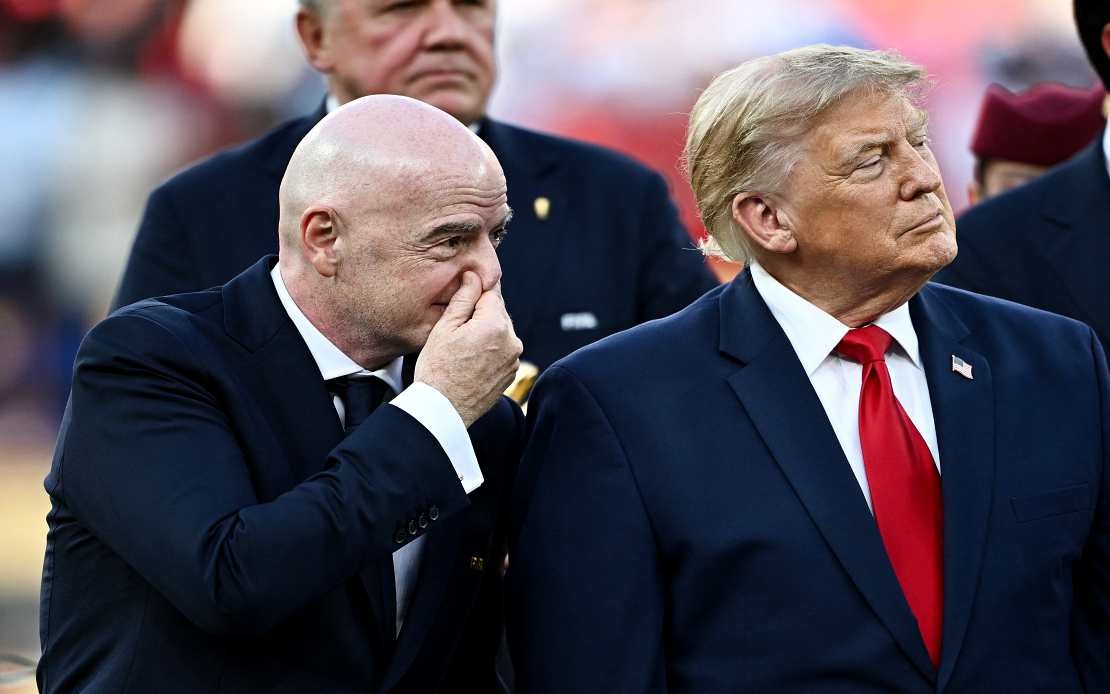
United States President Donald Trump has stepped into a brewing governance crisis at FIFA by publicly endorsing Gianni Infantino as the football body's indispensable leader, dismissing mounting criticism from major global confederations. In a statement posted to his Truth Social platform on August 11, Trump characterised Infantino as fantastic and credited him with orchestrating the most commercially successful World Cup tournament on record, suggesting the international football body would face irreversible decline if leadership changed. The intervention underscores deepening divisions within global football administration and hints at the complex geopolitical dynamics shaping sports governance.
The FIFA president's position has become increasingly precarious following a coordinated assault from three continental football confederations. UEFA, which oversees European football, joined forces with the Asian Football Confederation and CONCACAF, representing North, Central American and Caribbean football, to issue a joint open letter condemning Infantino's stewardship. The confederations demanded an independent investigation into the circumstances surrounding FIFA's attempt to monetise its commercial rights through a controversial privatisation scheme. The alignment of these three powerful regional bodies signals unusual consensus about fundamental governance failures at football's global governing institution.
The controversy centres on FIFA's attempt in July to secure approximately US$4.2 billion by selling roughly 20 per cent ownership stakes in a newly created entity designed to control the organisation's media and commercial properties, including World Cup broadcasting rights. Such a transaction would have represented an unprecedented shift in how international football generates revenue, moving away from direct federation control toward private investor involvement. Initial media reporting suggested Joshua Kushner's family foundation stood ready to acquire a significant stake, a detail that potentially explains both the international football community's alarm and perhaps Trump's interest in the matter, given Kushner's connection to his son-in-law Jared Kushner.
Infantino has faced unprecedented pressure within FIFA's own institutional structures. In early August, the president convened an emergency gathering of FIFA's executive leadership as his authority visibly eroded within the organisation. During this tense meeting, despite the mounting external criticism, FIFA's internal hierarchy rallied behind Infantino, though the president felt compelled to formally apologise for mismanagement regarding the FIFA Forward Enterprise commercial initiative. The closed-door show of support suggests Infantino retains sufficient backing among FIFA's administrative core to weather the immediate threat of dismissal, yet the need for such emergency damage control revealed cracks in his previously secure position.
The commercial rights proposal sparked the most serious fracture in global football governance in recent memory. European football, represented through UEFA, responded with particular ferocity, announcing that all its member national associations would boycott FIFA competitions unless the privatisation scheme was completely abandoned. This threat carried genuine weight given that European federations represent enormous financial and competitive value to FIFA's commercial ecosystem. The prospect of UEFA members withdrawing from FIFA competitions posed an existential threat to the federation's financial model and institutional legitimacy.
Confronted with this unified international resistance and the prospect of a continental boycott that could cripple global football operations, Infantino ultimately capitulated. FIFA announced the complete withdrawal of its commercial rights sale proposal, effectively retreating from the controversial privatisation plan that had unified football's regional power brokers against the central authority. The surrender represented a significant loss of face for Infantino and demonstrated that even FIFA's president cannot unilaterally impose major institutional changes without securing buy-in from the continental confederations that constitute football's actual power structure.
Trump's public defence of Infantino arrived amid this backdrop of organisational dysfunction and contested authority. The American president's characterisation of Infantino as irreplaceable and his invocation of the 2022 Qatar World Cup's commercial success appeared designed to rehabilitate the FIFA chief's image and perhaps signal to other potential critics that powerful international figures viewed his retention as strategically important. For Malaysian and Southeast Asian readers, Trump's intervention matters because AFC member nations depend on stable FIFA governance to protect their competitive interests and financial stakes in international football. Any further destabilisation of FIFA leadership could complicate the AFC's capacity to advocate effectively for Asian football interests.
The episode illuminates how global sports governance intersects with broader geopolitical considerations. Trump's defence of an embattled international bureaucrat—not typically his posture—suggests either commercial interests he wished to protect or a calculation that Infantino's continuity served American interests better than alternative leadership arrangements. The emerging pattern indicates that football governance has become sufficiently consequential that major powers now actively intervene in FIFA's internal affairs, using their political influence to shape outcomes in ways that transcend the sport itself.
For Asian football federations, the crisis presented both opportunity and risk. The AFC successfully joined a unified international front demanding governance reforms, demonstrating that Asian confederations could exercise meaningful leverage in FIFA decision-making when they coordinated with other regional bodies. However, the episode also revealed how FIFA crises can create unpredictable political complications, as when unexpected external figures like Trump inject themselves into football administration disputes. Moving forward, Asian football will need to navigate an increasingly politicised global sports governance environment while protecting its own institutional interests against both FIFA overreach and external manipulation.

