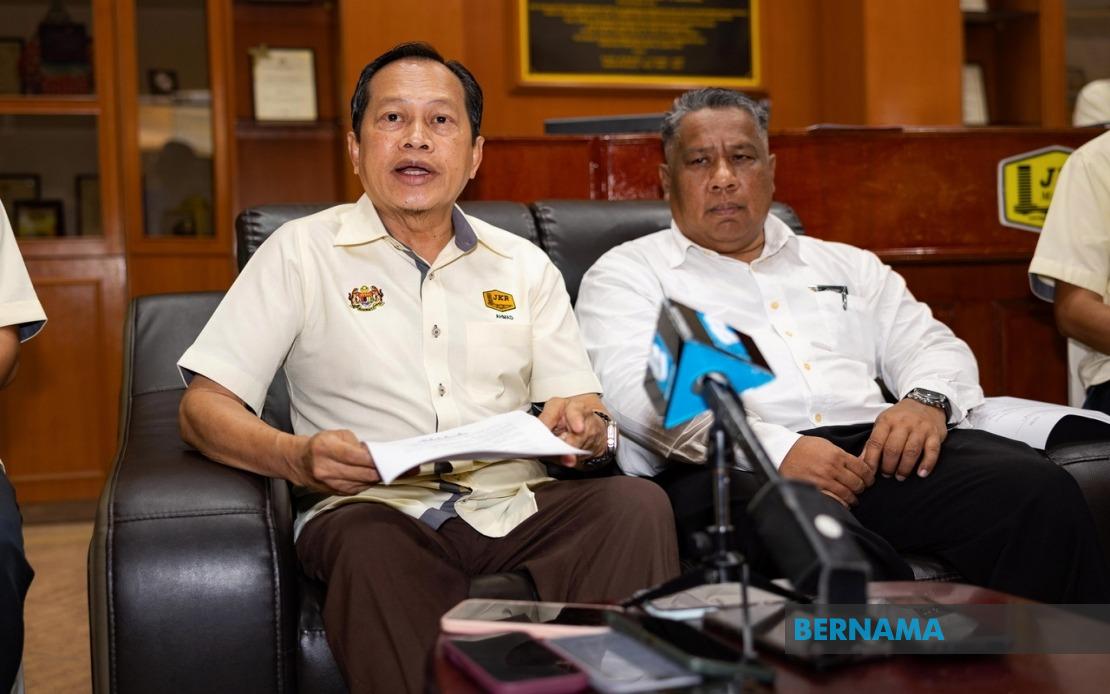
The Public Works Department has moved to clarify the division of responsibilities for tree management along Malaysia's federal road network, following renewed scrutiny over road safety following a fatal incident. Deputy Works Minister Datuk Seri Dr Ahmad Maslan stated during a working visit to Manjung in Perak that local authorities bear the primary obligation to manage vegetation on federal road reserves, a position anchored in existing legislation and recent judicial guidance.
The legal framework governing this arrangement derives from Section 101(b) of the Local Government Act 1976 (Act 171), which grants local government bodies explicit authority over tree planting, pruning and removal within their administrative jurisdictions. This authority extends to vegetation on federal road reserves that fall within a local authority's territorial boundaries. Ahmad emphasised that this legislative allocation of responsibility represents a settled matter of law, not a question of administrative preference or departmental convenience.
The clarification assumes heightened importance following the tragedy on the FT68 Bentong-Kuala Lumpur Old Road last Sunday, where four family members died after a mature tree collapsed onto their vehicle. The incident prompted Bentong Member of Parliament Young Syefura Othman to call for enhanced collaboration between JKR and private maintenance concessionaires with certified arboricultural experts to conduct routine technical evaluations of mature trees and slope conditions along federal corridors. Such recommendations reflected public concern about preventative measures and inter-agency coordination.
Ahmad's response distinguished between the department's actual contractual obligations and the reasonable boundaries of departmental responsibility. Under the concession agreements binding JKR and private maintenance companies, provisions for tree removal are narrowly circumscribed. The contracts permit clearing only after trees have already fallen, not preventative or protective cutting. Ahmad stressed that road furniture—signage, barriers, and similar installations—fall within departmental purview, but vegetation management does not. This distinction clarifies why JKR cannot unilaterally implement arboricultural interventions, regardless of safety considerations.
The minister stopped short of dismissing concerns about coordination and road safety, instead positioning JKR and concessionaire entities as willing collaborators with local authorities on improving protective outcomes. He emphasised that the department recognises the legitimate safety interests underlying the MP's intervention and expressed openness to structured cooperation frameworks. This approach acknowledges that institutional responsibility and practical cooperation need not be mutually exclusive—local authorities retain legal obligation while technical support and coordinated planning mechanisms can operate across agency lines.
The visit to Manjung afforded Ahmad an opportunity to review the organisational structure and operational priorities of JKR's district-level operations in Perak. Briefings covered divisional functions and infrastructure project timelines, reflecting the ministry's broader commitment to monitoring implementation quality across the country's public works ecosystem. The regional focus aligns with ministerial efforts to strengthen communication channels between federal, state and local tiers of the public works administration.
Ahmad underscored the importance of continuous operational oversight and institutional coordination to ensure that infrastructure projects and maintenance activities comply with technical specifications, scheduling requirements and budgetary allocations. He indicated that such vigilance constitutes a fundamental responsibility of the Ministry of Works in its supervisory capacity. Regular engagement between the ministry, JKR divisions and district-level engineers reflects an understanding that technical execution quality depends on sustained inter-agency alignment and performance accountability at multiple administrative levels.
The minister's remarks reflected broader ministerial messaging about the government's commitment to maintaining Malaysia's public infrastructure network to standards that prioritise safety and user satisfaction. This framing positions road safety not merely as a reactive response to specific incidents but as an integral dimension of infrastructure asset management requiring consistent investment in monitoring, coordination and preventative planning. The language suggested recognition that public confidence in road networks depends on visible institutional commitment to systematic safety protocols.
The situation illustrates a recurring tension in Malaysia's administrative architecture: the distribution of functional responsibilities across government layers sometimes creates ambiguity about which agency bears ultimate accountability for particular outcomes. While legal clarity exists regarding tree management authority, public perception may not align with formal jurisdictional allocations. Ahmad's explicit acknowledgment of legal responsibility represents an attempt to reset these expectations and redirect accountability pressures toward the appropriate institutional venue.
Moving forward, the effectiveness of road safety improvements will depend substantially on whether local authorities possess adequate technical capacity and financial resources to fulfil their statutory obligations regarding vegetation management. JKR's stated willingness to provide technical assistance suggests recognition that legal responsibility alone does not guarantee satisfactory implementation if resource constraints exist at the local government level. This signals potential scope for capability-building initiatives or formalized consultation protocols between JKR and local authorities on tree assessment and maintenance planning.
The Bentong incident has evidently prompted stakeholders to scrutinise existing safety frameworks and inter-agency communication patterns. While Ahmad's clarification reaffirms the lawful distribution of responsibilities, the underlying policy question—whether current arrangements adequately protect road users—remains open. Local authorities' capacity to implement sophisticated arboricultural assessment and remediation programs varies widely across Malaysia, potentially creating geographic variations in actual safety outcomes despite uniform legal responsibility allocations.
The ministry's commitment to enhanced monitoring and coordination reflects an implicit acknowledgment that formal responsibility assignments require reinforcement through regular communication and collaborative planning mechanisms. This represents an important recognition that administrative effectiveness depends not merely on clear legal frameworks but on sustained institutional engagement to ensure that formal responsibilities translate into practical safety improvements benefiting the Malaysian motoring public.

