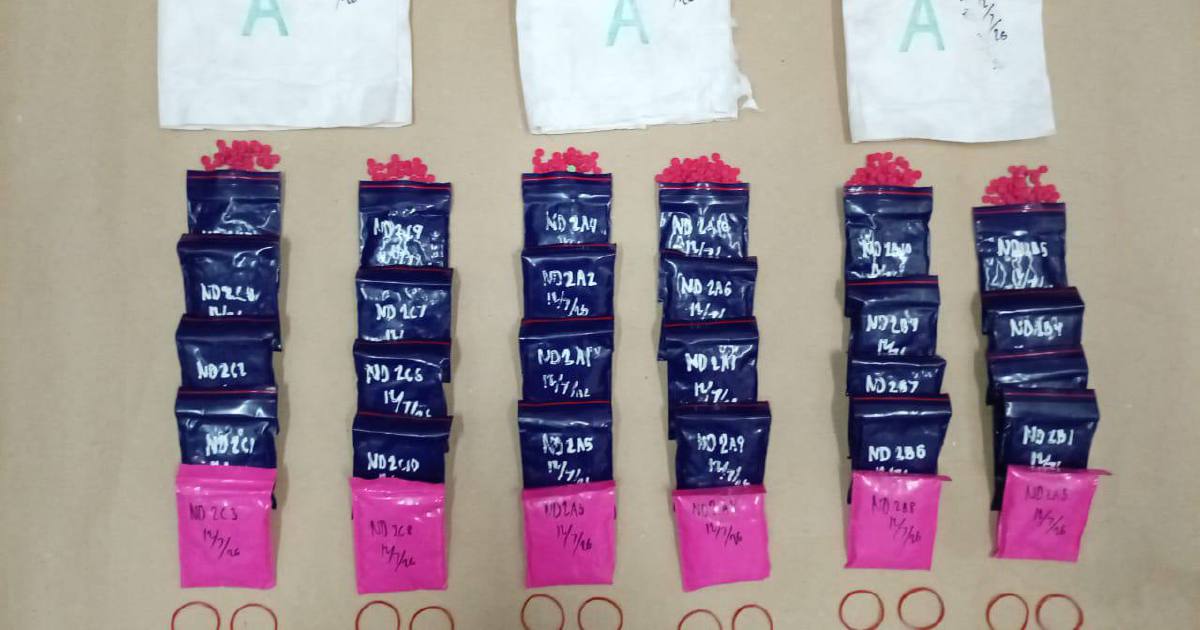
Law enforcement authorities in Kelantan have made a substantial drug seizure following the arrest of a 35-year-old tow truck agent in Tumpat. The operation, conducted along Jalan Kubang Batang in the vicinity of Wakaf Bharu, resulted in the recovery of 6,000 yaba pills carrying an estimated street value of RM60,000. The discovery marks the latest in a series of drug-related arrests highlighting the ongoing challenges posed by methamphetamine trafficking in Malaysia's northern states.
Yaba, a stimulant drug colloquially known as "crazy medicine" in regional contexts, has emerged as a persistent problem across Southeast Asia. The tablets—typically containing methamphetamine combined with caffeine—command high prices in underground markets and are trafficked extensively through Malaysia's porous borders, particularly in states like Kelantan that share proximity with Thailand and the broader Golden Triangle region. The RM60,000 valuation underscores the significant profit margins driving the drug trade and the financial incentives attracting individuals from seemingly legitimate professions into criminal networks.
The arrest during this operation raises questions about how a transport worker became entangled in large-scale drug distribution. The placement of contraband within a vehicle commonly used for commercial roadside assistance suggests the suspect may have been a mere courier or distributor rather than a primary trafficker. Such patterns are increasingly common as organised drug syndicates employ individuals from various occupations to handle logistics and street-level distribution, insulating higher-level operatives from direct law enforcement exposure. The use of cover businesses or legitimate work as a front for drug movement represents an evolving challenge for Malaysian authorities.
Kelantan's geographic positioning makes it particularly vulnerable to transnational drug flows. The state's lengthy border with Thailand and its status as a transit hub for trafficking networks moving contraband southward toward Kuala Lumpur and major urban centres have made enforcement efforts a perpetual priority for federal and state police forces. Yaba seizures in Kelantan have become increasingly routine, reflecting both the prevalence of the drug in the region and heightened law enforcement vigilance. However, the scale of individual busts suggests that supply remains robust despite ongoing interdiction efforts.
The methamphetamine crisis affecting Malaysia has intensified noticeably over the past decade, with synthetic drugs such as yaba overshadowing traditional narcotics in terms of trafficking volumes and user prevalence. Crystal methamphetamine and yaba tablets are cheaper to produce than heroin, generate higher addiction rates, and produce more severe public health consequences including violent behaviour and mental deterioration among users. This trend has forced Malaysian police to reorient drug enforcement strategies toward synthetic substances whilst maintaining pressure on traditional opioid smugglers.
The economic dimensions of yaba trafficking merit particular attention. At RM60,000 per seizure, the contraband represents a significant consignment. Street-level retail in Malaysia typically moves individual pills at RM10 to RM15 each, meaning the seized batch could have generated substantially higher revenues once distributed through user networks. Such profit potential explains why individuals in precarious economic circumstances, including informal transport sector workers, prove vulnerable to recruitment by trafficking organisations offering quick financial returns.
Police operations targeting drug syndicates require intelligence-driven approaches given the increasingly sophisticated methods employed by traffickers. The arrest in Tumpat likely resulted from tip-offs, surveillance operations, or checkpoint procedures rather than random searches. Building these intelligence networks remains labour-intensive and resource-dependent, creating ongoing challenges for under-resourced regional police divisions managing vast geographic areas and multiple enforcement priorities simultaneously.
The custody and interrogation of the arrested individual will likely focus on determining his role within the supply chain and identifying upstream sources and downstream distributors. Cooperation from arrested traffickers has proven essential in dismantling network structures, though cultural factors, limited education, and fear of reprisal from criminal organisations complicate cooperation efforts. Authorities will particularly seek information regarding the yaba's origin—whether sourced from Thai laboratories or produced domestically—as this distinction carries important implications for international enforcement collaboration.
For Malaysian readers following drug enforcement developments, this arrest exemplifies the pervasive nature of synthetic drug trafficking and its penetration across diverse occupational groups. The incident underscores that drug problems extend beyond traditional criminal populations to include individuals from ordinary working backgrounds, reflecting how criminal networks have expanded distribution capacity through systematic recruitment. Public awareness initiatives addressing the dangers of yaba use, particularly among youth, remain critical complementary strategies to law enforcement interdiction efforts.

