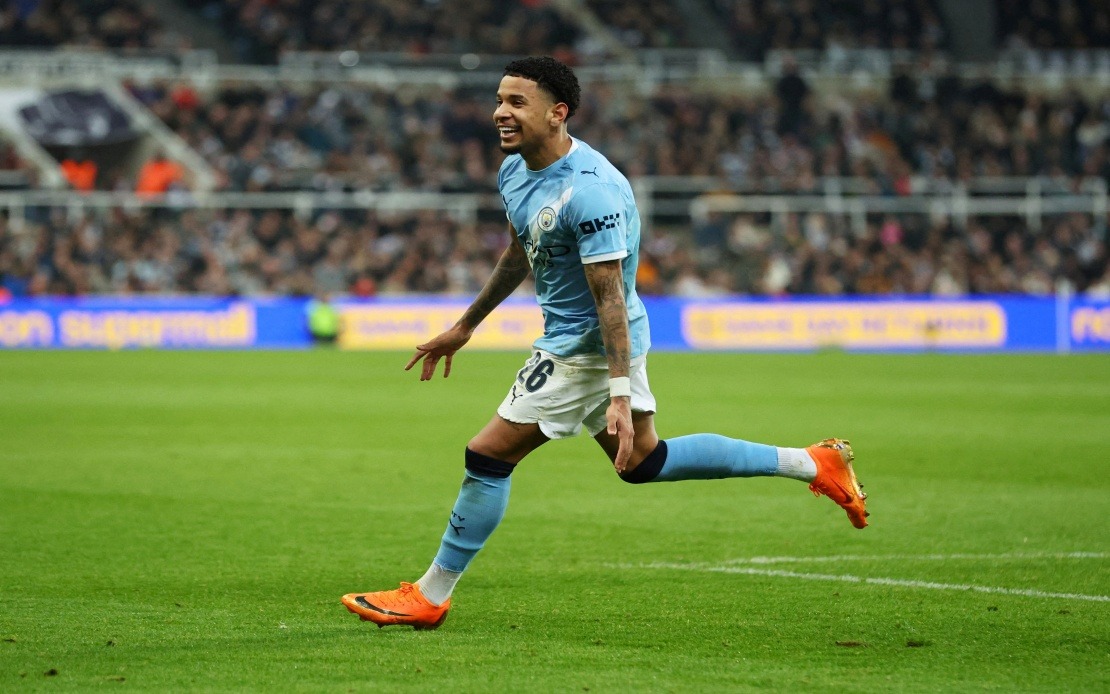
Tottenham Hotspur have secured a transfer agreement with Manchester City to bring Brazilian winger Savinho to the north London club, completing the first phase of what could become a landmark double raid on their Premier League rivals. The 22-year-old will arrive on an initial fee of £75 million, with a further £10 million potentially payable through performance-related add-ons, representing a major investment in attacking prowess as the club pursues its ambitions under new manager Roberto De Zerbi.
The signing caps an intensive pursuit spanning multiple transfer windows. Spurs had previously attempted to secure Savinho ahead of the 2025-26 season but failed in those initial overtures. This summer's successful acquisition represents vindication of the club's patience and sustained interest in a player who has demonstrated considerable quality despite limited opportunities at the Etihad Stadium. For De Zerbi, who took charge at Tottenham with explicit promises to reinforce the team's attacking options, the deal validates his strategic planning and the board's commitment to backing the Italian manager's vision.
Savinho's path to English football has been unconventional, reflecting the modern reality of player development through extensive loan networks. The left-footed winger began his professional journey at Atlético Mineiro in Brazil before progressing through the City Football Group's constellation of clubs, including productive spells at Ligue 1 outfit Troyes and Spanish side Girona. These loan moves proved instrumental in his development, allowing him to accumulate meaningful competitive experience that ultimately earned him a permanent move to Manchester City's senior squad.
Despite his credentials, Savinho found opportunities limited at City, where competition for berths in the attacking third remains fierce under manager Pep Guardiola. Across 84 appearances for the defending Premier League champions, he contributed seven goals and sixteen assists, respectable returns that nonetheless failed to translate into the consistency required for regular selection. The statistics suggest a player with creative capability and match intelligence, attributes that may flourish under different tactical systems or coaching methodologies.
Tottenham's expenditure on Savinho pushes their summer spending beyond the £300 million threshold, underlining the scale of recruitment undertaken to reshape the squad's competitive complexion. This investment strategy reflects both the club's financial capacity and De Zerbi's determination to field a team capable of challenging across multiple competitions. The spending pattern signals confidence in the manager's vision and suggests the board believes the financial outlay will be justified through improved on-pitch performance and potentially, qualification for European football.
The timing of the announcement creates significant pressure for Tottenham to complete formalities, with the transfer deadline looming on Friday at 12 pm GMT. Should the club successfully register Savinho before this cutoff, he would become eligible to feature in Saturday's Premier League season opener against Brentford, offering an immediate boost to the squad's readiness. The tight scheduling reflects typical end-of-window logistics but adds urgency to administrative procedures that must be finalised swiftly.
Savinho's potential deployment carries particular significance given Tottenham's current injury situation. With James Maddison, Dejan Kulusevski, Mohammed Kudus, Xavi Simons, and Wilson Odobert all unavailable or working through rehabilitation from injury concerns, the Brazilian winger will likely feature prominently in early-season fixtures. His versatility across either flank provides De Zerbi with tactical flexibility, allowing the manager to adjust his attacking shape according to opposition and circumstances. The expectation among supporters and analysts is that Savinho will move directly into the starting lineup, tasked with providing creative impetus during a period when the squad's usual attacking weapons remain sidelined.
The Savinho agreement represents only one component of Tottenham's summer business with Manchester City. Ongoing negotiations concerning forward Omar Marmoush suggest the club may yet complete a more expansive double transfer operation. Should talks with Marmoush reach fruition, the north London outfit would effectively orchestrate a significant restructuring of City's attacking department, a development that raises questions about resource allocation within Guardiola's squad planning for the forthcoming season.
For Malaysian and Southeast Asian observers of English football, the Savinho deal exemplifies the contemporary transfer marketplace's complex dynamics. Brazilian talent continues flowing into elite European clubs through various pathways, reflecting both the nation's enduring production line of technically skilled players and the increasing sophistication of international player development networks. Savinho's journey—from South American football through strategic loan placements within a multinational franchise model—represents a template increasingly adopted by ambitious players seeking consistent pathways to elite-level football.
De Zerbi's success in attracting Savinho also underscores the evolving nature of tactical diversity within the Premier League. The Italian coach's appointment itself signalled a philosophical shift toward expansive, possession-dominant football that contrasts with previous Tottenham approaches. Savinho's creative profile and technical capability align logically with such methodology, suggesting the transfer strategy reflects not merely squad-building but a coherent footballing philosophy communicated throughout the recruitment process.
The deal's financial structure—with substantial add-ons attached—reflects standard risk-sharing mechanisms prevalent in contemporary high-value transfers. By linking portions of the fee to performance metrics and likely achievements, both clubs acknowledge the inherent uncertainty surrounding individual player impact whilst establishing aligned incentives for success. Manchester City's willingness to facilitate the sale, particularly given Savinho's youth and potential trajectory, may indicate either surplus attacking depth or a deliberate strategic choice to generate funds for their own transfer objectives.
Looking forward, Savinho's integration at Tottenham will heavily influence whether the club's significant summer investment translates into tangible sporting achievement. Early-season performance will be particularly instructive, offering insights into both his adaptation to English football's demands and De Zerbi's capacity to extract optimal performances from his new recruits. The pressure surrounding such high-profile signings invariably intensifies expectations, creating an environment where success brings confidence whilst underperformance rapidly generates scrutiny and criticism.

