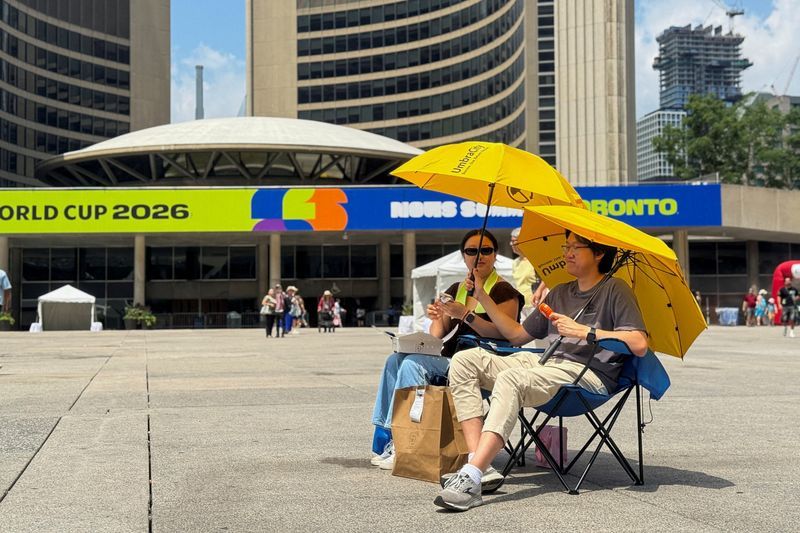
As thousands of World Cup supporters prepare to descend on Toronto for Thursday's round of 32 encounter between Portugal and Croatia, city health officials are sounding the alarm over dangerous weather conditions that could pose serious risks to attendees. The combination of extreme heat and humidity is expected to create a dangerously high apparent temperature, with medical authorities urging fans to take precautions that extend well beyond the usual match-day preparations. The warning comes amid an unusually severe weather pattern gripping Canada as the country heads into its national holiday period.
According to Toronto's medical officer of health Michelle Murti, the conditions will be particularly treacherous due to the interplay between raw temperature and moisture levels in the air. While Environment Canada has forecast that thermometers will climb above 35 degrees Celsius, the humidity is expected to make conditions feel considerably worse—potentially reaching a perceived temperature around 40 degrees Celsius. This discrepancy between actual and felt temperature is crucial, as it reflects the body's reduced ability to cool itself through perspiration when the air is already saturated with moisture. Murti outlined specific guidance for attendees, emphasizing that supporters should maintain constant hydration throughout the day rather than waiting until thirst signals their need for fluids.
The medical officer's recommendations addressed a common mistake made by people attempting to endure heat-stressed environments: consuming alcoholic beverages. While alcohol consumption is often part of the match-day experience for many fans, Murti stressed that such drinks actively work against the body's thermoregulation mechanisms. Alcohol functions as a diuretic, causing the body to lose fluids at an accelerated rate and potentially exacerbating dehydration. She urged fans to moderate their intake considerably and prioritize water consumption throughout their time in the city, whether they were at the stadium, in designated fan zones, or watching from public viewing areas.
Beyond the heat itself, Toronto's public health and emergency management teams are preparing for additional meteorological complications. Environment Canada has flagged the possibility of thunderstorms developing during the match period, creating a dual threat scenario where organizers may need to manage both heat-related emergencies and severe weather disruptions simultaneously. These storms could potentially lead to the cancellation or relocation of some of the public watch parties that the city has carefully arranged throughout various neighborhoods and parks. For a tournament that has brought unprecedented international attention and foot traffic to the Canadian city, such last-minute disruptions would represent a significant logistical and public relations challenge.
Toronto Stadium, which serves as the host venue for this particular fixture, holds the distinction of being the smallest stadium used throughout the entire World Cup tournament. The venue will be hosting its final match of the competition on Thursday, making this encounter particularly significant for the city and its infrastructure. The stadium's limited capacity creates both advantages and disadvantages in the context of the current heat emergency: while fewer people will be packed into the main venue, the city has had to establish numerous alternative viewing locations to accommodate the broader fan base that cannot secure tickets to the match itself.
In recognition of the heat threat, Toronto has deployed infrastructure specifically designed to help people cope with extreme temperatures in public spaces. Misting stations have been installed at prominent gathering points, including the iconic Nathan Phillips Square, which has become a focal point for fan activities during the tournament. These cooling stations represent a relatively low-cost but high-impact public health intervention, allowing people to temporarily lower their body temperature while waiting in queues or watching matches on large screens in outdoor settings.
The challenge facing the city reflects broader Canadian weather patterns that have been unusually volatile in recent weeks. From western provinces to the Atlantic coast, Canadians have experienced an erratic succession of weather events ranging from severe flooding to the current extreme heat. The timing is particularly awkward, occurring just ahead of Canada Day celebrations on Wednesday, when significant portions of the population are planning outdoor activities. The convergence of the World Cup match, the national holiday, and dangerous weather conditions creates a unique stress test for Toronto's public health infrastructure and emergency response systems.
Interviews with fans gathered at cooling stations in Nathan Phillips Square revealed the palpable impact of the heat on the fan experience. Megan Rennie, a Toronto resident, expressed concern not only for her own comfort but also for the players who would be competing in these conditions. She acknowledged that she might be forced to abandon her plans to watch the entire match due to the oppressive heat. Laura Albarez, visiting from Colombia where warm temperatures are routine, found the conditions sufficiently challenging to reconsider her participation in outdoor fan activities, indicating that the heat was registering as significant even for someone accustomed to tropical climates.
These personal accounts underscore an important dimension of the public health challenge: the subjective experience of extreme heat varies considerably among individuals based on age, fitness level, acclimatization, and underlying health conditions. What might be merely uncomfortable for a young, healthy individual could pose genuine health risks for older fans, those with cardiovascular conditions, or people taking medications that impair thermoregulation. The city's public health messaging therefore needs to be sufficiently granular to address these varying risk profiles while remaining accessible to the general fan population.
For Malaysian readers and Southeast Asian observers following the World Cup, Toronto's heat emergency offers an interesting perspective on how wealthy, developed nations respond to weather challenges that tropical and subtropical regions experience routinely. The relatively heightened alarm in Canada over temperatures and humidity levels that would be considered normal monsoon-season conditions in Malaysia reflects both the genuine risks posed by sudden environmental shifts in non-accustomed populations and the sophisticated public health infrastructure available in developed nations. The incident also highlights how major sporting events can amplify existing public health challenges and require significant coordination between multiple agencies.

