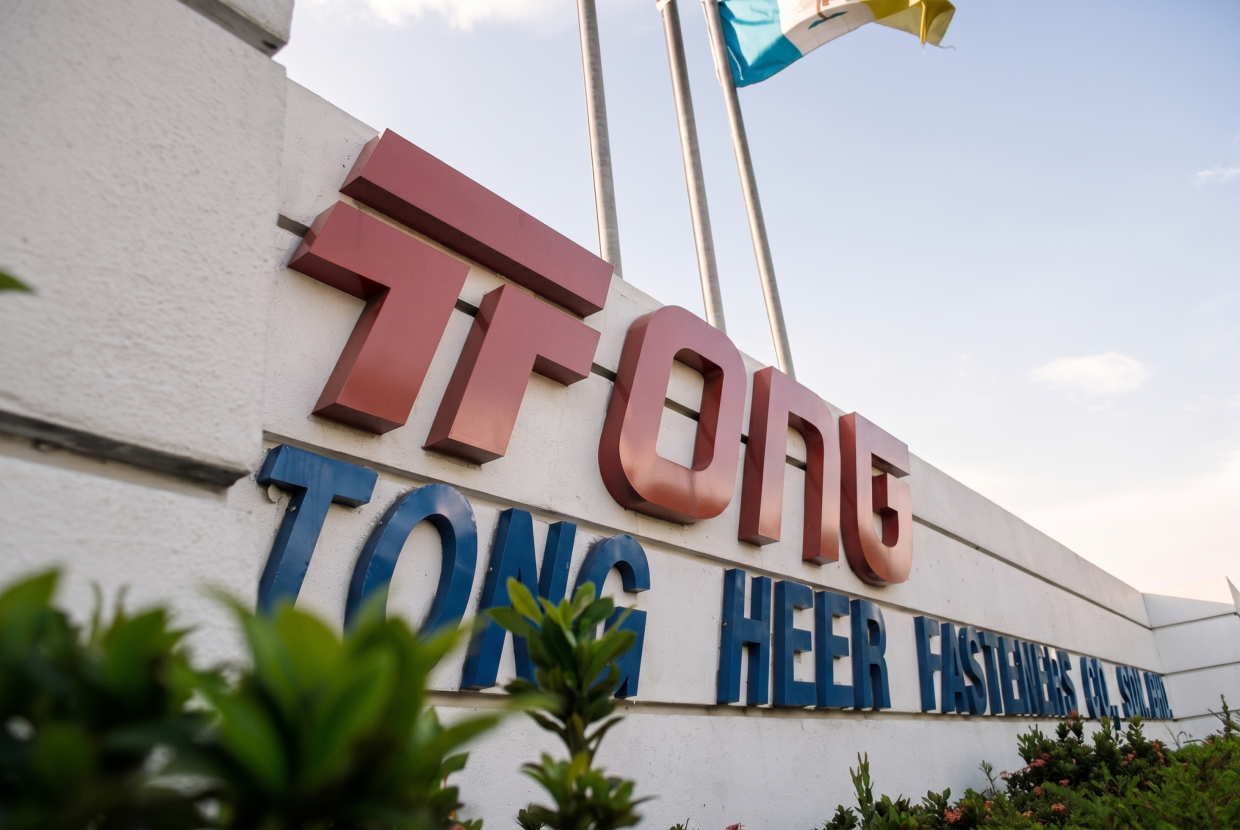
Malaysia's stainless steel fastener and aluminium extrusion manufacturer Tong Herr faces a privatisation proposal from its two largest shareholders, who have offered to take the company off public markets at RM2.55 per share. The bid represents a substantial 34.2% uplift from the stock's last closing price of RM1.90 before the announcement, reflecting shareholder confidence in value creation through delisting, yet also highlighting persistent concerns about the company's viability as a listed entity.
Allrich Corp and Richard Holdings Ltd control the proposal, respectively holding 39.68% and 31.95% of Tong Herr's equity. When combined with their joint ultimate offerors and persons acting in concert, their collective stake reaches 114.38 million shares, or approximately 74.5% of issued capital. This dominant shareholding gives them sufficient influence to potentially force through the transaction, though regulatory safeguards require approval from independent shareholders and court confirmation before proceeding.
The pricing mechanism reflects careful analysis of recent trading patterns. The RM2.55 offer price was calibrated using Tong Herr's closing price and volume weighted average price through August 5, 2026, representing a more generous 41.7% premium to the RM1.80 closing price recorded on that specific date. This methodology suggests the offerors have attempted to construct a defensible valuation that accounts for trading history rather than arbitrary pricing, though independent shareholders will ultimately judge whether the premium adequately compensates them for losing liquidity and public market access.
The privatisation would be executed through a selective capital reduction and repayment exercise, a mechanism increasingly favored in Malaysia for delisting transactions. This structure allows shareholders to exit their positions at an agreed price while simultaneously reducing the company's capital base. The offerors have explicitly committed to requesting Bursa Securities approval for delisting and withdrawal of listing status upon transaction completion, signalling an intention for clean separation from public market obligations.
The rationale presented by Allrich and Richard Holdings centres on operational flexibility and cost reduction. Maintaining listed status imposes ongoing compliance expenses, corporate governance requirements, and management attention that the offerors argue diverts resources from core business activities. For a manufacturing company focused on metal components and extrusions, this burden becomes particularly acute when combined with minimal shareholder engagement, a problem made evident by the company's trading profile over recent years.
Liquidity concerns provide the most compelling justification for privatisation. Tong Herr has recorded an average daily trading volume of merely 21,075 shares across the three-year period through the last trading day, representing only 0.05% of its free float. This extraordinarily low turnover reflects a stock largely abandoned by the investing public, with limited price discovery and minimal opportunity for minority shareholders to adjust their positions. Such illiquidity effectively creates a trap for small investors who find themselves unable to exit without accepting significant price concessions, a situation the offerors' proposal would remedy by providing an immediate exit opportunity at a premium valuation.
The selective capital reduction mechanism specifically addresses minority shareholder concerns by providing entitled shareholders with an immediate opportunity to realise their investments at the agreed price. Rather than remaining locked in an increasingly illiquid security, shareholders can take the RM2.55 offer and redeploy capital elsewhere. This represents genuine value realization for those who have watched their holdings trade infrequently while bearing the regulatory and reputational risks associated with Malaysian public company ownership.
Approval requirements include multiple layers of protection designed to ensure fairness to non-interested parties. Shareholders holding shares not covered by the offerors and their concert parties must approve the proposal through special resolution at an extraordinary general meeting, with the threshold set at a simple majority in number of such shareholders but requiring 75% support by voting value. Additionally, the vote cannot be opposed by more than 10% in value of all non-interested shareholdings, effectively requiring broader consensus beyond minimum procedural compliance. Following shareholder approval, the High Court must confirm the capital reduction, providing judicial review of fairness and propriety.
Tong Herr's non-interested directors now bear responsibility for assessing the proposal's merits and determining the company's formal response. Their deliberation will examine whether the RM2.55 price adequately reflects the company's intrinsic value, growth prospects, and the costs of maintaining public company status. This director-led evaluation provides another layer of protection for minority interests, though the outcome remains uncertain given the substantial shareholding already supporting the transaction.
The company operates in the specialty metal components sector, manufacturing stainless steel fasteners and aluminium extrusions serving industrial applications. This business model typically generates steady, if unspectacular, returns dependent on manufacturing efficiency and customer relationships rather than growth acceleration or market expansion. Such characteristics make listed status particularly onerous, as public markets demand growth narratives and scale advantages that commodity-oriented metal suppliers struggle to deliver. Privatisation could allow management to focus on operational optimization and customer retention rather than quarterly earnings guidance and analyst expectations.
For Malaysian capital markets, this transaction reflects ongoing challenges facing small-cap manufacturers seeking to maintain public listings amid deteriorating investor appetite and rising compliance costs. The proposal demonstrates how dominant shareholders increasingly resolve this tension through privatisation, offering remaining shareholders a clean exit rather than presiding over slow value erosion through illiquidity. The outcome will influence how other similarly-positioned companies approach their own strategic positioning, potentially accelerating consolidation of Malaysia's secondary listings into private ownership structures.
Shareholders and market observers await the formal response from Tong Herr's independent directors and the timeline for convening an extraordinary general meeting where non-interested parties will vote on this consequential proposal.

