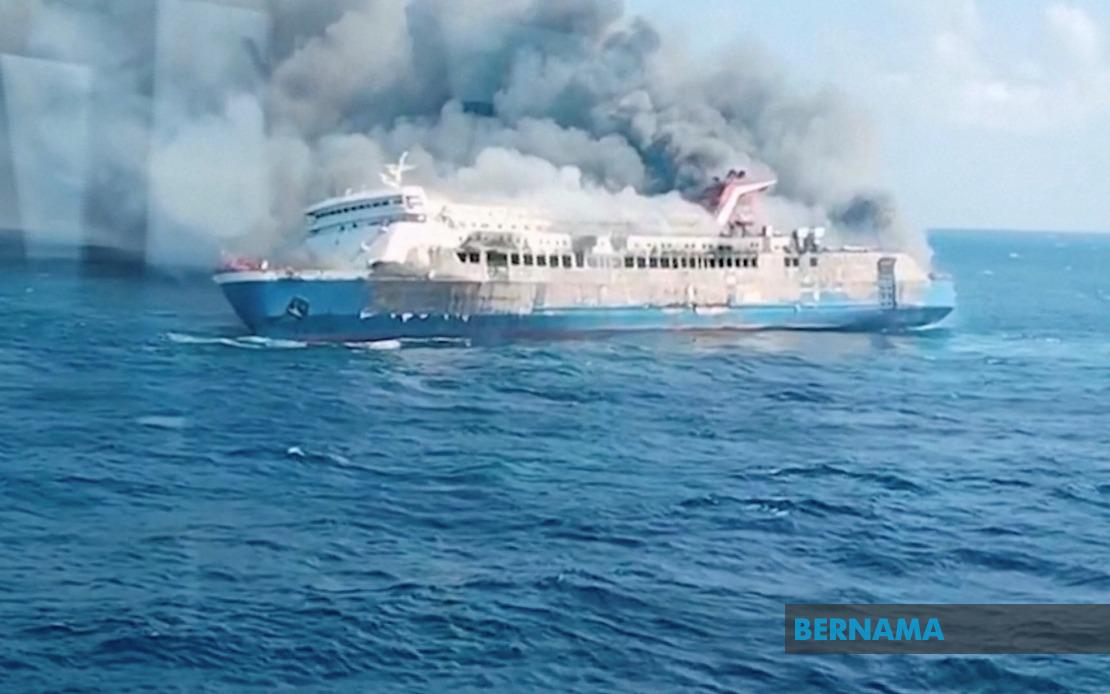
The search for dozens of passengers and crew members unaccounted for following the catastrophic fire aboard the KMP Mutiara Sentosa II ferry entered its second day with significantly expanded resources, as Indonesian authorities mobilized military assets to comb the waters north of Sumenep in Madura. The incident has emerged as one of Indonesia's most serious maritime disasters in recent years, prompting immediate intervention from the Indonesian National Armed Forces (TNI), which dispatched the warship KRI Bung Hatta-370 to join the ongoing operation.
The ferry, operating with a manifest of 232 passengers and 39 crew members, erupted in flames at approximately 8:24 am local time in the waters off Sumenep, with the blaze consuming much of the vessel before emergency responders could fully contain the situation. The rapid spread of the fire across the ship highlighted longstanding safety concerns that plague Indonesia's maritime sector, where aging vessels and inadequate fire prevention systems have repeatedly contributed to loss of life. The scale of the disaster became apparent within hours as rescue teams struggled to account for all persons aboard.
The Surabaya Search and Rescue Office, under Chief Nanang Sigit, coordinated an expanding fleet of rescue assets deployed across the affected waters. Beyond the TNI warship, the operation mobilized the State Ship Grantin P.211, the patrol vessel Manyar 5003, and a helicopter provided by the East Java Police. The deployment of both sea and air assets reflected the urgency of locating survivors scattered across the Madura waters and any bodies that might provide closure to grieving families. By the second day, rescue coordinators remained focused on maximizing coverage of the search zone before currents could disperse floating debris or other evidence.
According to available reports from the Surabaya Search and Rescue Office, 229 survivors had been evacuated to Tanjung Perak Port in Surabaya for medical evaluations and treatment. Many evacuees would have suffered smoke inhalation, burns, and psychological trauma from the harrowing experience of abandoning a burning vessel at sea. The medical facilities at Tanjung Perak undertook the challenging task of processing nearly a quarter-thousand individuals while simultaneously gathering information that might aid the ongoing search effort. Meanwhile, five bodies had been recovered and transported to Bhayangkara H.S. Samsoeri Mertojoso Hospital in Surabaya, beginning the sorrowful process of identification and family notification.
The incident underscores persistent vulnerabilities within Indonesia's maritime transport system, a sector critical to a sprawling archipelago where inter-island travel remains essential for commerce and passenger movement. The Madura Strait, through which the ferry was traveling, witnesses considerable traffic daily, with thousands of passengers depending on these routes to connect to employment, education, and family obligations. Such disasters inevitably raise questions about vessel maintenance, crew training, and compliance with international maritime safety standards that Indonesia has committed to upholding as a signatory to international conventions.
For Malaysian readers, the ferry fire carries particular resonance given the shared maritime environment and comparable challenges faced by Southeast Asian nations operating aging transport fleets across congested shipping lanes. Malaysia's own experience with maritime incidents, including the loss of Malaysia Airlines Flight MH17 and ongoing concerns about shipping safety in the Strait of Malacca, demonstrates that these tragedies transcend borders and affect the entire region. The competence and resources demonstrated by Indonesian rescue services during this operation provide lessons applicable across Southeast Asia regarding emergency coordination and inter-agency cooperation during mass casualty events.
The ongoing search operation represented one of the largest coordinated maritime rescue efforts mounted in Indonesian waters in recent memory. The deployment of military assets alongside civilian rescue vessels illustrated Indonesia's recognition of the disaster's gravity and the political imperative to be seen as responding comprehensively to what would inevitably dominate national news cycles. However, the involvement of military resources also highlighted systemic gaps in Indonesia's dedicated maritime safety infrastructure, suggesting that civilian agencies alone lack sufficient capacity for major incidents.
The tragedy will likely prompt renewed scrutiny of ferry operator compliance with safety regulations, vessel inspection procedures, and the adequacy of life-saving equipment aboard commercial ferries operating throughout Indonesia. Industry observers anticipated that the incident would trigger government investigations into whether the KMP Mutiara Sentosa II met current safety standards, how fire suppression systems functioned during the emergency, and whether evacuation procedures were properly executed. International maritime organizations typically monitor such incidents closely, and findings could influence Indonesia's regulatory approach to commercial shipping going forward.
As the search operation continued through its second day, the focus remained on locating the missing passengers and crew while beginning the longer process of understanding how this preventable tragedy occurred. The recovery of five bodies within the first twenty-four hours suggested that recovery of additional casualties might continue over subsequent days, as underwater currents and debris dispersal complicated systematic searching. For the survivors already evacuated to safety, the physical and emotional recovery would extend far beyond the immediate rescue phase, underscoring the human cost of maritime disasters that continue to plague Southeast Asian waters.

