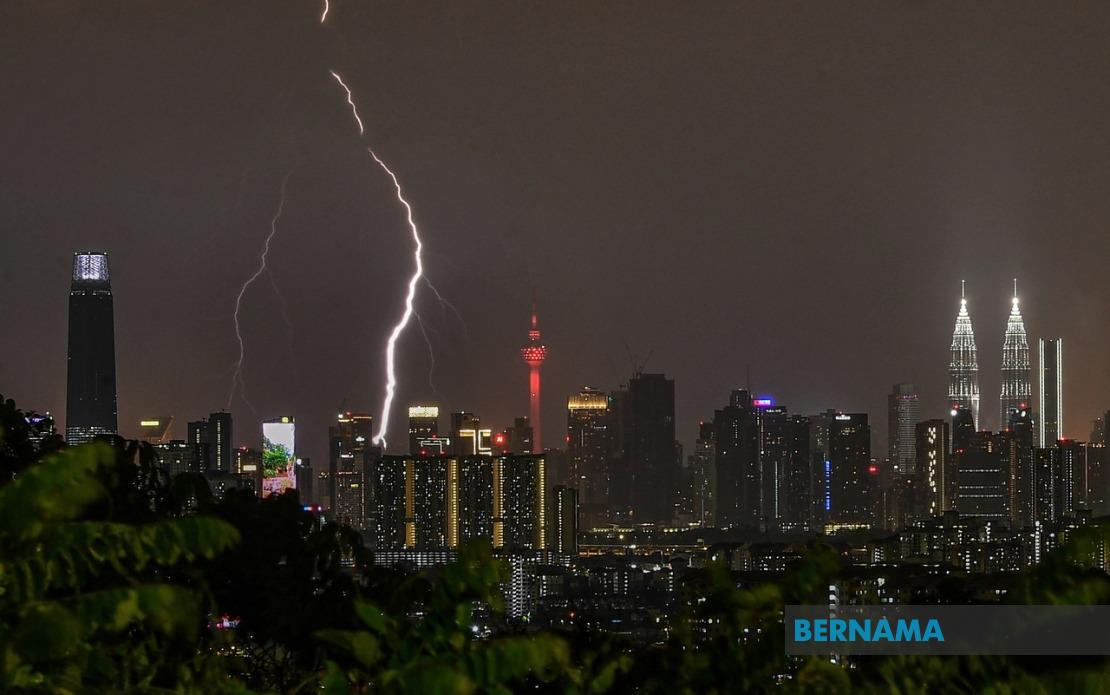
The Malaysian Meteorological Department issued a severe weather alert on Thursday afternoon, warning that thunderstorms accompanied by heavy rainfall and gusty winds will sweep across the Klang Valley and eight states throughout the day. The alert, released at 2 pm, remains in effect until 5 pm, prompting authorities to advise the public to exercise caution and monitor weather updates as conditions could shift rapidly without notice.
The entire states of Melaka and Penang face the brunt of the incoming weather system, with all districts in both states placed under the warning. This blanket coverage means residents across the Peninsular Malaysia's west coast corridor should prepare for disruptions to daily activities, from traffic congestion caused by poor visibility to potential flash flooding in low-lying areas.
In Kedah, the northern state affected by the system, five districts have been singled out as particularly vulnerable: Kuala Muda, Sik, Baling, Kulim and Bandar Baharu. These areas, which span both rural and semi-urban landscapes, are susceptible to rapid water accumulation during intense rainfall, necessitating heightened vigilance from residents and local authorities.
Perak, one of Malaysia's largest states, sees a significant portion of its territory under alert. The warning encompasses Kerian, Larut, Matang and Selama, Hulu Perak, Kuala Kangsar, Kinta, Kampar, Batang Padang and Muallim—a sprawling belt that covers much of the state's western corridor and interior regions. These districts include major population centres and critical infrastructure that could be affected by the severe weather.
Eastern Pahang faces similar threats, with six districts identified as at-risk zones: Cameron Highlands, the country's primary hill station; Lipis; Raub; Bentong; Pekan and Rompin. Cameron Highlands, situated at high elevation, is particularly vulnerable to sudden downpours that can trigger landslides and disrupt the region's agricultural operations and tourism sector.
The Klang Valley, Malaysia's economic heartland, bears the full force of the warning. Seven districts across Selangor—Sabak Bernam, Kuala Selangor, Hulu Selangor, Klang, Gombak, Petaling and Hulu Langat—are expected to experience the worst conditions. Given that this region encompasses Kuala Lumpur's metropolitan sprawl and houses millions of commuters and workers, any significant disruption could have cascading effects on national economic activity. The dense urban infrastructure, with limited natural drainage in many areas, makes these zones particularly prone to localized flooding during heavy downpours.
Negeri Sembilan's Jelebu district and southern Johor's Tangkak, Segamat, Muar, Batu Pahat, Kluang and Mersing are also under alert. The southern states, often experiencing their own tropical weather patterns, face additional pressure when systems like this extend their reach southward, affecting agricultural activities and port operations in strategic trade hubs.
The temporal specificity of the warning—a defined three-hour window until 5 pm—suggests that meteorologists have tracked this system's expected movement and intensity. This precision allows businesses, schools and government agencies to prepare contingency plans, though the potential for the situation to deteriorate beyond the forecast window remains a concern that warrants continued monitoring.
MetMalaysia's guidance for the public to remain vigilant and track real-time updates reflects the inherent unpredictability of tropical weather systems. In Southeast Asia's monsoon climate, thunderstorm systems can intensify or change trajectory with limited warning, making continuous monitoring essential for those in affected areas. Citizens are advised to avoid unnecessary travel, secure loose outdoor items, and stay indoors during peak weather activity.
For Malaysia's transport sector—encompassing highways, railway networks and aviation—such weather warnings necessitate immediate operational adjustments. Reduced visibility affects road safety, while airports may experience flight delays or cancellations. The tourism industry, particularly in Penang and Melaka, two of the country's premier destinations, may see disrupted visitor activities, though such weather events are routine during the monsoon season.
The geographic spread of the alert across nine administrative areas demonstrates the vast scale of this weather system. From the northern reaches of Kedah to the southern tip of Johor, and westward across the economically vital Selangor region, the system represents a significant meteorological event that demands coordinated response from federal and state disaster management agencies.

