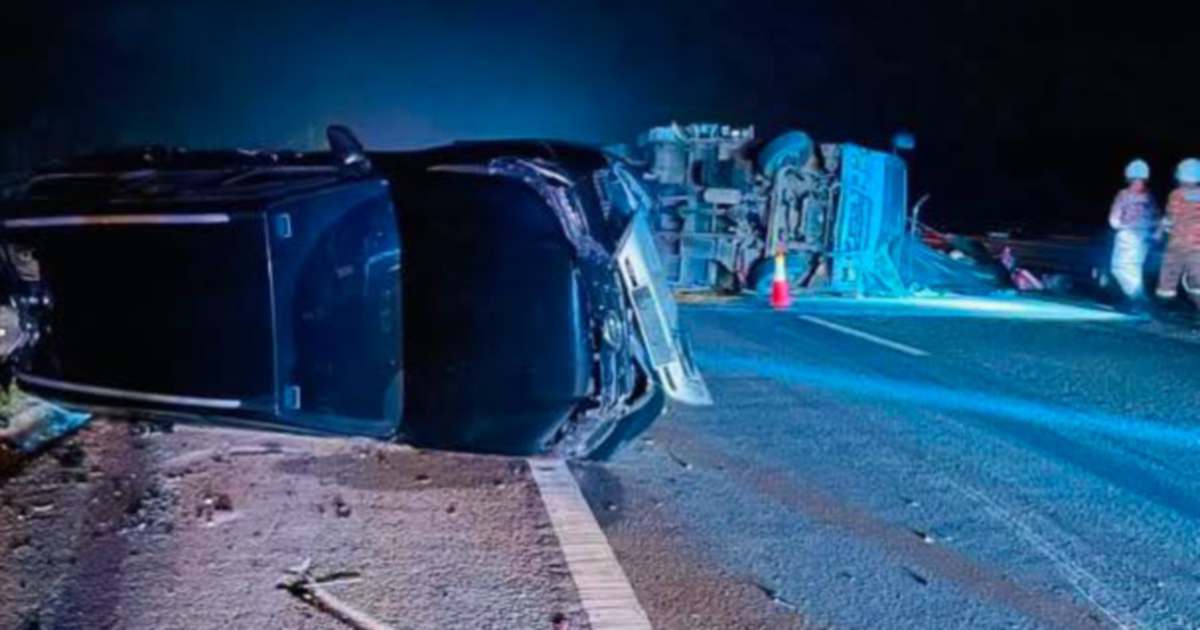
A three-vehicle collision on the East Coast Expressway in the early hours left seven people hurt, including three media officers assigned to work with Deputy Prime Minister Datuk Seri Dr Ahmad Zahid Hamidi. The incident occurred at kilometre 144 of the expressway, a heavily trafficked route connecting the northern and southern regions of Peninsular Malaysia. The involvement of members of the Deputy Prime Minister's media contingent has drawn attention to safety concerns on one of the country's busiest highways.
The East Coast Expressway remains a critical artery for both commercial and passenger traffic, linking Kuala Lumpur with key destinations across the east coast including Terengganu and Kelantan. Traffic volumes surge during peak hours and holiday periods, and the road has witnessed numerous incidents over the years. The proximity of the accident site to Maran, a town in Pahang state, places it in a region where the expressway intersects with significant local traffic movements.
All seven individuals injured in the accident sustained injuries ranging in severity, though emergency responders confirmed that none of the three media officers attached to the Deputy Prime Minister's office suffered critical or life-threatening injuries. The other four people involved in the collision were occupants of the remaining vehicles. Medical teams responded promptly to the scene, and the injured were transported to nearby medical facilities for treatment and evaluation.
The circumstances surrounding the collision—including weather conditions, visibility, vehicle speeds, and road surface conditions—remain subjects of investigation by traffic authorities. Such multi-vehicle accidents typically involve complex causation factors, and investigators will examine vehicle damage patterns, eyewitness accounts, and any available traffic camera footage from the location. Understanding the precise sequence of events will be important for determining responsibility and identifying whether any breaches of traffic regulations occurred.
The involvement of a deputy ministerial contingent underscores how accidents on major expressways affect not only ordinary commuters but also government personnel and their support teams. Media officers accompanying high-ranking officials operate under demanding schedules, often travelling between locations quickly to cover official engagements and news developments. The pressures of such work can sometimes intersect with highway safety risks, particularly during early-morning journeys when fatigue and reduced traffic volumes may alter driver behaviour.
Incidents involving government officials' vehicles occasionally receive heightened scrutiny from both the public and official quarters. Questions typically emerge about whether any special circumstances applied—such as whether vehicles were operating under official escort protocols, whether speed limits were observed, or whether the convoy was travelling to a scheduled engagement. Transparency regarding such details helps maintain public confidence in how government personnel conduct themselves on public roads.
The East Coast Expressway has been the site of numerous accidents since its opening, reflecting both the volume of traffic it carries and the challenges of maintaining safety on high-speed divided highways. Factors commonly contributing to expressway accidents include driver fatigue, excessive speed, sudden lane changes, and poor visibility during adverse weather. Congestion during peak periods can also trigger chain-reaction collisions when vehicles are unable to stop or manoeuvre safely.
This incident serves as a reminder of the importance of defensive driving practices, especially for drivers operating vehicles carrying multiple passengers over long distances. Regular rest breaks, adherence to posted speed limits, and maintaining safe following distances are fundamental safety measures that reduce accident risk. For official vehicles carrying media personnel and government representatives, institutional safety protocols and driver training become even more critical to ensure the security of passengers.
Highway safety initiatives in Malaysia have included infrastructure improvements, enforcement campaigns, and public awareness programmes targeting common accident causes. The Centre of Excellence for Road Safety at the Malaysian Institute of Road Safety Research contributes research and recommendations to inform policy responses. However, translating safety knowledge into consistent driver behaviour remains an ongoing challenge requiring continued effort from authorities, vehicle operators, and the driving public.
The Maran accident will likely be documented in traffic authority records as part of the broader database of expressway incidents. Such data informs risk assessments and can identify patterns regarding particular road sections, times of day, or conditions associated with elevated accident frequency. Authorities may use findings from this investigation to support targeted safety improvements at the affected location if patterns suggest particular vulnerabilities.
For the three media officers involved, the incident interrupted their work schedule accompanying the Deputy Prime Minister. Media contingents performing official duties operate under the expectation that professional activities can proceed safely, and accident-related disruptions create both immediate operational challenges and longer-term considerations about travel protocols and risk management. Recovery from injuries will be a priority, along with resumption of their media support duties once cleared to return to work.
%22%2F%3E%3C%2Fpattern%3E%3C%2Fdefs%3E%3Crect%20width%3D%22100%25%22%20height%3D%22100%25%22%20fill%3D%22url(%23phrol8g)%22%2F%3E%3Crect%20width%3D%22100%25%22%20height%3D%22100%25%22%20fill%3D%22url(%23phrol8p)%22%2F%3E%3Ctext%20x%3D%2250%25%22%20y%3D%2250%25%22%20text-anchor%3D%22middle%22%20dominant-baseline%3D%22central%22%20fill%3D%22rgba(255%2C255%2C255%2C0.95)%22%20font-family%3D%22Georgia%2C%20'Times%20New%20Roman'%2C%20serif%22%20font-weight%3D%22700%22%20font-size%3D%22320%22%20letter-spacing%3D%22-0.02em%22%3EPKR%3C%2Ftext%3E%3C%2Fsvg%3E)
%22%2F%3E%3C%2Fpattern%3E%3C%2Fdefs%3E%3Crect%20width%3D%22100%25%22%20height%3D%22100%25%22%20fill%3D%22url(%23ph4pol5g)%22%2F%3E%3Crect%20width%3D%22100%25%22%20height%3D%22100%25%22%20fill%3D%22url(%23ph4pol5p)%22%2F%3E%3Ctext%20x%3D%2250%25%22%20y%3D%2250%25%22%20text-anchor%3D%22middle%22%20dominant-baseline%3D%22central%22%20fill%3D%22rgba(255%2C255%2C255%2C0.95)%22%20font-family%3D%22Georgia%2C%20'Times%20New%20Roman'%2C%20serif%22%20font-weight%3D%22700%22%20font-size%3D%22320%22%20letter-spacing%3D%22-0.02em%22%3EUS%3C%2Ftext%3E%3C%2Fsvg%3E)
%22%2F%3E%3C%2Fpattern%3E%3C%2Fdefs%3E%3Crect%20width%3D%22100%25%22%20height%3D%22100%25%22%20fill%3D%22url(%23phq81g)%22%2F%3E%3Crect%20width%3D%22100%25%22%20height%3D%22100%25%22%20fill%3D%22url(%23phq81p)%22%2F%3E%3Ctext%20x%3D%2250%25%22%20y%3D%2250%25%22%20text-anchor%3D%22middle%22%20dominant-baseline%3D%22central%22%20fill%3D%22rgba(255%2C255%2C255%2C0.95)%22%20font-family%3D%22Georgia%2C%20'Times%20New%20Roman'%2C%20serif%22%20font-weight%3D%22700%22%20font-size%3D%22320%22%20letter-spacing%3D%22-0.02em%22%3EPAS%3C%2Ftext%3E%3C%2Fsvg%3E)