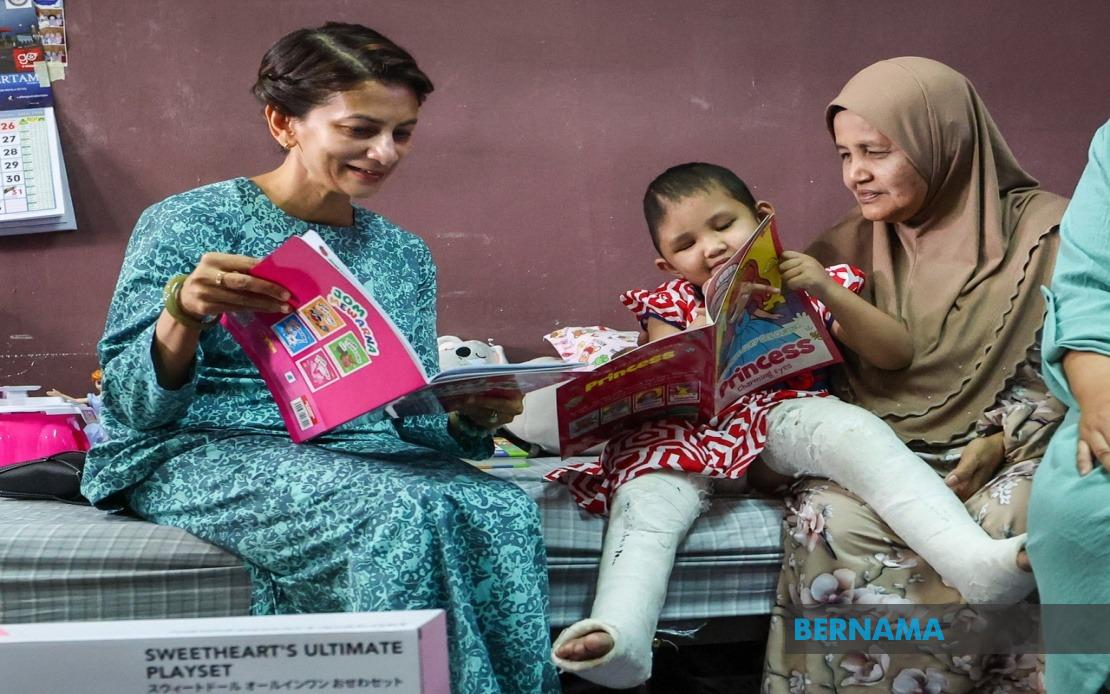
The three-year-old girl who miraculously survived a catastrophic road collision in Sungai Petani last month that claimed the lives of six family members is showing encouraging signs of recovery, according to her paternal aunt who has taken her into care in Bertam. Aulia Sofea Ahmad Shafiq was discharged from Sultanah Bahiyah Hospital in Alor Setar on July 2 following nearly a month of intensive treatment and has demonstrated rapid physical and emotional rehabilitation since returning home. Her caregivers and medical professionals have expressed cautious optimism about her long-term prospects, though she still faces significant challenges in the months ahead.
Siti Nor Atikah Ahmad Syukri, 32, who now cares for the child, described Aulia Sofea's survival as extraordinary given the severity of the collision and the extent of her injuries. Speaking at her home in Taman Bandar Bertam Putra, she explained that family members initially held little hope for the girl's survival when she first arrived at hospital. The contrast between those grim initial assessments and her current condition has been stark, with Aulia Sofea displaying the vitality and playfulness typical of children her age, though her physical mobility remains severely compromised.
The crash, which occurred on June 7 at approximately 3.50 pm along the route between Penang and Merbok, resulted from a collision between a newly purchased Proton X50 sport utility vehicle and a heavy lorry. The impact was catastrophic, with six members of the family perished at the scene or shortly thereafter: Aulia Sofea's parents Ahmad Shafiq Ahmad Shukri, 27, and Jamaliah Sannusi, 29; her two-month-old brother Ahmad Mikail; her grandmother Nora Mhd Husin, 55; her uncle Ahmad Fahim Ahmad Shukri, 27; and her cousin Iskandar Affan Ibrahim, seven. The tragedy compounded the grief within the extended family, as Siti Nor Atikah herself lost her youngest son in the same incident.
Aulia Sofea's physical injuries remain substantial despite her overall progress. Both of her legs sustained fractures in the collision, leaving her unable to walk or bear weight unaided. She requires ongoing physiotherapy and orthopedic care, with follow-up consultations scheduled to assess her rehabilitation trajectory and determine when she might regain mobility. The fractured limbs represent only part of her physical trauma; she also sustained serious head injuries and suffered severe damage to her left eye, including rupture of the eyeball itself.
The eye injury presents one of the most uncertain aspects of her recovery. Surgeons successfully intervened to preserve the eye itself, preventing total loss of the organ, but the extent of vision restoration remains unknown. Her medical team has cautioned that she may experience complete restoration of sight, significant blurring of vision, or permanent loss of sight in that eye. Further specialized ophthalmological examinations will be required to determine the final outcome, leaving considerable uncertainty for both Aulia Sofea and her caregivers about what the future holds visually.
Psychologically, Aulia Sofea regained consciousness approximately two weeks after the tragedy and has since been gradually informed about the deaths of her parents and the fate of her infant brother. Her aunt noted that the child has been told of these losses, though the full comprehension and psychological processing of such profound trauma in a three-year-old remains an ongoing concern for those supporting her. Child psychologists working with families experiencing sudden bereavement would typically anticipate that such understanding evolves gradually over an extended period.
On July 18, Tengku Sarafudin Badlishah ibni Al Aminul Karim Sultan Sallehuddin, Raja Muda of Kedah, visited the child alongside Raja Puan Muda of Kedah Che Puan Muda Zaheeda Mohamad Ariff and their daughter Tunku Zara Bahiyah. The royal family presented material assistance to support those caring for Aulia Sofea and established a National Education Savings Scheme (SSPN) account in her name to help secure her educational future. The gesture reflected the state's royal family's commitment to supporting families devastated by tragedy and represented acknowledgment of the broader communal impact of such accidents.
Siti Nor Atikah expressed gratitude for the royal visit, viewing it as evidence of the compassion demonstrated by Kedah's leadership toward families affected by catastrophic loss. Such visits, while not uncommon for royalty across Southeast Asia when responding to major tragedies, carry particular significance in Malaysian society where the institution of monarchy remains deeply respected. The royal family's intervention also served to elevate public awareness of the case and the child's ongoing needs.
The guardianship arrangements for Aulia Sofea reflect the commitment of her paternal relatives to maintain family bonds despite the tragedy. Her uncle Ibrahim Ghazali, 39, and his wife Siti Nor Atikah intend to raise her as their own daughter, and legal guardianship procedures are underway to formalize this arrangement. Ibrahim, who works as a lorry driver, emphasized that the child's integration into their household has been facilitated by her existing close relationships with their own children and other cousins, suggesting that familiar bonds and the presence of peers will support her emotional recovery.
The broader context of this tragedy reflects ongoing concerns about road safety in Malaysia, particularly regarding collisions involving heavy vehicles. The circumstances of the June 7 accident, involving a collision between a private vehicle and a lorry, mirror patterns seen in numerous fatal incidents across the country. While detailed investigations into the cause of this particular collision have not been publicly detailed, such accidents typically result from factors including driver error, vehicle mechanical failure, or inadequate road infrastructure and safety measures.
The involvement of a newly purchased vehicle raises questions about whether mechanical factors contributed to the collision, though no evidence has been presented suggesting this was the case. Investigations by traffic authorities typically examine such possibilities as part of comprehensive accident analysis. The incident underscores the unpredictability of road accidents and how swiftly circumstances can transform a family outing into devastating tragedy, a reality that resonates across Malaysian society where road fatalities remain a significant public health concern.
Moving forward, Aulia Sofea's recovery will require sustained medical attention, psychological support, and the continued commitment of her adoptive family and community. Her case has captured public attention partly because of her remarkable survival against odds that initially seemed insurmountable, but also because it exemplifies the resilience required of young children who survive major accidents and must navigate the complex aftermath of profound loss. The coming months and years will reveal the extent to which she can overcome her physical injuries and process her emotional trauma, while remaining supported by a family determined to provide her with a stable and nurturing environment.

