An accident during festivities in Kuala Terengganu left a young child injured on the morning of August 31st, when a tow vehicle participating in the 2026 National Day parade inadvertently ran over his foot. The incident, which unfolded near Wisma Persekutuan in the state capital, has prompted authorities to investigate the circumstances surrounding the mishap, raising questions about crowd management and safety protocols at major public events.
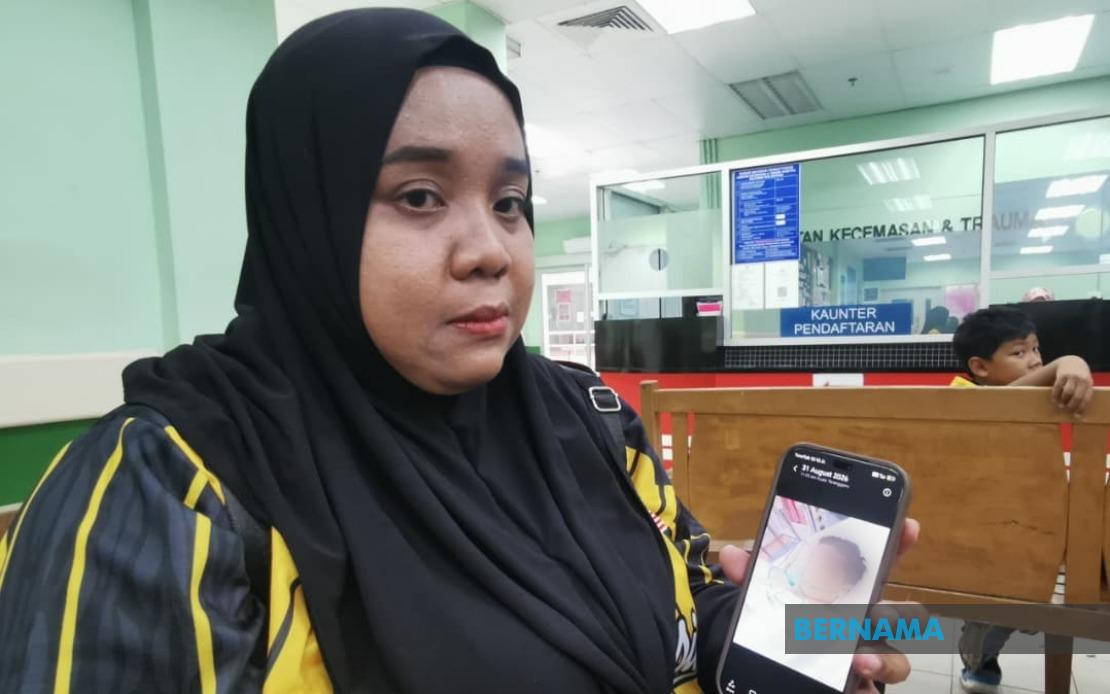
The three-year-old victim, Che Ku Muhammad Khairul Amir Che Ku Mohd Khairul Azlan, was taken to Sultanah Nur Zahirah Hospital following the accident at approximately 9.45 am. His mother, Puteri Anis Athirah Wan Rosli, a 36-year-old resident of Cendering, provided an account of events that shed light on how the incident unfolded. She explained that the family had positioned themselves along the parade route to observe the procession when the Fire and Rescue Department's boat carrier approached their location.
According to Puteri Anis Athirah's recollection, her seven-year-old daughter became eager to photograph the passing vehicles and moved ahead in the crowd. The younger boy, excited by the spectacle unfolding around him, pursued his sister into a position closer to the moving vehicle. Firefighters who were managing the parade assets noticed the child's proximity to the tow vehicle and made an effort to reposition him away from the moving equipment for his protection.
During this intervention by emergency personnel, the child fell forward unexpectedly. The tow vehicle, which was carrying a Fire and Rescue Department boat as part of the parade display, was unable to stop in time, and the child's left foot came into contact with the vehicle's wheel. The rapid sequence of events transformed what had begun as a routine safety correction into a sudden accident.
Medical assessment at the hospital provided some reassurance to the family. X-ray imaging conducted on the boy's injured foot revealed no fractures, a finding that significantly reduced concerns about long-term complications from the incident. Nevertheless, medical staff elected to keep the child under hospital observation to monitor his condition and ensure no delayed complications developed. The decision reflected standard precautionary measures for paediatric patients involved in such accidents.
Puteri Anis Athirah expressed appreciation for the emergency response system's effectiveness, particularly commending police personnel for their swift arrival at the scene and their coordination in safely transporting her son to hospital. An ambulance departed the parade location approximately ten minutes after the accident, conveying the injured child to medical facilities by 10.15 am. The efficiency of this response demonstrated the presence of adequate safety infrastructure at the public gathering, though questions remain about how the initial incident occurred.
Notably, the mother's public statement revealed a measured perspective regarding responsibility for the accident. She explicitly stated that she harboured no resentment toward the firefighters involved, characterizing their actions as part of their professional duty to manage both crowd safety and the movement of equipment. She attributed the accident to her son's youthful excitement and the unpredictable nature of very young children in crowded public spaces. This measured response contrasts with scenarios where parents might seek to assign blame, suggesting a recognition of the inherent challenges in managing large-scale public events with families and young children.
Kuala Terengganu district police chief Assistant Commissioner Azli Mohd Noor confirmed that authorities had documented the incident and begun investigative procedures. He noted that while the incident's general circumstances were clear, determining the precise causative factors remained an ongoing priority. This suggests that police will examine whether parade safety protocols were followed, whether adequate barriers separated spectators from vehicles, and whether communication systems between emergency personnel and vehicle operators functioned optimally.
The accident raises broader considerations about National Day parade management in Malaysia, particularly regarding the positioning of heavy equipment and the supervision of young children in crowds. While National Day celebrations represent important national occasions that draw families across demographics, the presence of large vehicles, moving machinery, and dense crowds creates inherent safety challenges. This incident illustrates how quickly circumstances can shift from routine to critical, even when emergency personnel are actively monitoring conditions.
Parade organisers throughout Malaysia will likely review their protocols following this incident. Best practices in crowd control, vehicle operator awareness, and barrier placement become relevant topics when large-scale public gatherings involve motorised equipment. The involvement of professional emergency personnel and well-equipped hospitals in this instance produced a positive outcome, yet the incident serves as a reminder that preventive measures merit continuous refinement.
The incident also reflects broader conversations in Southeast Asia about public event safety standards. As Malaysia continues hosting significant national celebrations and international events, maintaining rigorous safety frameworks becomes increasingly important. Regular training for parade participants, clearer demarcation of vehicle corridors, enhanced signage for spectators, and coordinated communication systems all contribute to reducing preventable accidents.
As the boy continues his recovery at hospital, his case will likely inform discussions among relevant authorities regarding parade management protocols. The cooperation displayed by all parties involved—from emergency responders to the family to investigating officers—demonstrates the importance of systematic approaches to public safety. While accidents at large public gatherings cannot be entirely eliminated, their frequency and severity can be substantially reduced through thoughtful planning and continuous improvement of existing procedures.

