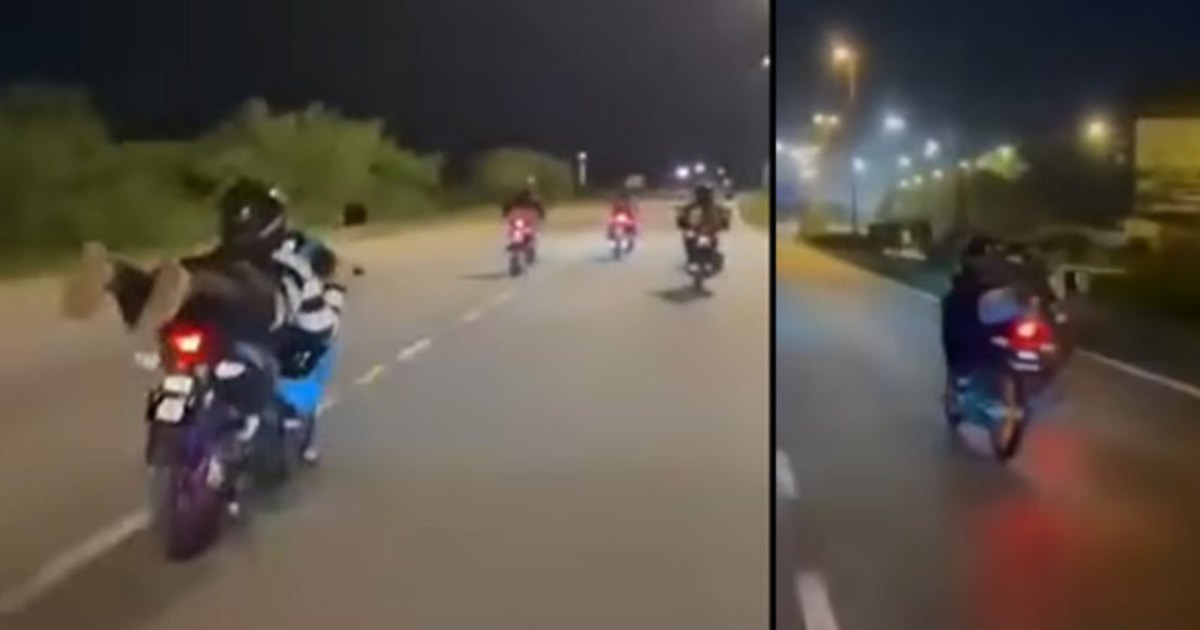
Police in Kuantan have taken into custody three teenage girls responsible for a series of dangerous 'Superman' motorcycle stunts that captured social media attention last week along Jalan Kuantan Bypass-Gebeng. The arrests mark a growing crackdown on viral stunt performances that endanger both riders and other road users on Malaysian highways.
The 'Superman' stunt, a reckless manoeuvre where riders stand on their motorcycle seats while leaning forward in a horizontal position to mimic a flying superhero, has become increasingly popular among young motorists seeking online virality. The Kuantan girls' execution of this stunt on a high-traffic bypass corridor represents a particularly brazen instance of this trend, drawing the attention of road safety authorities and sparking renewed discussion about the responsibilities of social media platforms in moderating dangerous content.
The arrests on Jalan Kuantan Bypass-Gebeng reflect heightened enforcement efforts by Pahang police against reckless driving practices. This major arterial route, which experiences considerable traffic volume daily, presents significant risks when riders compromise their control to execute stunts. The decision to apprehend the teenagers underscores law enforcement's determination to address not merely the immediate danger but also to deter copycat incidents inspired by viral circulation of such videos.
The timing of these arrests aligns with broader concerns among Malaysian traffic safety officials about the proliferation of dangerous riding videos across TikTok, Instagram, and YouTube. Young riders, particularly those in their mid-to-late teens, have increasingly participated in high-risk behaviours specifically designed for audience engagement and follower accumulation. The Kuantan incident exemplifies how social media incentive structures can translate directly into life-threatening conduct on public roads.
Motorists performing 'Superman' stunts face multiple hazards that extend beyond their own safety. Loss of directional control at speed can cause collisions with other vehicles, pedestrians, or roadside infrastructure. The forward-leaning posture eliminates the rider's ability to brake effectively or react to sudden traffic situations. Additionally, these manoeuvres violate numerous sections of Malaysian traffic legislation, including provisions against reckless or dangerous driving that carries penalties ranging from substantial fines to custodial sentences.
For teenage offenders, arrest and prosecution carry serious consequences beyond immediate legal penalties. Criminal records stemming from dangerous driving charges can affect educational opportunities, employment prospects, and insurance eligibility in future years. The Kuantan arrests may serve as a cautionary example to other youth considering similar stunts, though the allure of online attention continues to drive participation in risky behaviour among adolescents globally.
The incident highlights persistent challenges facing Malaysian authorities in combating road safety violations that originate from social media culture. While police enforcement addresses individual perpetrators after the fact, preventing initial participation requires intervention at multiple levels: parental supervision, platform responsibility in content moderation, school-based education programmes, and the normative influence of peer groups. The arrests alone, while necessary, represent only a reactive component of comprehensive traffic safety strategy.
Pahang police and the Royal Malaysia Police traffic enforcement divisions have intensified operations along major highways to identify and apprehend riders engaging in stunt performances. Enhanced surveillance, increased patrols, and public awareness campaigns form part of a coordinated response to what officials characterise as a growing menace. These efforts acknowledge that isolated arrests, while important for deterrence and accountability, must be accompanied by broader cultural shifts toward responsible road use.
For Malaysian parents and educators, the Kuantan case underscores the importance of conversations with adolescents about the authentic consequences of viral-seeking behaviour. The gap between perceived online rewards—views, likes, and social validation—and real-world dangers including serious injury, permanent disability, or death often remains abstract for teenagers until confronted with immediate consequences. The arrests provide educators with concrete examples to discuss risks and responsibility.
The incident also raises questions about platform accountability. TikTok, Instagram, and YouTube face mounting pressure globally to restrict content depicting dangerous driving stunts. While these platforms employ automated detection systems and community reporting mechanisms, motivated creators continue finding ways to circumvent restrictions or operate in grey zones where content is not immediately flagged. The Kuantan girls' video presumably circulated widely enough to gain police attention, suggesting that moderation systems operated after rather than before harm occurred.
Looking forward, the Kuantan arrests will likely influence policing priorities across Peninsular Malaysia, particularly in urban and peri-urban areas where such incidents cluster. Insurance companies may adjust premiums for young riders, and road safety campaigns may incorporate testimonials from apprehended teenagers emphasising unforeseen consequences. These secondary effects extend the impact of enforcement action beyond the three teenagers directly involved.
The case ultimately reflects tensions inherent in contemporary adolescent culture where digital social networks reward attention-seeking regardless of physical risk. Malaysian society continues wrestling with how to balance individual freedom and youthful expression against collective safety imperatives on shared road spaces. The Kuantan arrests represent one enforcement response, but sustainable solutions require sustained commitment from multiple stakeholders to reshape both incentive structures and cultural attitudes toward dangerous driving performances.

