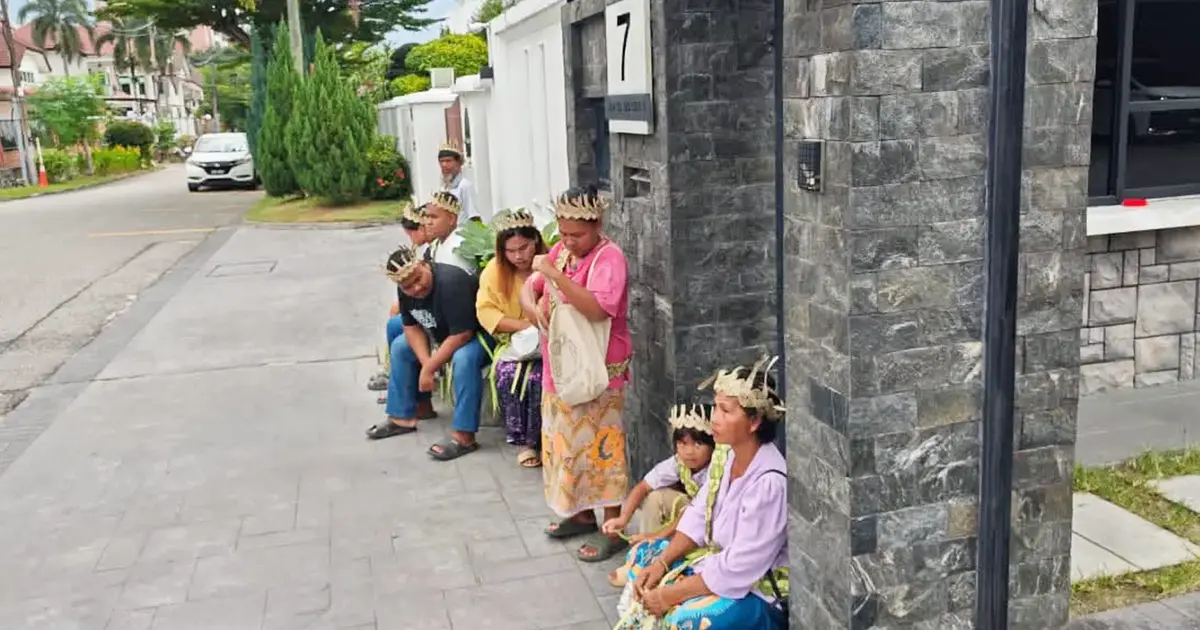
Prime Minister Anwar Ibrahim confirmed on Friday that three Orang Asli individuals detained in relation to a land dispute have been freed, marking a potential de-escalation in a case that highlighted tensions over indigenous land rights in Malaysia. The statement came as the government faces mounting scrutiny over how land conflicts affecting the Orang Asli—the peninsula's indigenous population—are being handled at both federal and state levels.
The release of the three detainees represents an important development in a protracted dispute that has drawn attention from civil society organisations and indigenous rights advocates. While details of the specific location and circumstances of the detention remain limited, such cases typically emerge from conflicts between indigenous communities and external parties seeking access to traditional lands, whether for development, resource extraction, or other commercial purposes. The swift intervention by the Prime Minister's office suggests awareness at the highest levels of government regarding the sensitivity of Orang Asli land issues.
Anwar emphasised that the matter would be escalated to the Pahang state government for further attention and resolution. This procedural point reflects the constitutional division of powers in Malaysia's federal system, where land administration and the management of land disputes fall squarely within state jurisdiction rather than federal purview. The Prime Minister's explicit commitment to raise the issue with Pahang authorities signals an intention to ensure state-level engagement rather than treating the release of the detainees as the final chapter in addressing underlying grievances.
The distinction between federal and state authority is crucial for understanding how indigenous land disputes are processed in Malaysia. While the federal government can exercise moral and political pressure and offer coordination, the actual authority to resolve land title disputes, approve or deny land usage, and determine the validity of indigenous claims rests with state governments. In Pahang's case, this means the state government holds the keys to any lasting resolution, from recognising Orang Asli land claims to facilitating dialogue between communities and other stakeholders.
Orang Asli communities across Malaysia have faced decades of land encroachment, with traditional territories shrinking due to urbanisation, agricultural development, and infrastructure projects. Pahang, one of the largest states on the peninsula and home to significant Orang Asli populations, has witnessed multiple such disputes. These conflicts often escalate because the Orang Asli lack formal legal documentation of their ancestral lands in the manner required by modern Malaysian land law, leaving them vulnerable when external interests seek to acquire or develop their traditional territories.
The detention of the three Orang Asli raised immediate concerns among advocacy groups about whether indigenous individuals were being treated as criminals for defending their land rights. The swift release, coupled with the Prime Minister's public acknowledgment, may reflect recognition that such detentions can provoke international attention and domestic criticism of the government's commitment to indigenous welfare. Malaysia has made various commitments under international frameworks regarding indigenous peoples' rights, and high-profile cases can create diplomatic complications.
Moving forward, the involvement of Pahang authorities will be critical in determining whether this incident leads to substantive progress on resolving the underlying land dispute. The state government will need to investigate the circumstances that prompted the detention, assess the legitimacy of the land claims being disputed, and potentially facilitate negotiations between parties. Without meaningful engagement by the state, the release of the detainees risks becoming merely a symbolic gesture that fails to address the systemic issues driving such conflicts.
The case also underscores broader challenges in Malaysia's approach to indigenous rights and land governance. Many Orang Asli communities lack secure title to their ancestral lands despite occupying them for generations, making them susceptible to disputes whenever their territories become economically valuable. Modernising the framework for recognising and protecting Orang Asli land rights—whether through statutory recognition, community mapping, or reformed titling procedures—remains an unfinished agenda that requires coordinated action between federal and state governments.
For Malaysian policymakers and regional observers, this incident serves as a reminder that indigenous land issues in Southeast Asia require sensitive handling grounded in recognition of historical injustices and contemporary vulnerabilities. The Prime Minister's commitment to engage the Pahang government should ideally extend beyond crisis management to supporting structural reforms that prevent such disputes from arising in the first place. Whether the federal government will push for such reforms, or whether the matter will fade from public attention once the detainees are released, remains to be seen.

