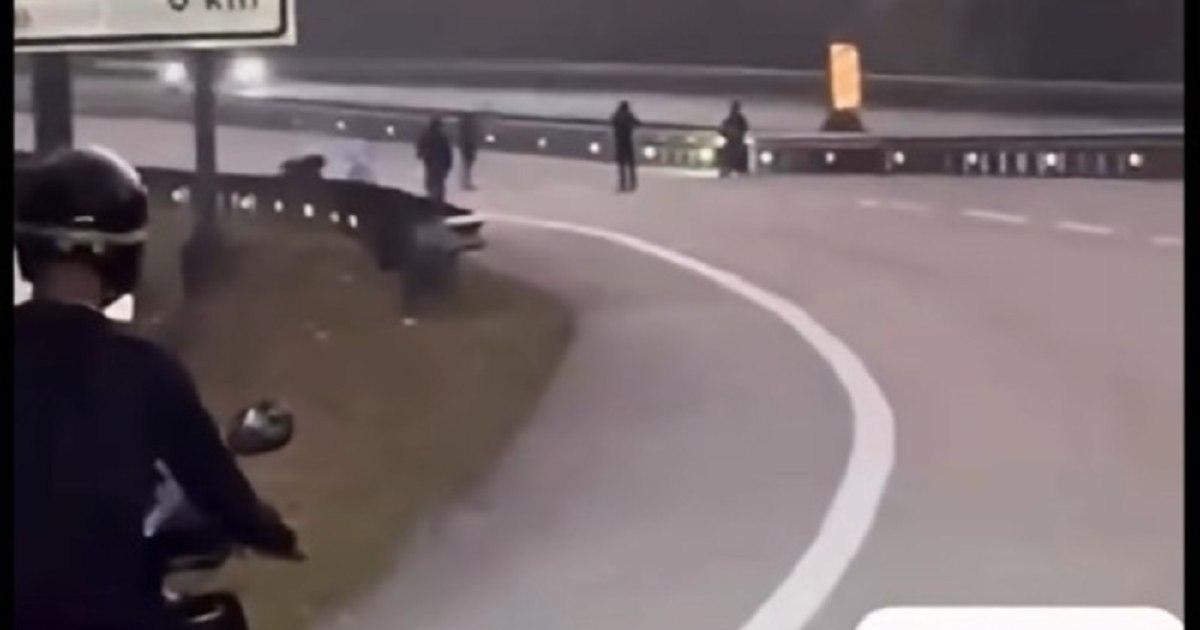
Police have widened their investigation into an illegal street racing operation after apprehending three more individuals in Kuala Lumpur, bringing the total number of arrests to five. The detainees are being questioned in connection with a widely-circulated online video that documented what appeared to be an organised motorcycle race staged on the Second Link, one of Malaysia's busiest international highways linking Johor to Singapore.
The viral footage, which sparked considerable public outrage when it surfaced online, showed a group of individuals seemingly taking control of the highway crossing to conduct what authorities described as an unauthorised and dangerous racing event. The video's rapid spread across social media platforms highlighted growing concerns about reckless road behaviour and the apparent coordination required to execute such a brazen operation on a major arterial route.
The Second Link, officially known as the Second Crossing, serves as a critical transportation artery for commercial and passenger traffic between Malaysia and Singapore, carrying tens of thousands of vehicles daily. The deliberate closure or obstruction of this vital economic corridor for an illegal activity underscores both the scale of the operation and the serious risks posed to innocent motorists and commercial drivers who rely on this route.
Investigators from the Johor police contingent, coordinating with their counterparts in Kuala Lumpur, have been pursuing leads systematically to identify all individuals involved in organising and participating in the event. The decision to conduct arrests in the capital suggests the operation may have had organisational links extending beyond the Johor region, potentially involving a network of street racing enthusiasts.
The escalating number of arrests indicates authorities are taking a comprehensive approach to dismantling what may be a more established illegal racing circuit. Each additional apprehension potentially provides investigators with fresh intelligence about the scope of the operation, the identities of organisers, and the methods used to coordinate such high-risk activities.
These arrests underscore a persistent challenge facing Malaysian law enforcement: the prevalence of illegal street racing culture, particularly among younger motorists drawn to high-speed activities outside regulated venues. Unlike sanctioned motorsports facilities where safety protocols and insurance requirements are enforced, illegal highway races endanger uninvolved third parties and create unpredictable hazards for ordinary commuters.
The Second Link incident carries additional weight given its international dimensions and the diplomatic sensitivities surrounding bilateral infrastructure. Any disruption to this crossing affects not only individual travellers but also trade flows and commercial operations between the two nations, potentially drawing attention from higher government levels.
Police investigations typically pursue multiple angles in such cases, including identifying who coordinated the event, how traffic was managed to temporarily clear the highway, what communication systems were used to synchronise participants, and whether financial wagers were involved. The viral video itself serves as crucial evidence, allowing investigators to identify additional suspects through visual identification or analysis of vehicle registrations and licence plates visible in the footage.
Public cooperation has proven invaluable in cases involving widely-shared online content. Viewers who recognised participants or vehicles have the opportunity to contact authorities confidentially, potentially accelerating the investigative process and leading to further arrests. The Johor police have appealed for continued public assistance and information.
Beyond the immediate criminal charges these individuals may face—potentially including illegal assembly, obstruction of traffic flow, and dangerous driving offences—prosecutors will likely consider whether charges related to conspiracy or organising the event can be pursued. Such elevated charges would signal that courts treat premeditated highway closures more severely than spontaneous impromptu racing incidents.
For Malaysian motorists and the broader motoring public, these arrests deliver a message that authorities remain vigilant against road safety threats. However, experts note that sustained education campaigns about the dangers of street racing, combined with more accessible legitimate racing venues and community engagement with enthusiast groups, represent longer-term strategies for addressing the underlying demand that drives such illegal activities.
The investigation continues as police work to establish the full circumstances surrounding the event and identify any remaining participants who may not yet have been apprehended. Authorities expect to provide further updates as the case progresses through preliminary investigations and potential charging decisions.

