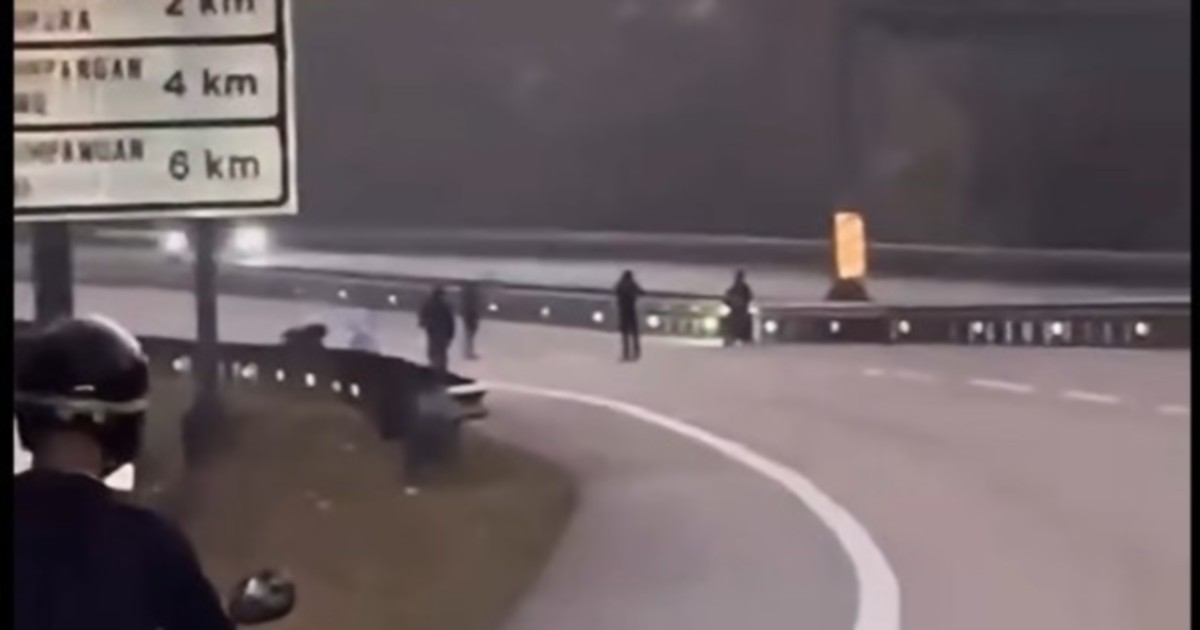
The police have intensified their enforcement response to street racing activities, with a third wave of arrests now bringing the total number of suspects in custody to 11 in relation to the illegal motorcycle racing incident on the Second Link highway connecting Johor and Singapore. The latest detentions occurred in Kulai, underscoring the scale of the operation and the authorities' determination to address dangerous road conduct that threatens public safety on one of Malaysia's busiest transport corridors.
The Second Link, officially known as the Second Crossing of the Straits of Johor, serves as a vital economic and social artery linking Malaysia to Singapore. The highway experiences substantial daily traffic comprising commuters, commercial vehicles, and long-distance travellers. An illegal racing event on this congested and high-speed route represents not merely a traffic violation but a significant public safety hazard, potentially endangering hundreds of motorists at any given moment. The incident has prompted heightened concern among road users and policymakers about the prevalence of street racing culture in Malaysia's transportation network.
Street racing, particularly involving motorcycles, has emerged as a recurring challenge for Malaysian law enforcement. These activities typically occur during late evening or early morning hours when traffic volumes are lower, though this provides no guarantee of safety. The perpetrators often operate with minimal regard for other road users, and participants frequently lack proper protective equipment or vehicle documentation. The practice has been linked to numerous traffic accidents, fatalities, and injuries across Malaysia over recent years, making each enforcement operation consequential for public health and road safety statistics.
The decision to remand three additional suspects suggests that investigations remain active and ongoing. Police typically pursue remand orders when they require additional time to gather evidence, interview other witnesses or suspects, and build a comprehensive case file. The staggered nature of the arrests—with groups being brought into custody sequentially rather than all at once—indicates that officers may be following investigative leads that connect various individuals to the incident. This methodical approach, while potentially lengthy, often yields stronger prosecutorial outcomes.
The accumulation of 11 arrests highlights the organised nature of what may have transpired on the Second Link. Illegal racing events of this scale typically require coordination, communication among participants, and possibly lookout personnel or individuals managing traffic flow to reduce interception risk. The diversity of suspects arrested suggests that authorities are casting a wide net to capture not only the primary participants but also organisers, enablers, and observers who facilitated the event. Understanding the full scope of involvement remains essential for determining appropriate charges and penalties.
Malaysia's legal framework provides authorities with several mechanisms to address illegal racing. The Road Transport Act 1987 contains provisions for traffic violations, whilst the Penal Code encompasses offences related to rash or negligent conduct endangering life. Depending on the circumstances and severity of the incident, prosecutors may pursue charges ranging from traffic infractions to more serious criminal offences. In cases where racing directly caused injuries or property damage, additional charges may apply. The courts have gradually increased penalties for street racing in recent years, reflecting heightened public concern.
The Second Link incident arrives amid broader police campaigns targeting street racing. Authorities have deployed various strategies including roadblocks, surveillance operations, and cooperation with community informants to disrupt racing networks. The Royal Malaysia Police Traffic Investigation and Enforcement Division has prioritised dangerous driving behaviour, particularly on highways where speeds are elevated and accidents carry higher consequences. These efforts reflect a recognition that reactive responses to accidents must be complemented by proactive prevention.
For Malaysian motorists, especially those who regularly commute or travel on the Second Link, the incident reinforces concerns about road safety despite ongoing enforcement efforts. The popularity of the route for commuting between Johor Bahru and Singapore means that many families and workers depend on its relative safety and efficiency. Illegal racing disrupts this trust and creates genuine risks for ordinary travellers who are innocent of wrongdoing but suddenly exposed to reckless behaviour.
The incident also raises questions about underlying motivations that drive individuals to engage in street racing despite significant legal risks and public safety concerns. Some researchers attribute participation to thrill-seeking behaviour, peer pressure within racing communities, or attempts to demonstrate driving skill. Others point to inadequate leisure facilities and limited alternative outlets for young people in certain communities. Understanding these motivations remains important for developing preventive strategies that extend beyond enforcement alone.
As investigations continue and additional remands are sought or suspects are charged, the case will likely proceed through the courts in coming months. The outcomes—including conviction rates, sentences handed down, and any licence suspensions—will signal to potential offenders the seriousness with which authorities and judiciary treat illegal racing. The Second Link incident serves as a reminder that Malaysia's roads remain contested spaces where regulatory enforcement must continuously adapt to emerging safety threats. Simultaneously, it underscores the importance of sustained public awareness campaigns emphasising that responsible driving protects not only oneself but entire communities sharing the road.

