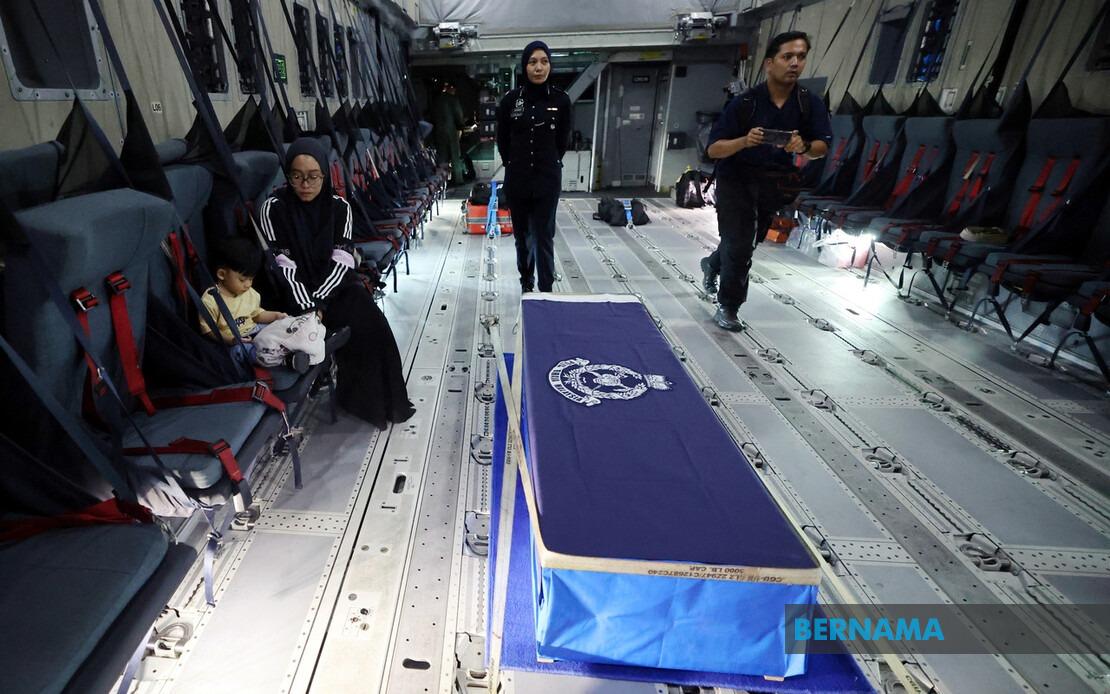
Three members of Malaysia's police force who perished in an electrocution incident in Beaufort, Sabah, were airlifted to their respective hometowns on the evening of August 7, concluding a tragic chapter that claimed the lives of officers serving in the nation's frontline law enforcement operations. The repatriation saw coordinated deployment of Royal Malaysian Air Force and Royal Malaysia Police assets to ensure the dignified return of the fallen personnel to their families and communities across the peninsula and East Malaysia.
Corporal Mohamad Nur Hafiz Ibrahim, aged 29 from Kelantan, and Constable Muhammad Raimi Ismarubee, aged 26 from Terengganu, departed Kota Kinabalu International Airport aboard an RMAF aircraft at 7.10 pm, with the flight plan directing the aircraft to make stops at RMAF Air Base Kuantan before proceeding to RMAF Air Base Gong Kedak in Terengganu. The routing reflected both the geographic distribution of the deceased officers' origins and operational coordination between military transport authorities and police leadership. Simultaneously, Corporal Chiu Teck Siong, aged 40 and hailing from Sarawak, was conveyed to the Royal Malaysia Police Air Operations Force base in Kota Kinabalu before being transferred aboard a police aircraft destined for Sarawak.
The tragic incident unfolded outside Weston Police Station in Beaufort at 5.50 pm on August 6, when circumstances involving electrical current resulted in the deaths of all three officers. The specific cause and context surrounding the electrocution remain subjects of official investigation, though the incident underscores inherent occupational hazards faced by police personnel executing their duties in field conditions. Such accidents, while statistically infrequent, highlight the breadth of risks confronting law enforcement beyond conventional threats.
All three bodies underwent comprehensive post-mortem procedures at noon on August 7 at Queen Elizabeth Hospital's Forensics Department in Kota Kinabalu. Following completion of the medical examinations essential for coroner's inquiries and death certification, the bodies were released at approximately 2.56 pm, facilitating the expedited repatriation process that authorities coordinated through the evening hours. The medical procedures represented standard protocol ensuring that cause of death was thoroughly documented and all legal requirements satisfied before family members could receive their loved ones for funeral arrangements according to their respective religious and cultural traditions.
The loss of three officers simultaneously represents a significant casualty event for the Royal Malaysia Police, particularly given that the three personnel represented different operational zones and demographic backgrounds within the force. Mohamad Nur Hafiz's death represents a loss to Kelantan's policing infrastructure, Muhammad Raimi's to Terengganu's establishment, and Chiu Teck Siong's to the Sarawak contingent. Such distributed losses underscore how a single incident can ripple across multiple police contingents and affect multiple families and communities simultaneously.
For the broader Malaysian law enforcement community, the incident serves as a sobering reminder of workplace safety imperatives even within established police facilities. Electrical hazards at police stations—often aging infrastructure housing outdated electrical systems—represent potential risks that may require systematic auditing and remediation across the national police estate. The Beaufort station incident may prompt review of electrical safety protocols and maintenance schedules at comparable facilities throughout Sabah and nationwide.
The coordinated response by RMAF and RMP Air Operations Force in executing the repatriation reflects institutional capacity for dignified handling of line-of-duty deaths and demonstrates commitment to ensuring fallen officers receive appropriate honors during their final journey home. The deployment of military transport assets for such purposes underscores the fraternal relationship between Malaysia's armed forces and police service, with both institutions recognizing mutual obligations to officers who sacrifice in service to the nation.
Family members of the deceased officers are confronting sudden and traumatic loss amid the complexities of funeral preparation, probate matters, and adjustment to circumstances of deprivation that electrocution deaths often entail. Police welfare frameworks and support mechanisms become particularly critical during such periods, ensuring that bereaved families receive counseling, financial assistance where applicable, and community recognition of sacrifice rendered by their loved ones.
The incident also carries implications for police station infrastructure asset management across Malaysia. Beaufort's status as a regional police facility in a relatively remote area may reflect broader patterns of aging infrastructure and deferred maintenance affecting police establishments in smaller towns and rural areas. Systematic electrical audits, staff training in electrical hazard recognition, and investment in facility upgrades could represent prudent risk mitigation measures warranting consideration by police leadership and government authorities overseeing police infrastructure budgets.

